


 Tiếng Việt
How can a beginner tell real wine from fake wine without being a tasting expert? As counterfeit wine becomes increasingly common, equipping yourself with basic identification knowledge is essential. The article below will guide you through how to recognize fake wine through simple observations at the store and easy scientific tests you can perform at home.
1. How to Tell Real Wine from Fake Wine Right at the Store
Before deciding to pay, your eyes are the most effective checking tool. No matter how sophisticated fake wines may be, they often leave behind “clues” that reveal their origin through packaging and bottling details.
1.1 Observe the Product Stamp on the Wine Bottle
In the Vietnamese market, the import stamp, often called the Ministry of Public Security stamp or customs stamp, is the first important legal sign that protects consumers.
- Breakable stamp material: Officially imported wine must have this stamp. The most important feature of a genuine stamp is that it is printed on special breakable decal paper. Once attached to the bottle, if someone tries to peel it off, the stamp will break into small pieces and cannot be reused. Fake stamps are often printed on glossy paper or ordinary paper, and can be peeled off and reapplied easily without tearing.
- Printing technology: Genuine stamps have sharp, sophisticated patterns. If you shine ultraviolet light, such as a counterfeit-money detector, on a real stamp, hidden customs security marks will glow. Fake stamps often have blurry ink, uneven color and no reflective security features.
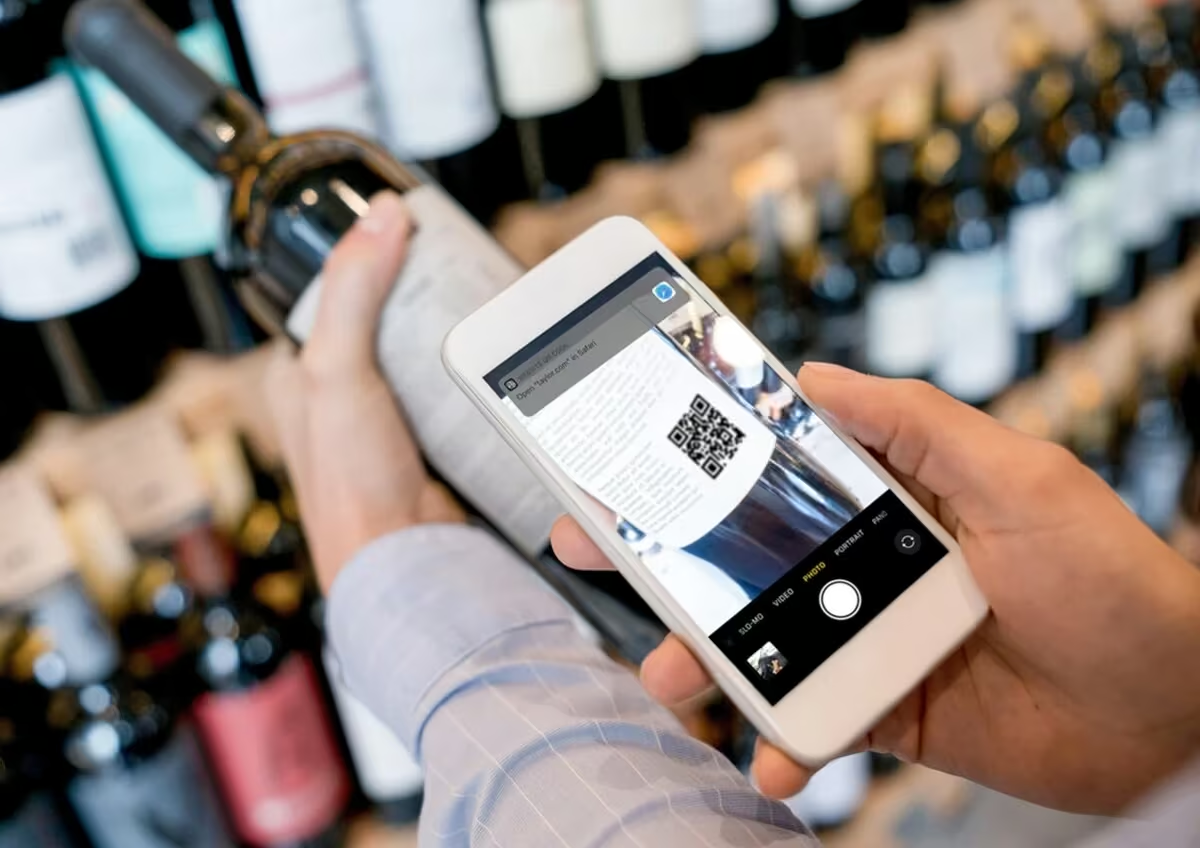
- QR code: Today, imported wine stamps often include QR codes. Use your phone to scan the code. If it is genuine, it should lead to full information about the importing company, import date and customs declaration number. Fake stamps often lead to broken links or unauthenticated websites.
1.2 Check the Label on the Bottle to Identify Real or Fake Wine
Reputable wine producers, especially from France, Italy and Chile, invest heavily in bottle labels because the label represents the brand’s image.
- Level of refinement: Real wine labels often use premium art paper, embossed lettering or foil stamping. When you run your fingers over the label surface, you can feel the smoothness and raised details clearly. Fake wine often uses cheap inkjet printing, with a flat label surface and unnatural colors.
- Adhesive quality: Real wine labels are applied by automatic industrial machinery, ensuring the edges are flat, straight and perfectly aligned. Fake wine is often labeled by hand, so the label may be crooked, wrinkled or show messy glue residue around the edges.
- Spelling mistakes: Read the information on the label carefully. Fake wine often intentionally changes one small character in the brand name or wine region, for example “Bordaux” instead of “Bordeaux”, to deceive buyers who only glance at the bottle.
1.3 Observe the Color and Clarity of the Wine
If the bottle is made of clear glass, usually for white wine or rosé wine, hold it up against a light source.
- Clarity: Real wine should be clear, bright and have depth of color.
- Impurities: If the wine looks cloudy, murky like rice water or contains strange floating objects, it may be a sign of poor-quality wine or wine spoiled by bad storage. Fake wine mixed with artificial coloring often looks overly bright red or artificially dark purple, very different from the natural ruby red or brick-red tones of real wine.
1.4 Pay Attention to the Wine Fill Level
This is an excellent but often overlooked tip. Real wine is bottled on industrial production lines with almost absolute precision in volume.
- How to check: When standing in front of a wine shelf, observe a row of identical bottles placed side by side. The wine level in the neck of all bottles should be perfectly even.
- Fake wine sign: If bottles from the same batch show uneven fill levels, with some fuller and some lower, be cautious. This may indicate manual bottling, a typical sign of counterfeit wine production.
1.5 Check the Bubbles Inside the Wine Bottle
For still wine, the appearance of bubbles can be an unusual sign.
- How to check: Turn the bottle upside down and observe the bottom of the bottle under light.
- Real wine: If there are bubbles, they are usually very fine, move slowly, spread evenly and then disappear.
- Fake wine: If the wine is made from industrial alcohol or bottled under poor sanitary conditions, the bubbles are often large, rough, move quickly in a straight vertical direction and cling to the bottle wall like carbonated soft drinks. This may indicate unwanted refermentation or careless mixing.
1.6 Check the Wine Cork and Closure
The closure, especially natural cork, can reveal many secrets about the bottle.
- Tightness of the capsule: The metal capsule around the neck of a real wine bottle is applied by specialized machinery, so it fits snugly while still being slightly rotatable. Fake wine capsules are often loose, wrinkled or so tight that they cannot turn.
- Information on the cork: Reputable winemakers often print the vintage or a code on the cork. If you buy an expensive bottle and the cork inside is completely blank, or the information on the cork does not match the label, there is a high chance the bottle has been refilled.
>> Watch an example of how to identify real or fake Château Angelus wine here!
2. How to Tell Real Wine from Fake Wine at Home
If you have already bought the wine but still have doubts, try the simple chemical tests below. These methods are based on the reaction of Anthocyanin, the natural pigment in grape skins, with the pH of the surrounding environment.
2.1 Identify Real or Fake Wine with Baking Soda
This is one of the most accurate and easiest methods to perform at home.
- Principle: Anthocyanin from real grapes changes color when exposed to an alkaline substance such as baking soda. Industrial coloring in fake wine does not.
- How to do it: Pour a little wine into a glass, add one spoon of baking soda and stir well.
- Result:
- Real wine: The wine color changes from red to moss green, dark green, bluish-black or grayish purple.
- Fake wine: The color remains red or only becomes slightly lighter because of the white powder, without a true color shift.
2.2 Check Again with White Vinegar or Lemon Juice
- How to do it: After the wine has turned green or black from baking soda, add a few drops of white vinegar or lemon juice.
- Result:
- Real wine: Vinegar is acidic and neutralizes the alkaline baking soda, causing the wine to return to its original red-purple color.
- Fake wine: No special color change occurs.
2.3 Identify Fake Wine with Tissue Paper or Blackboard Chalk
This method is based on liquid absorption and chromatography.
- How to do it: Drop a few drops of wine onto a sheet of tissue paper or a piece of blackboard chalk.
- Result:
- Real wine: The stain spreads evenly, with a natural and consistent pinkish-red color.
- Fake wine: Chemical coloring often separates poorly. You may see layered staining: a dark artificial red spot in the center, surrounded by a clear or much lighter ring, which looks unnatural.
2.4 Recognize Wine Through Aroma and Taste
Human senses are still one of the most refined detection tools.
- Aroma: Real wine has a complex, layered aroma, such as fruit, oak and floral notes. When you gently swirl the glass, the aromas open up. Fake wine often smells harshly alcoholic, sharp on the nose or artificially sweet like candy flavoring.
- Taste: Real wine has gentle tannins and a finish that lingers in the throat. Fake wine often tastes sharply sour like vinegar, leaves an unpleasant artificial sugar sweetness and feels thin immediately after swallowing.
2.5 Check with Glycerin
Glycerin is a natural component produced during fermentation and contributes to the wine’s texture.
- How to do it: Add a few drops of glycerin to a glass of wine.
- Observed result:
- Real wine: The glycerin drops slowly sink to the bottom and do not immediately change the wine’s color.
- Fake wine: The wine may turn pale yellow or unusually bright red, or the glycerin may float because the density of the mixed wine is not properly balanced.
3. Common Types of Fake Wine on the Market
To avoid being deceived, you need to understand how counterfeiters fake wine. Below are the 4 most common forms today:
3.1 Correct Label and Correct Vintage, but Fake Wine Inside
This is the “old bottle, new wine” type. Counterfeiters collect genuine empty bottles, often expensive ones, from restaurants, hotels or recycling dealers. They then refill them with cheap wine or chemically mixed wine, reseal them with fake corks and resell them as premium products. This is the hardest type to detect if you only look at the bottle.
3.2 Original Bottle but Different Vintage
This often happens with premium wines, such as Grand Cru bottles, where value depends heavily on the harvest year. For example, 2015 may be an excellent vintage and very expensive, while 2013 may be weaker and cheaper. Counterfeiters may alter the label from 2013 to 2015 to sell at a higher price. In this case, the wine inside is still genuine, but its value is misrepresented.
3.3 Fake Wine with Real Bottle and Real Closure
Similar to type 3.1, but more sophisticated in handling the closure. Counterfeiters use specialized tools to remove genuine capsules and seals from real bottles without tearing them, then reattach them to refilled bottles. This type can deceive even buyers who check stamps and seals.
3.4 Completely Fake Bottle, Stamp and Cork
This is fully counterfeit wine. Everything from the bottle, label and cork to the liquid inside is produced illegally. However, because printing and finishing technology at counterfeit workshops is often poor, this type is usually easier to detect if you apply the label and packaging checks in section 1.
4. Where Should You Buy Wine to Avoid Fake Products?
The best way to protect yourself from fake wine is to choose the right seller. Below are long-established and reputable wine distributors in Hanoi and Ho Chi Minh City that you can trust:
Professional imported wine retail chains:
- Vang Thiên Linh: One of Vietnam’s long-standing wine importers, owning many exclusive brands. Available in Hanoi, Ho Chi Minh City and Da Nang.
- Hedon WineHub: A reputable retail chain with a diverse product portfolio ranging from affordable to premium wines. The stores have clear addresses and proper storage conditions.
- Major supermarkets: Lotte Mart, Aeon Mall, Mega Market and others. These places have strict product intake procedures, full invoices, documents and labels. Although they may not carry extremely rare wines, their safety level is very high.
Note: Limit buying wine from online hand-carried sellers without clear addresses or documents, or from small grocery stores that display wine under direct sunlight. High temperature can damage wine even if the bottle is genuine.
Final Thoughts,
Knowing how to tell real wine from fake wine not only helps you avoid wasting money, but also protects the health of you and your family.
Be a smart consumer by observing carefully, choosing reputable sellers and applying the simple checking tips in this article.