


 Tiếng Việt
When people talk about the king of wines, wine lovers around the world almost immediately think of Barolo, the legendary icon from Piedmont, Italy. It is no coincidence that this wine is often described as wearing a magnificent royal robe. More than just a red wine, Barolo is the crystallization of history, terroir and masterful winemaking artistry.
So what has elevated Barolo wine to such a prestigious position? Let us explore its origin, production process, distinctive flavor profile and the proper way to enjoy it.
1. The Origin of the “King of Wines”
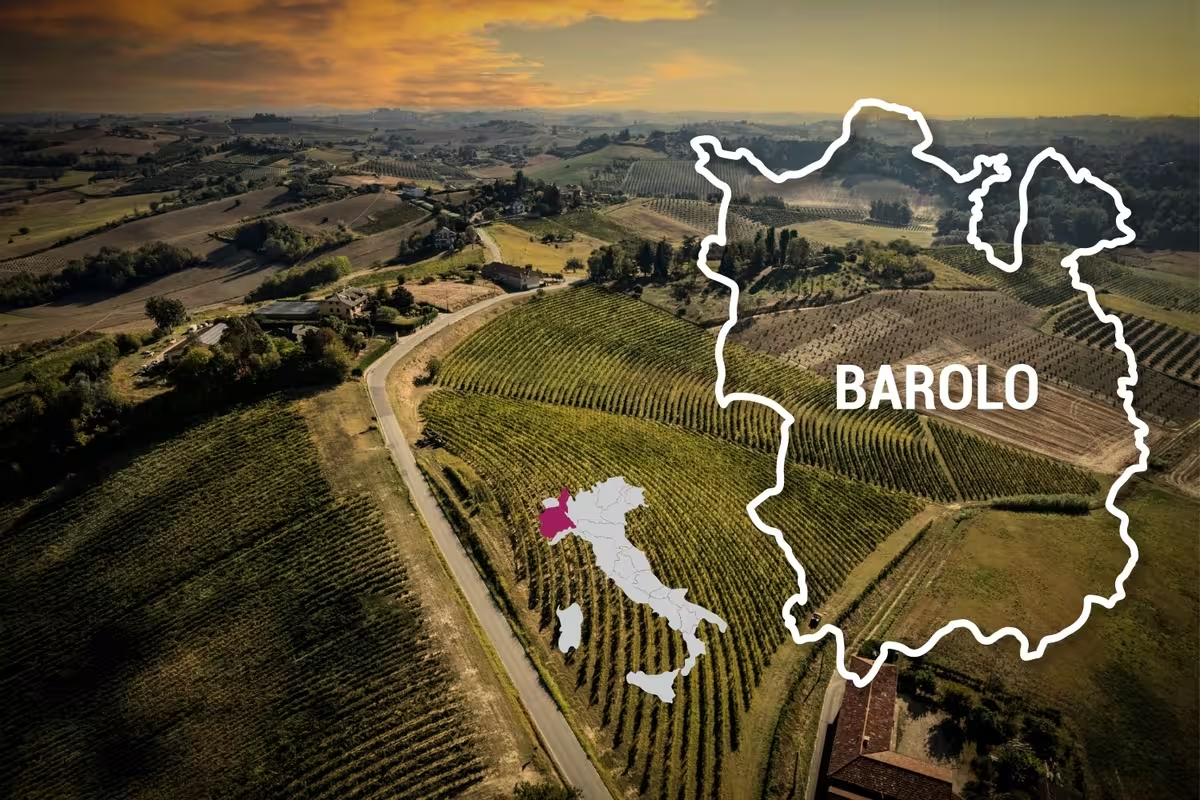
The journey of Barolo began in the poetic hills of Langhe in Piedmont, Italy. This region offers perfect natural conditions for nurturing the native Nebbiolo grape. Viticulture in this area dates back to ancient Roman times, but it was not until the 19th century that the bold, tannic Barolo style we know today truly came into being.
Before the 19th century, Barolo was often slightly sweet or lightly sparkling. This was because winter arrived early and harshly in Northern Italy, causing yeast fermentation to stop midway and leaving residual sugar in the wine. The historical turning point came thanks to Marchesa di Barolo, Giulia Falletti, and Count Camillo Benso di Cavour. They applied advanced winemaking techniques from France and controlled cellar temperatures so that yeast could fully convert sugar into alcohol.
As a result, a dry, powerful red wine with firm structure and the ability to age for decades was born. Thanks to its durability and ability to travel long distances without spoiling, Barolo quickly became a favorite drink of the House of Savoy and royal courts across Europe. From then on, the title “king of wines” became closely associated with Barolo, affirming its unique status on the world wine map.
2. Why Is Barolo Called the “King of Wines”?
Barolo’s reputation does not come from marketing, but from 3 core elements: strict production regulations, a remarkable grape variety and an unmistakable flavor profile.
2.1 Strict DOCG Production Standards
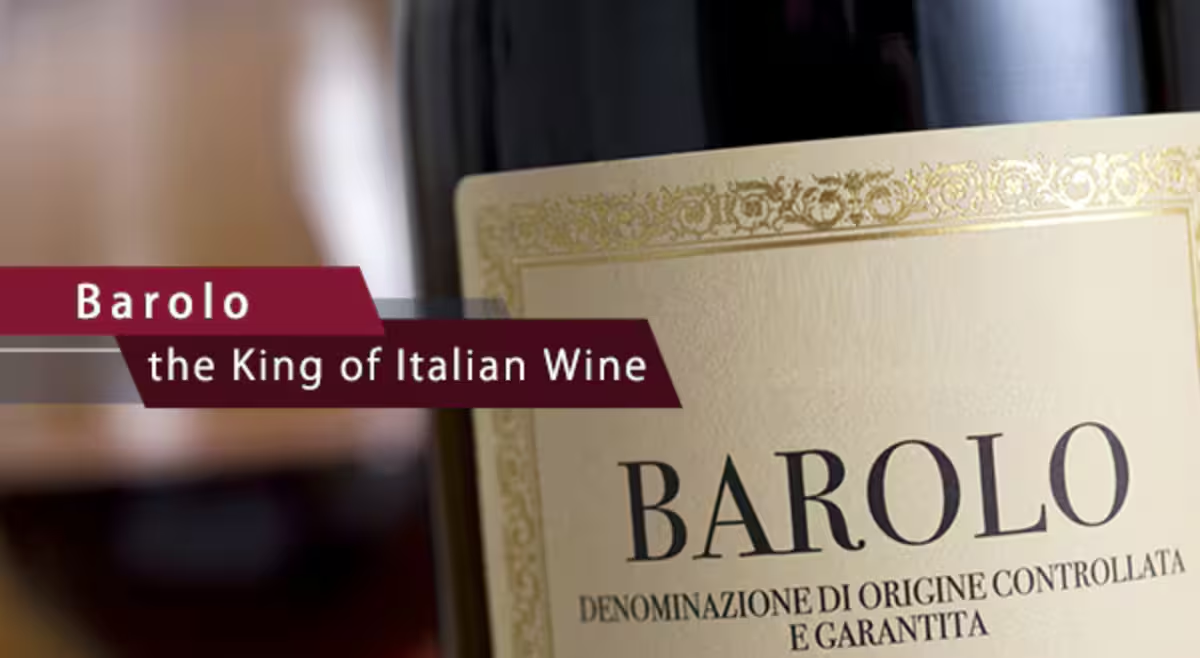
Barolo is protected by the DOCG classification system, Denominazione di Origine Controllata e Garantita. This is the highest and strictest classification level for Italian wine. For a bottle to be labeled Barolo DOCG, it must comply with extremely strict regulations:
- Single grape variety: It must be made from 100% Nebbiolo grapes, with no blending of any other grape variety allowed.
- Aging period: Standard Barolo must be aged for at least 38 months, more than 3 years, before being released to the market, including at least 18 months in oak barrels. For the higher-level Barolo Riserva, the aging period reaches 62 months, more than 5 years, giving the wine greater depth and absolute smoothness.
- Alcohol content: The minimum requirement is 13%, but many modern Barolo wines often reach 14-15% due to climate change helping grapes ripen more fully.
Beyond regulations, terroir is also the magic of the Barolo land. The production area is limited to 11 communes, with 5 especially prominent names: Barolo, La Morra, Castiglione Falletto, Serralunga d’Alba and Monforte d’Alba. Barolo wine styles are often divided according to 2 main soil types:
- Tortonian soils, in the west – La Morra and Barolo: More fertile clay-limestone soils create elegant, softer wines with fragrant floral aromas that can be enjoyed earlier.
- Helvetian soils, in the east – Serralunga and Monforte: Poor, dry sandstone soils force vine roots to grow deep in search of water, producing extremely powerful wines with intense tannins that often need a decade or more to mature in bottle.
2.2 Nebbiolo: The Soul of the “King of Wines”
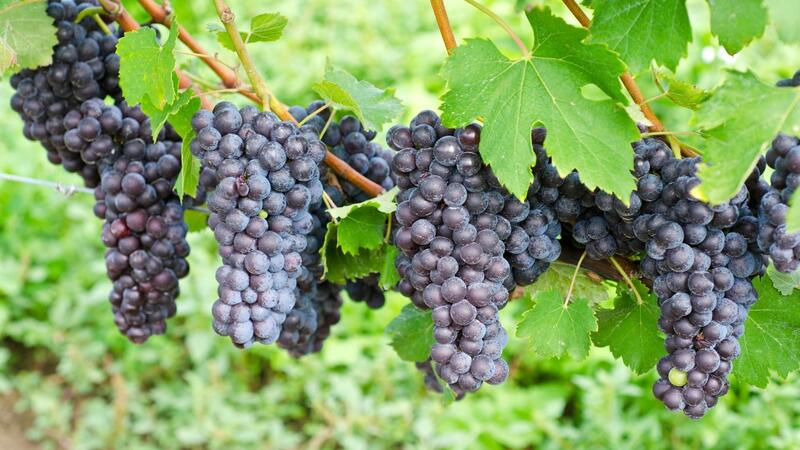
The soul of the “king of wines” is Nebbiolo, a grape variety considered one of the noblest in Italy.
The name Nebbiolo comes from the Italian word “nebbia”, meaning fog. During harvest in late October, the hills of Langhe are often covered in a dreamy veil of mist. At the same time, ripe Nebbiolo grapes are covered with a white bloom that resembles fog, giving them an especially elegant appearance.
Nebbiolo is an extremely demanding and temperamental grape. It buds very early in spring, making it vulnerable to frost, yet ripens very late in autumn. Its long time on the vine allows the grapes to slowly accumulate complex flavors. This variety is highly selective about terroir and shines most brilliantly in its homeland of Piedmont. Although many regions around the world have attempted to grow Nebbiolo, none has fully recreated the greatness achieved in Barolo.
2.3 Barolo’s Unique Flavor and Outstanding Aging Potential
For beginners, Barolo often brings a major surprise because of the contrast between its appearance and its taste.
- Delicate appearance: When poured into the glass, Barolo does not show the dense black-red color of Cabernet Sauvignon. It has a pale ruby-red, translucent appearance and quickly develops a brick-orange rim after only a few years of aging.
- Signature aromas: Bring the glass to your nose and you will be captivated by the famous aroma profile that wine professionals often describe as “roses and tar”. In addition, the wine reveals red cherry, raspberry, damp earth, truffle, leather and dried herbs.
- Explosive palate: In contrast to its pale color, Barolo delivers a powerful and impressive tasting experience. Nebbiolo grapes have extremely high tannins and acidity. When the wine is young, these tannins can make your mouth feel very dry. But be patient. Over time, these 2 elements act as natural preservatives, helping the tannins soften into a velvety texture and leaving behind a sweet, endlessly lingering finish.
Many experts compare Barolo to a person who needs time to be understood: “delicate yet bold, simple yet complex”.
> Discover the 7 countries that produce the most wine in the world!
3. What Food Pairs Well with Barolo?
With its firm tannins and high acidity, Barolo is definitely not a wine for sipping casually on its own or pairing with sweet desserts. The golden rule is this: it needs protein and animal fat to tame its tannins. When paired with rich, fatty dishes, the tannins in the wine become significantly softer and smoother, while the wine’s acidity cuts through the richness of the food.
- Classic European pairings: Barolo is a perfect partner for grilled red meats such as beef steak, lamb ribs braised in red wine, or richly flavored dishes featuring truffle and hard cheese.
- Creative pairings with Vietnamese cuisine: Do not assume Barolo only works with Western food. You can absolutely pair it with Vietnamese dishes, as long as they are rich and high in protein. Excellent examples include traditional Vietnamese beef stew with its thick, savory broth, warming five-spice and star anise aromas, or deeply marinated grilled ribs.
Important note: Avoid pairing the “king of wines” with steamed seafood, fresh spring rolls or light salads. The wine’s strong tannins will completely overwhelm the food and may create an unpleasant metallic bitterness.
4. How to Enjoy Barolo Properly
To fully appreciate the “king of wines”, keep these points in mind:
- Decant before drinking
Let the wine breathe for 1-2 hours.
This helps soften the tannins and open up the aromas.
- Serving temperature
Ideal temperature: 16-18°C.
- Suitable wine glass
Use a large-bowled glass to concentrate the aromas.
Final Thoughts,
It is no coincidence that Barolo is honored as the “king of wines”. Barolo is a work of art, a witness to history, nurtured by the fertile land of Piedmont and the patient hands of its winemakers. From the demanding nature of Nebbiolo grapes and the years-long aging process to the deep layers of flavor that transform beautifully over time, all these elements have created an immortal monument in the wine world.
Whether you are a beginner or an experienced wine expert, sipping and waiting for a bottle of Barolo to fully reveal itself is always a philosophical and captivating experience. With its timeless quality, Barolo will always stand proudly and deservedly as the “king of wines”, a precious gem that every wine lover longs to experience at least once.