
 Tiếng Việt

Exploring the countries that produce the most wine in the world is not only about looking at statistics, but also a journey into winemaking philosophies and fascinating historical stories. This article gives you a complete overview of the 7 powers currently dominating the global wine map and explains why they are leading the world.
1. Overview of the Global Wine Industry
In 2025, global wine production is estimated to reach around 232 million hectoliters (mhl), equivalent to 23.2 billion liters. This represents a 3% increase compared with 2024, showing a strong recovery in the industry.
The global wine production landscape is divided into two main groups:
- Old World: European countries with long-standing traditions.
- New World: Countries in the Americas, Australia and Africa, known for innovation, creativity and modern techniques.
2. 7 Countries That Produce the Most Wine in the World
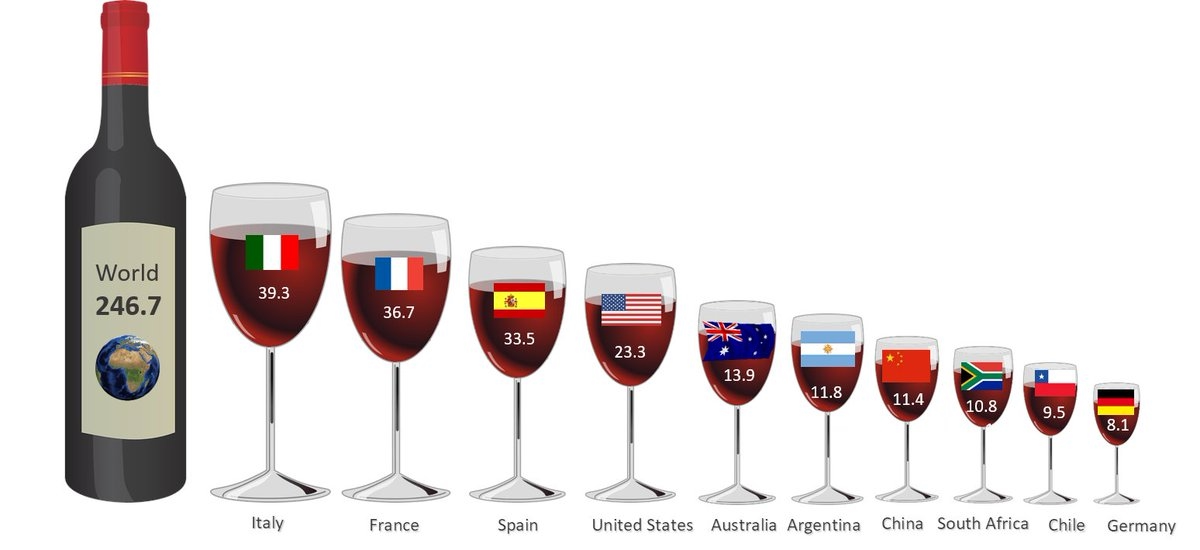
2.1 Italy: The Country That Produces the Most Wine in the World
Italy consistently holds its position as the country that produces the most wine in the world, contributing nearly one-fifth of global supply. What makes Italian wine truly great is its biodiversity, with more than 500 native grape varieties.
Three key wine-producing regions to know:
- Piedmont: Famous for the Nebbiolo grape, which creates Barolo, known as the “king of wines”, with powerful tannic structure and aromas of violet and truffle.
- Tuscany: The kingdom of Sangiovese, the heart of Chianti Classico wines that balance bright acidity with herbal notes beautifully.
- Veneto: A major export powerhouse with Prosecco, a light, fresh and highly approachable sparkling wine.
To help consumers identify quality, Italy uses a clear classification system from low to high: VdT (table wine), IGT (geographical indication), DOC (controlled designation of origin) and the highest level, DOCG (controlled and guaranteed designation of origin with the strictest standards).
2.2 France: The Global Benchmark for Quality
Holding second place, France has always been considered the ultimate benchmark for quality. The power of French wine lies in the philosophy of “terroir”. This is the unique combination of soil, climate, landscape and farming tradition. The French believe that wine should accurately reflect the land where it is grown.
Two iconic French wine regions:
- Bordeaux: Famous for the art of blending Cabernet Sauvignon, which provides firm structure and high tannins, with Merlot, which brings softness and black fruit aromas.
- Burgundy: Celebrates the purity of single-varietal wines. This region is famous for Pinot Noir for red wine and Chardonnay for white wine, offering elegant structure, berry aromas and deep earthy notes.
France manages quality through the strict AOC system, which regulates everything from grape varieties and geographical boundaries to planting density.
2.3 Spain: The Largest Vineyard Area in the World
Spain has the largest vineyard area in the world. Due to its harsh, dry climate, producers must use low-density planting so vine roots have enough space to search for underground water.
The white grape Airén is widely planted for light white wines, but Spain’s true “national treasure” is the red grape Tempranillo, especially in Rioja. Tempranillo wines are known for deep notes of leather, cigar, vanilla and dried fruit after aging in oak barrels. Today, Spain also leads Europe in organic vineyard area.
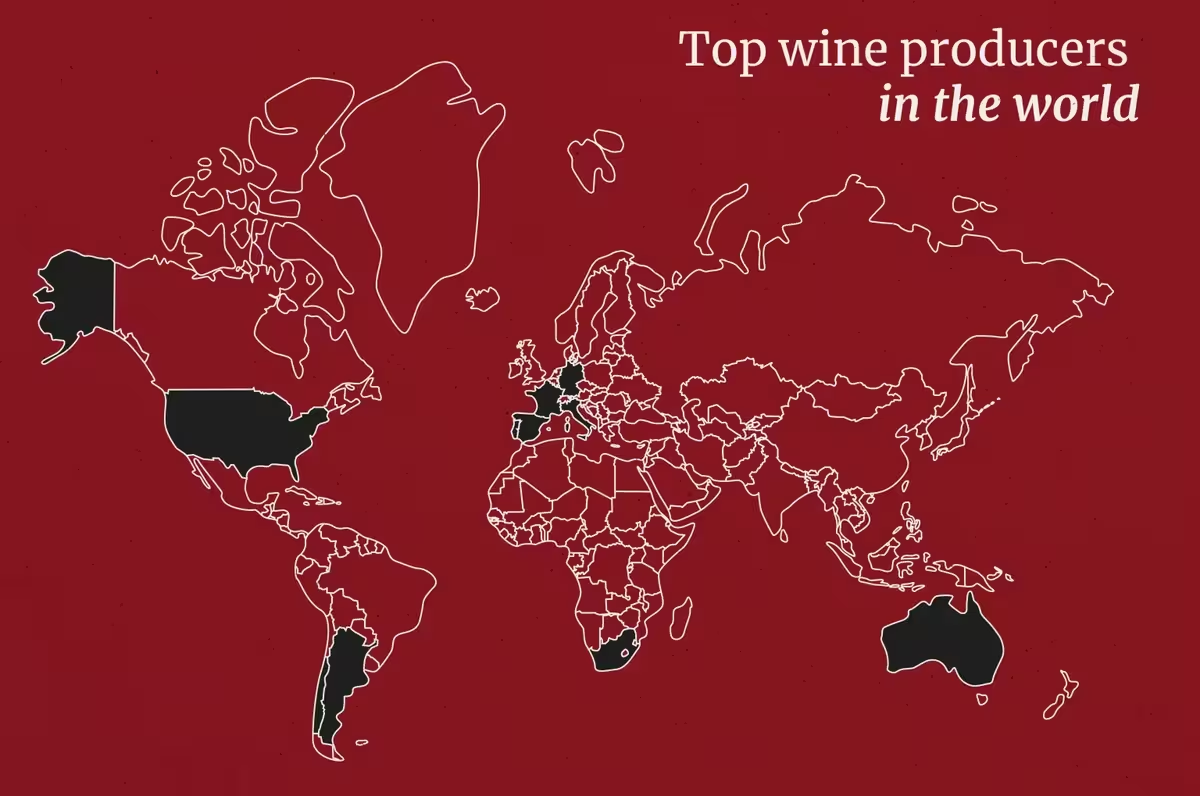
2.4 United States: The Power of the New World
The United States is the strongest representative of the New World, with California contributing the majority of its production.
The rise of American wine is closely linked to the “Judgment of Paris” in 1976. In this blind tasting, California Cabernet Sauvignon and Chardonnay defeated famous French icons, proving that world-class wine could be produced outside Europe. Unlike Europe, the United States manages wine regions through the AVA system, or American Viticultural Areas, which focuses on geographical boundaries while allowing greater creative freedom. American wines often have higher alcohol levels, intense fruit flavors and rich buttery, vanilla notes from oak barrels.
2.5 Australia: Technology and Shiraz
In 2025, Australia’s wine production is estimated to reach 11.6 million hectoliters, an 11% increase compared with the previous year. When people mention Australia, wine lovers immediately think of Shiraz. Australia’s Barossa Valley has preserved old Shiraz vines dating back to the 1840s because it was not devastated by the Phylloxera root-louse epidemic. Australian Shiraz is powerful and full-bodied, with intense aromas of black plum, blackberry and dark chocolate.
Australia’s strength also lies in night-time machine harvesting. This not only solves labor shortages, but also preserves the cool temperature of grapes, helping maintain natural freshness. In addition, Australia was also a pioneer in popularizing screw caps instead of traditional corks starting in 1964, helping preserve wine freshness for longer and making bottles more convenient for consumers.
2.6 Argentina: Power at High Altitude
Argentina’s 2025 production is estimated at 10.7 million hectoliters, maintaining its position as the largest wine-producing country in South America. Its core strength lies in vineyards planted at altitudes from 900 to 1,500 meters above sea level along the Andes Mountains, mainly in Mendoza.
The large temperature difference between day and night at this altitude helps the red grape Malbec develop perfectly: thick skins, deep color and smooth tannins combined with aromas of ripe plum and spicy notes. To farm in semi-desert conditions, producers use the ancient Acequias irrigation canal system, which channels pure meltwater from the snow-capped Andes, combined with modern drip irrigation technology.
2.7 Chile: An Oasis of the Wine Industry
Chile’s production is estimated at 8.4 million hectoliters in 2025. Chile is surrounded by the Andes Mountains, the Pacific Ocean, the Atacama Desert and the Patagonian glaciers, creating a biological “oasis” that has remained completely protected from the Phylloxera epidemic.
The most legendary story in Chilean wine is the revival of the Carmenere grape. Originally from France but extinct in Europe, Carmenere was mistakenly planted in Chile under the name “Merlot” for more than a century. It was not until 1994 that scientists discovered the truth. Today, Chile holds more than 97% of the world’s Carmenere vineyard area, producing bold wines with notes of green bell pepper, black pepper and red berries.
3. Why Do These Countries Lead in Wine Production?

The dominance of these 7 wine powers is no coincidence. It comes from the combination of the following factors:
- Terroir and climate advantages: Grapevines grow best between latitudes 30° and 50°. All 7 countries have this “golden belt” with cool winters and dry, warm summers, helping grapes accumulate the ideal levels of sugar and acidity.
- Clear winemaking philosophy: The Old World, including France, Italy and Spain, focuses on local identity, elegance and strict regulations. Meanwhile, the New World, including the United States, Australia, Argentina and Chile, emphasizes creativity, flexibility and scientific techniques to produce approachable, fruit-forward wines.
- Supportive policies: In Europe, the wine industry receives major government subsidies for vineyard restructuring and trade promotion. In the New World, growth is driven by free-market mechanisms and large-scale exports.
4. Current Global Wine Production Trends
The wine industry is entering a period of transition, with major trends shaping its future:
4.1 Adapting to Climate Change
Extreme weather events such as drought, frost and heatwaves are forcing growers to harvest earlier than before. Many producers are starting to move vineyards to higher altitudes, such as in Argentina, or to higher-latitude regions in search of cooler climates.
4.2 Organic Wine and Sustainability
New-generation consumers, including Millennials and Gen Z, are especially concerned about health and the environment. Organic wines and natural wines produced with minimal intervention and without chemicals are becoming increasingly popular. Certifications for sustainable farming and environmentally friendly packaging are also gaining more attention.
4.3 Drinking Less but Better
Consumers are following the principle of “premiumization”, meaning they are willing to spend more on high-quality wines with historical stories instead of buying large quantities of cheap wine. At the same time, the trend of low-alcohol and no-alcohol wines, also known as NOLO, is booming to support healthier lifestyles.
4.4 Perspective on the Vietnamese Market
In Vietnam, despite global fluctuations, the wine market continues to develop steadily and is expected to reach USD 1.67 billion by 2027. Drinking culture is gradually changing: instead of being used only at large banquets, young consumers and office professionals are increasingly enjoying wine at specialized wine bars, where they can experience refined spaces and receive detailed advice from sommeliers. New World wines from Australia and Chile are especially popular among Vietnamese consumers thanks to their bold, easy-drinking flavors and competitive prices supported by trade agreements.
Final Thoughts,
Becoming one of the countries that produces the most wine in the world requires the perfect combination of nature’s advantages, traditional heritage and modern technology. From Italy with its hundreds of native grape varieties, France with its famous concept of terroir, to the creative breakthroughs of the United States, Australia, Chile and Argentina, each country leaves a distinctive mark that cannot be confused with any other.
By understanding the characteristics of these 7 wine powers, you can confidently choose bottles that suit your taste and budget while fully exploring the artistry hidden in every glass of wine.