


 Tiếng Việt
For beginners, wine labels can look very complicated, filled with unfamiliar French, Italian or Spanish terms. The article below will help you decode the symbols on wine bottles in the simplest and easiest way to understand.
1. Why Is It Important to Understand the Symbols on Wine Bottles?
Many people choose wine based on attractive label design or price. However, understanding the symbols on wine bottles is the real “key” to choosing the right bottle.
A wine label is not only a tool for brand recognition. In the world of wine, the label works like a perfect “brief profile” with legal significance. It tells you exactly where the wine comes from, which grape variety it is made from, how it was aged and what quality level it belongs to. Decoding this information helps you imagine the wine’s flavor in advance, such as whether it is more or less acidic, full-bodied or delicate, while also helping you avoid paying the wrong price for the real value of the bottle.
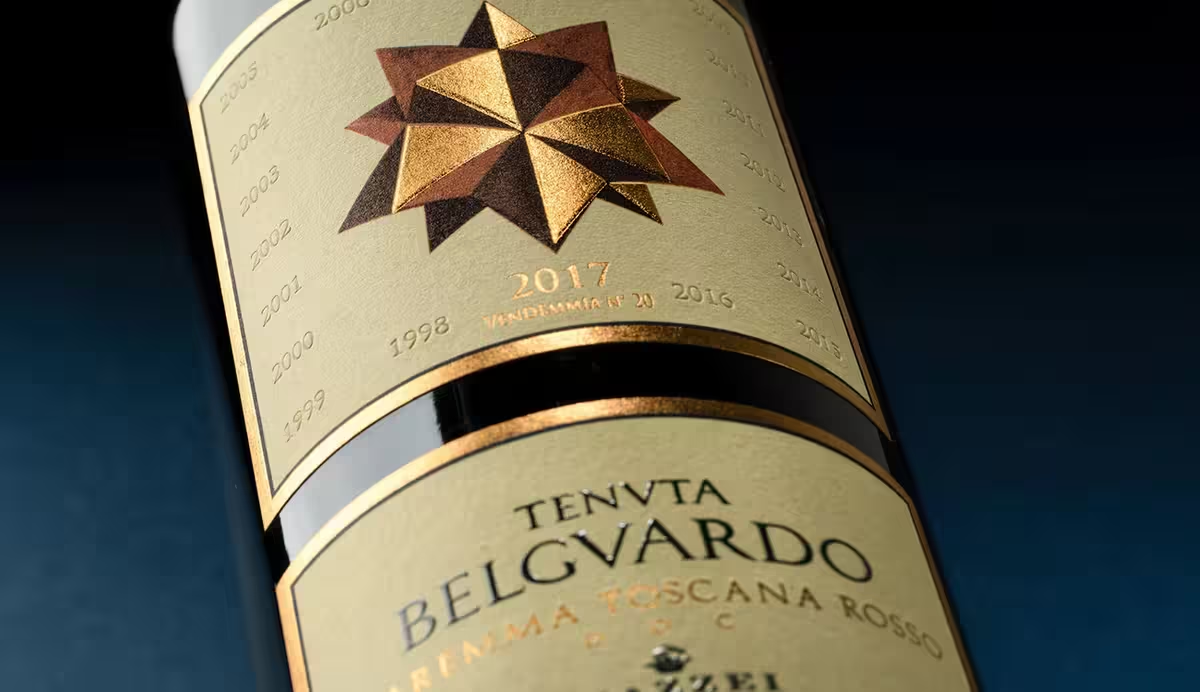
2. Two Common Wine Label Styles
Before going into detail, you need to understand a basic principle: the wine world is divided into two major schools, each with a completely different labeling philosophy.
2.1 Old World Wine: Focused on Region
The Old World includes countries with thousands of years of winemaking history, such as France, Italy and Spain. The climate in these regions is often cooler, allowing grapes to ripen slowly and creating wines that are refined, fresh in acidity and strongly expressive of their land, often with mineral character.
Old World wine laws are very strict. On the front label, producers rarely print the grape variety name, such as Cabernet Sauvignon or Merlot. Instead, they print the name of the wine region. When you see a regional name such as Bordeaux in France or Chianti in Italy, you are expected to understand that the wine is made from the traditional grape varieties of that region.
2.2 New World Wine: Focused on Grape Variety
The New World refers to countries with younger wine industries, such as the United States, Australia, Chile and Argentina. The climate in these regions is warmer and sunnier, helping grapes ripen faster and producing wines that are richer, higher in alcohol and bursting with ripe fruit flavors.
New World labeling is very friendly to new consumers. Producers usually print the grape variety clearly and prominently on the front label. If you enjoy Sauvignon Blanc or Pinot Noir, you can easily find the bottle you want without having to memorize a complex wine map.
> Quickly distinguish the two biggest wine schools in the world through this video!
3. Decoding Wine Label Terms and Symbols by Country
Each country has its own legal system and language. Below is a guide to decoding the most common symbols on wine bottles from the world’s leading wine-producing countries.
3.1 Symbols on French Wine Bottles
France is the cradle of wine law, so French wine labels provide a great deal of information about ranking and quality.
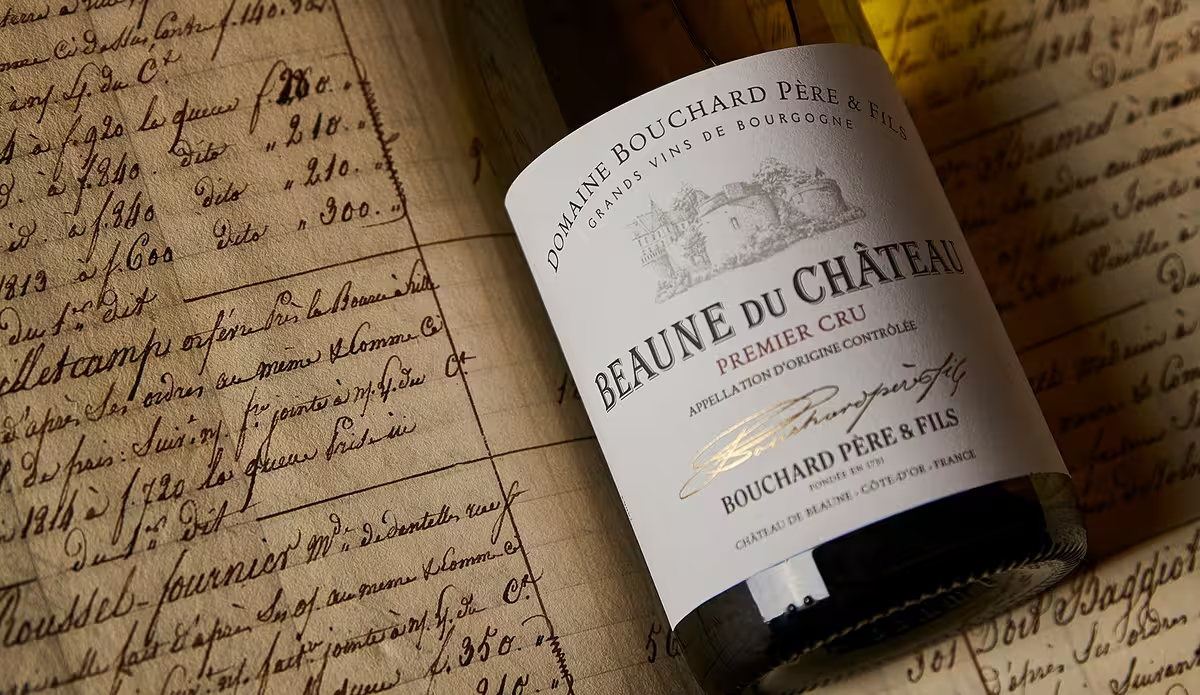
- Appellation d’Origine Contrôlée / Protégée (AOC/AOP): This is the highest classification for French wine. When you see AOC or AOP, you can be assured that the wine follows extremely strict government production rules, from vineyard area and yield to the grape varieties allowed. The smaller and more specific the place name on the label, such as a village name instead of a large region, the stricter the regulations and generally the higher the wine quality.
- Mis en Bouteille au Château / au Domaine / à la Propriété: This means “bottled at the estate/château/property”. It guarantees that the wine was harvested, fermented and bottled directly by the people who own the vineyard, without passing through any intermediate merchants. This is a strong sign of authenticity.
- Grand Vin de Bordeaux / Bourgogne: “Grand Vin” can be loosely translated as “great wine” or “top wine”. In Bordeaux, producers often use this term to proudly indicate that this is their finest and most carefully made wine.
- Cru / Grand Cru / Premier Cru: “Cru” refers to exceptional vineyards. “Premier Cru” means first-class vineyards with outstanding quality. At the very top is “Grand Cru”, a title reserved for rare and exceptional vineyard sites that produce expensive wines capable of aging for decades.
- Château / Domaine: Both refer to an estate or wine producer. “Château”, meaning castle, is commonly used in Bordeaux, where large noble estates are common. “Domaine” is more commonly used in Burgundy, where vineyards are often smaller and family-owned.
- Élevé en fûts de chêne: This tells you that the wine has been aged in oak barrels. This process helps make the wine smoother and adds attractive flavors such as vanilla, chocolate and toast.
3.2 Symbols on Italian Wine Bottles
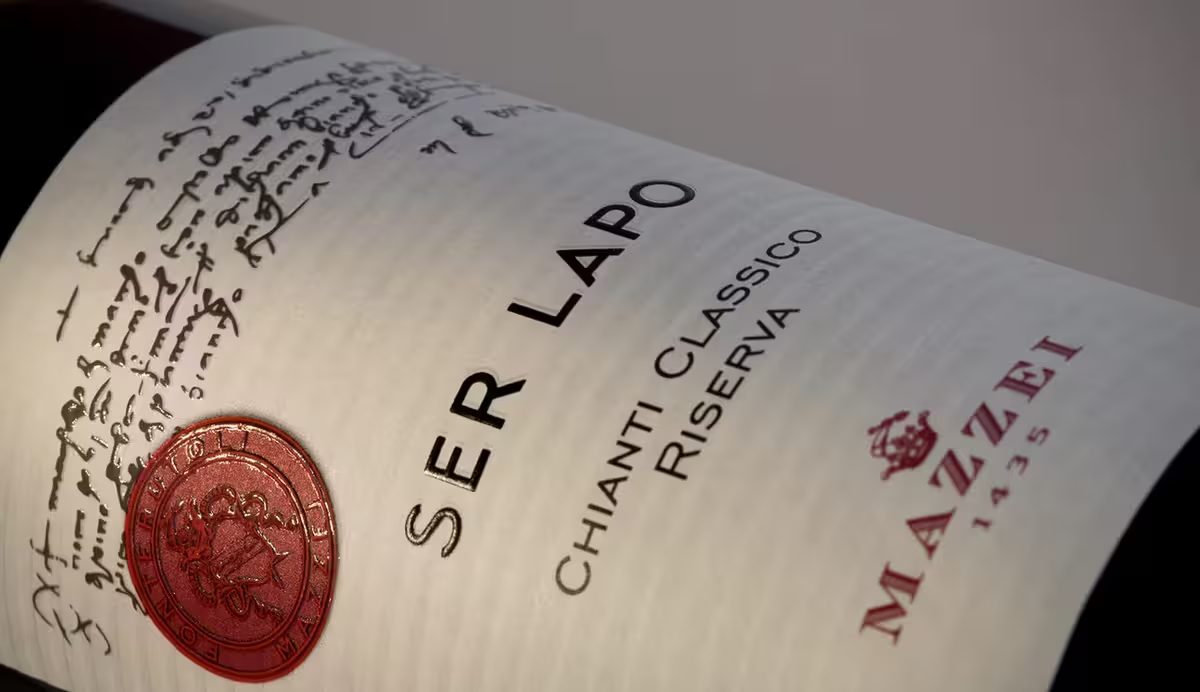
Italy has a pyramid-style quality classification system, closely connected to aging time.
- DOCG / DOC / IGT: These are the 3 main classification levels. IGT is a flexible level, allowing winemakers more freedom to blend international grape varieties. DOC is a high-quality level with regulations on growing region and grape variety. DOCG is the highest level, with “Garantita” meaning guaranteed. These wines must undergo strict tasting by a government expert panel and carry a seal on the bottle neck.
- Classico: When you see the word Classico, such as Chianti Classico, it means the grapes were grown in the central, historic core area of that wine region, which often produces the best grape quality.
- Superiore: This indicates wines with a slightly higher natural alcohol level than the standard, usually because the grapes were more carefully cultivated and ripened more fully.
- Riserva: This is a valuable term in Italy. It shows that the wine has been aged in the cellar for a longer period than usual, sometimes from 3 to 5 years depending on the region, before being released to the market. Italy does not use the term “Gran Riserva”.
3.3 Symbols on Spanish Wine Bottles
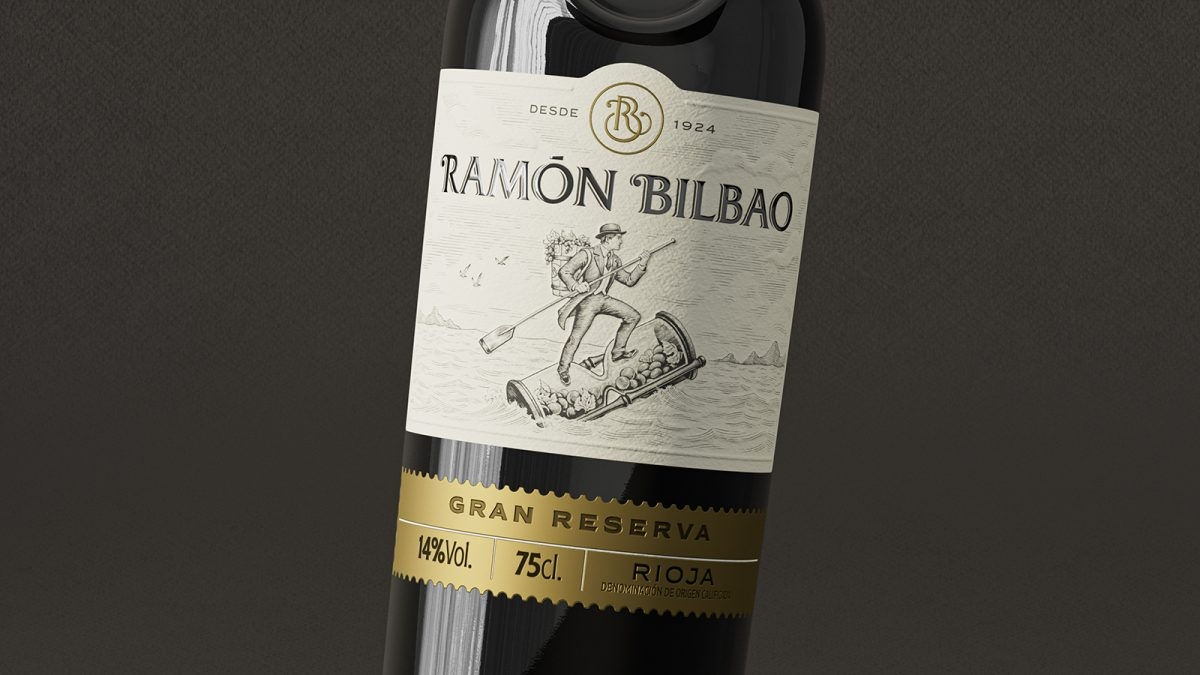
Spanish wine is famous for patient aging in oak barrels. Therefore, the symbols on Spanish wine bottles mainly focus on aging time.
- DO / DOCa: Similar to France and Italy, these are origin certifications. DO refers to a protected quality wine region. DOCa is the highest level, and currently only 2 Spanish regions hold this title: Rioja and Priorat.
- Crianza / Reserva / Gran Reserva: These are 3 aging levels:
- Crianza: Red wine aged for at least 2 years, including at least 1 year in oak barrels.
- Reserva: Wine aged for at least 3 years, with at least 1 year in oak barrels and the remaining time in bottle.
- Gran Reserva: The peak of patience. The wine is aged for at least 5 years, including at least 18 months in oak barrels. Gran Reserva wines are extremely mellow, smooth and complex in flavor.
3.4 Symbols on Chilean and Argentinian Wine Bottles
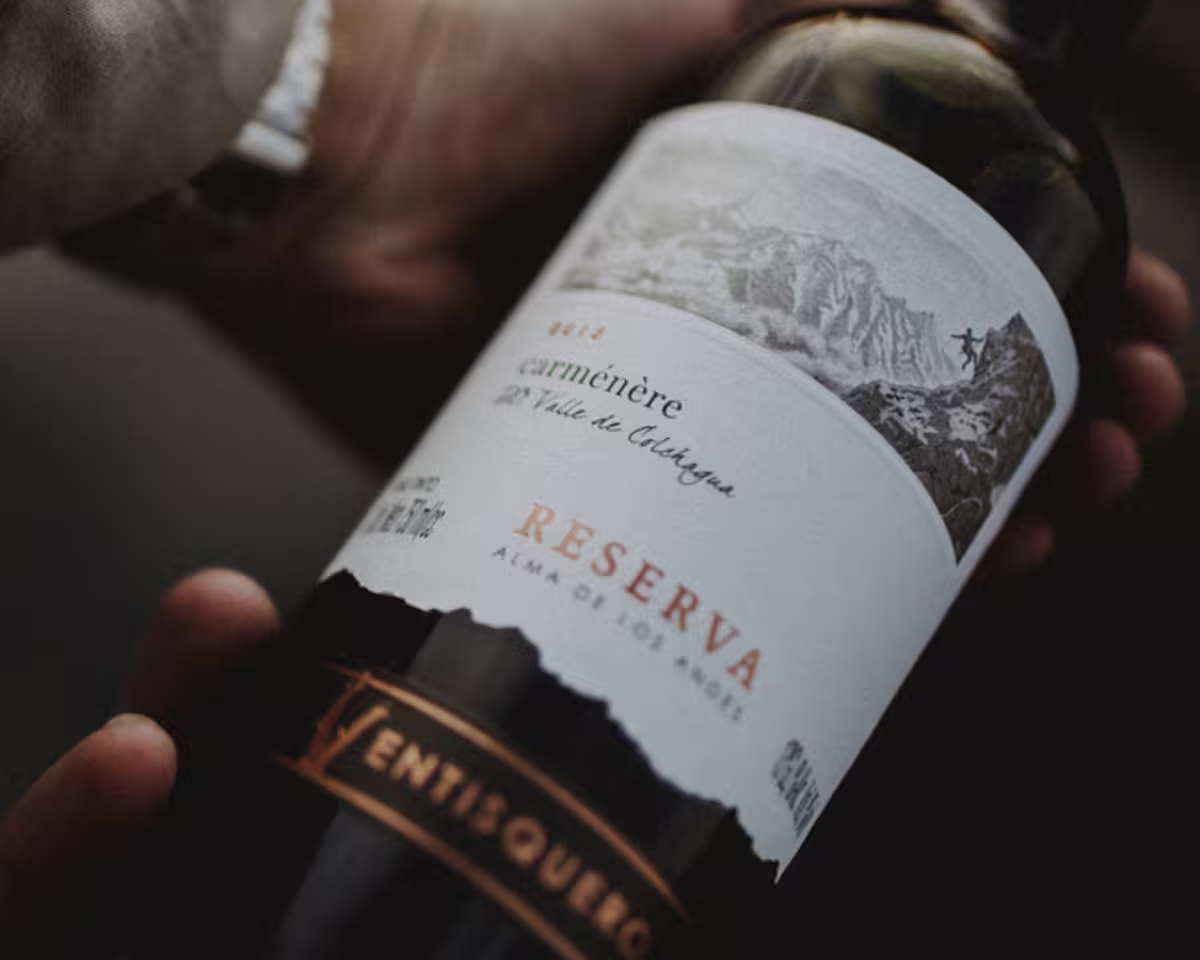
As outstanding representatives of the New World, Chile and Argentina usually use easy-to-understand labels, but you should pay attention to their use of the term “Reserva”.
- Reserva / Gran Reserva: Unlike Spain, where these terms are strictly regulated by law, Reserva in Chile or Argentina usually represents an internal quality tier set by each winery. In general, South American Reserva wines are often aged in oak for around 6-8 months to add smoothness. Gran Reserva is a higher-level line, often made from older vines and aged in oak for a longer period, around 12 to 18 months.
- Estate Bottled: This means that 100% of the grapes used to make the wine must be harvested from vineyards owned and managed by the winery itself. This helps ensure consistent quality and avoids reliance on grapes purchased from outside sources.
3.5 Symbols on American and Australian Wine Bottles
The United States and Australia combine modern creativity with respect for terroir, resulting in very practical label terms.
- AVA (American Viticultural Area): This is the vineyard region system used in the United States. When an AVA name appears on the label, such as Napa Valley, the law requires that 100% of the grapes used to make the wine must be grown within that valley’s boundaries.
- Estate Bottled / Single Vineyard / Old Vines:
- Estate Bottled: Similar to Chile, this means the wine is bottled at the estate.
- Single Vineyard: A highly prestigious term. It means all grapes were harvested from a single vineyard instead of being blended from several different vineyards. The flavor reflects the unique and authentic character of that specific small plot of land.
- Old Vines: This term is especially famous in Australia, particularly with the Old Vine Charter in Barossa Valley. The older the vine, from around 35 years old to even more than 125 years old, the lower the yield. In return, the roots reach deep into the soil and absorb more minerals, producing grapes of exceptional concentration. “Old Vines” wines often have deep color, explosive flavor and a long, unforgettable finish.
4. Quick Tips for Reading Wine Labels
When holding a bottle of wine, check the following:
- Country / region
- Grape variety or region name
- Classification level, such as AOC, DOCG or Reserva
- Vintage, or harvest year
- Special terms, such as Oak, Estate or Single Vineyard
With this approach, you can understand most of the bottle in just 10-15 seconds.
Final Thoughts,
The world of wine is vast and fascinating. Understanding the symbols on wine bottles is like learning a new language in the world of wine. Instead of choosing wine based on instinct, you can now confidently pick up a bottle, understand its origin, recognize the methods used by the winemaker and imagine the flavors waiting inside the glass. Wishing you the joy of discovering the wines you love most and many wonderful tasting experiences.