


 Tiếng Việt
When you step into wine shops or wine cellars, you will easily come across the familiar image of standard 750ml wine bottles. However, besides this popular size, wine bottles also come in many fascinating versions – from compact bottles such as Piccolo 187.5ml to the giant Maximus 130L. Join Hedon as we explore interesting knowledge about wine bottle sizes and the shapes of different wine bottles in the article below.
1. What Does Wine Bottle Size Mean?
Throughout the wine production process, including aging, fermentation, oxidation and storage, measurements such as bottle height, width and volume all affect the final wine quality. Winemakers have found that: The larger the wine bottle, the better its ability to store and develop flavor. In larger bottles, the exchange of gas between wine and air happens more slowly. This helps wine develop more complex and stable flavors compared with smaller bottles.
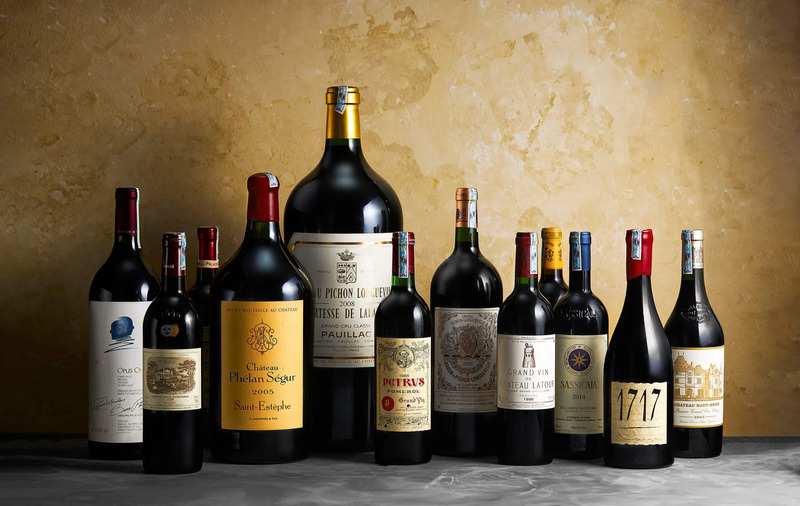
In addition, wine bottle size also helps optimize display and storage. Larger wine bottles are often used for elegant parties. In restaurants, most large-format wine bottles are used for decoration. In contrast, smaller bottles are convenient, easy to carry and suitable for everyday drinking or gifting.
For wine lovers, owning a collection of wine bottles in different sizes not only reflects personal aesthetic taste but also creates a highlight in the display space and expresses sophistication.
2. The Origin of the 750ml Wine Bottle Size
There are many theories surrounding the origin of the 750ml wine bottle size. One of them is related to human lung capacity. Before bottles were made automatically by machines in the 18th century, glass bottles were produced by hand-blowing. Each breath could create an average air volume of 650-800ml. Therefore, the 750ml bottle size was considered reasonable and easy to produce.
However, in reality, the standard 750ml wine bottle originated from the trade history between England and France. Although wine is considered to have its origins in France, England had a decisive influence on wine bottle size. In the 19th century, France used liters as the unit of measurement for liquids, while the United Kingdom used another measurement unit: the gallon, 1 gallon = 4.546 liters. This made conversion between the two countries inconvenient.
At that time, the United Kingdom was the main importer of French wine. To avoid calculation errors in import and export, merchants from both countries reached an agreement. They standardized the use of 225-liter oak barrels, about 50 gallons, for transporting wine. Since 225L of wine could be divided into 300 equal portions of 750ml, merchants established this intermediate volume as 750ml to facilitate trade between France and the United Kingdom. This is why the standard 750ml wine bottle size was born and gradually became an international norm.
3. Standard Wine Bottle Sizes
To distinguish wine bottle sizes, people use the names of biblical kings to name them. Below is a list of the most common wine bottle sizes today:
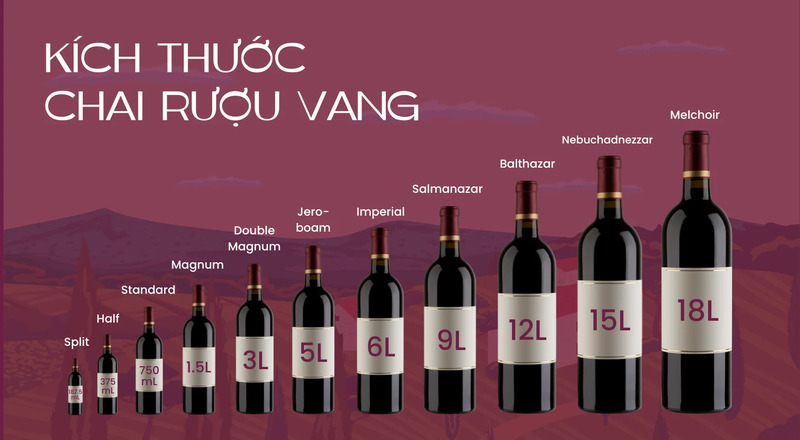
- Piccolo or Split, 187.5ml: Equal to 1/4 of the standard size, often used for a single serving of Champagne
- Demi or Half, 375ml: Equal to 1/2 of the standard size
- Standard, 750ml: The most common bottle size for most distributed wines
- Magnum, 1.5L: Equivalent to two standard bottles
- Double Magnum, 3.0L: Equivalent to two Magnums or four standard bottles
- Jeroboam, 4.5L: Equivalent to six standard bottles. For sparkling wine, one Jeroboam is 3 liters
- Methuselah or Imperial, 6.0L: Equivalent to eight standard bottles or two Double Magnums. Imperials have a shape similar to a standard wine bottle and are used for red or white wine. Methuselah is usually reserved for Champagne or sparkling wine and comes in a bottle with sloping shoulders similar to a Burgundy bottle
- Salmanazar, 9.0L: Equivalent to twelve standard bottles or one full case of wine
- Balthazar, 12.0L: Equivalent to sixteen standard bottles or two Imperials
- Nebuchadnezzar, 15.0L: Equivalent to 20 standard bottles
- Melchior, 18.0L: Equivalent to 24 standard bottles
In addition, there are many lesser-known special bottle sizes such as Solomon, 20L, Sovereign, 25L, Primat or Goliath, 27L, Melchizedek or Midas, 30L, and Maximus, 130L.
4. Differences in Wine Bottle Shapes
Besides volume, wine bottle shapes are also highly diverse, reflecting the style of a production region or a specific type of wine. Today, there are hundreds of wine bottle shapes with minor or major differences. In general, there are several main bottle shapes:
4.1 Bordeaux Wine Bottle Shape

- The traditional Bordeaux bottle shape
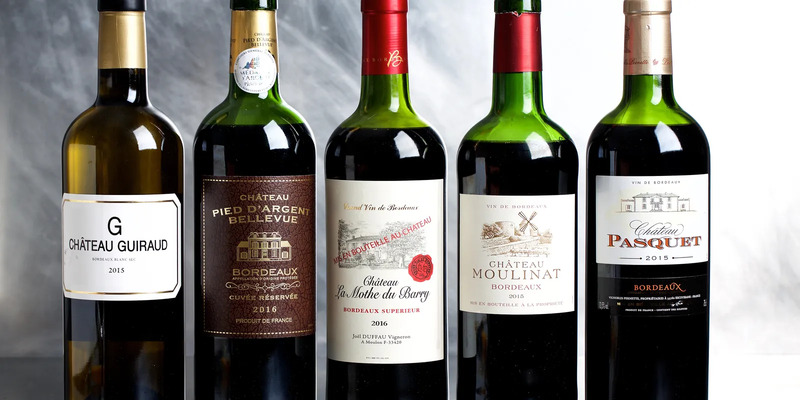
The Bordeaux bottle is the most common standard bottle type, created in France in the early 1700s. Its main characteristics are a short neck, straight shoulders and a long body that runs evenly down to the base. It is believed that the straight shoulders help retain sediment better when wine is poured into a glass. The deep punt at the bottom adds strength to the bottle structure and makes wine stacking easier.
4.2 Burgundy Wine Bottle Shape

- The traditional bottle shape of Burgundy and the Rhône Valley
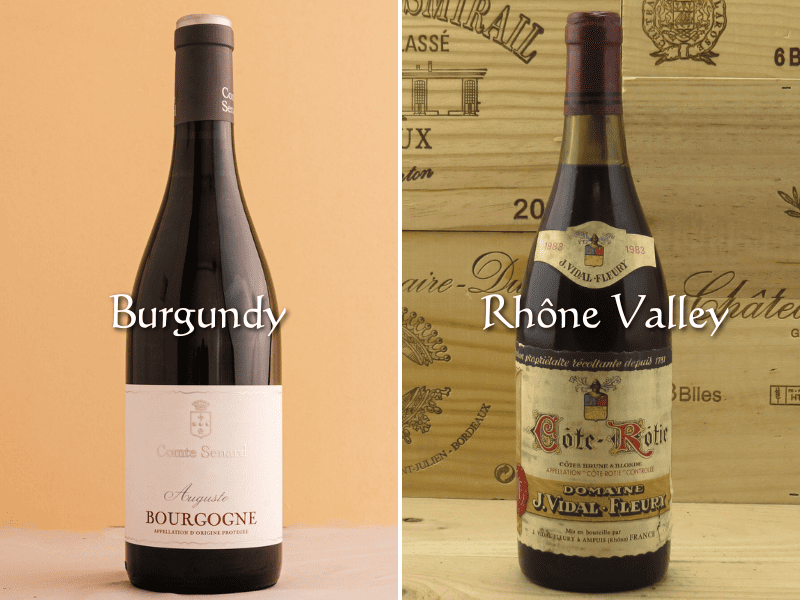
The shape of the Burgundy bottle resembles a pear. Its base is wider than a Bordeaux bottle, and its shoulders are longer and more sloped. Most wines that are aged for a long time in oak barrels use this bottle shape. Pinot Noir, Gamay and Chardonnay are typical examples. The Burgundy bottle has a variation called the Rhône bottle, used for red grape varieties such as Syrah and Grenache, with a similar style but a slimmer lower body.
4.3 Alsace Wine Bottle Shape

- The traditional flute bottle shape in Alsace
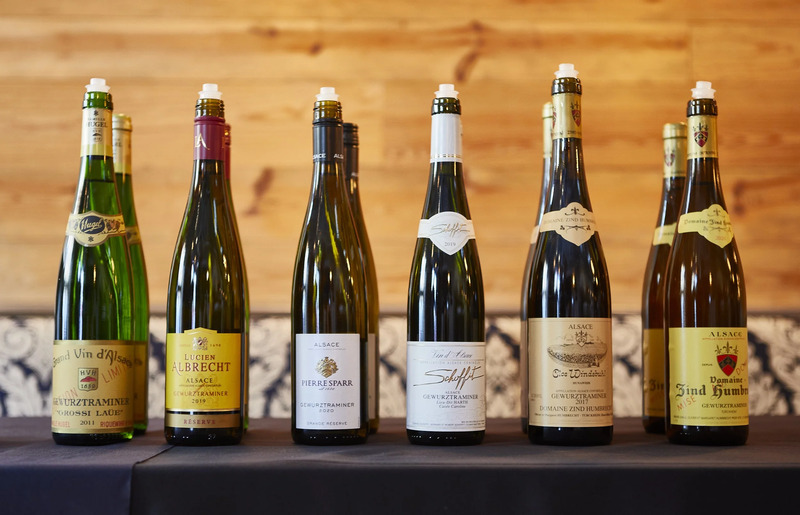
The Alsace bottle stands out with its long neck and small base. This unique shape was likely created around the 1800s. Its elongated shape makes it easier to store and helps it stand out from other bottles in wine shops. Some German and Alsatian bottles vary in size from the neck to the base, although the amount of liquid inside remains the same. Bottle colors can also vary greatly, from clear glass to mixed shades of green, brown, blue and more.
4.4 Champagne Wine Bottle Shape

- The beautiful Champagne bottle shape from Duval Leroy
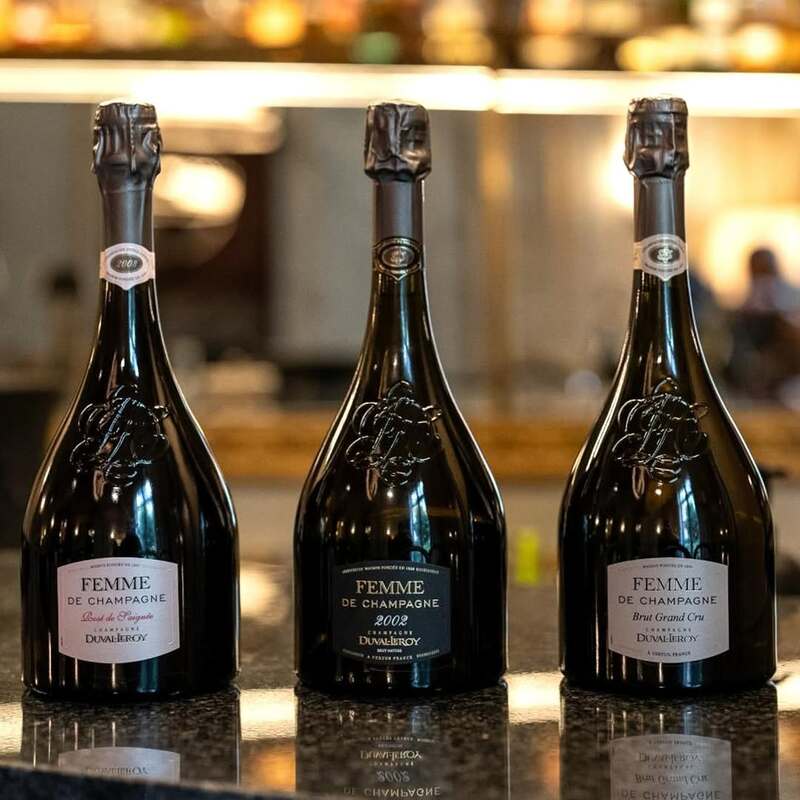
The Champagne bottle has a pear-like shape that is somewhat similar to Burgundy bottles. However, it has thicker glass, gently sloping shoulders and a deep punt at the base to withstand pressure of up to 80-90psi inside the bottle. Some Champagne producers such as Duval Leroy, Canard Duchêne, Krug, Dom Perignon, Feuillatte Palmes d’Or and others have created and patented their own Champagne bottle shapes to make their products stand out.
>>> Learn more about Duval Leroy, one of the most influential brands in Champagne and around the world!
4.5 Clavelin Wine Bottle Shape, Vin Jaune
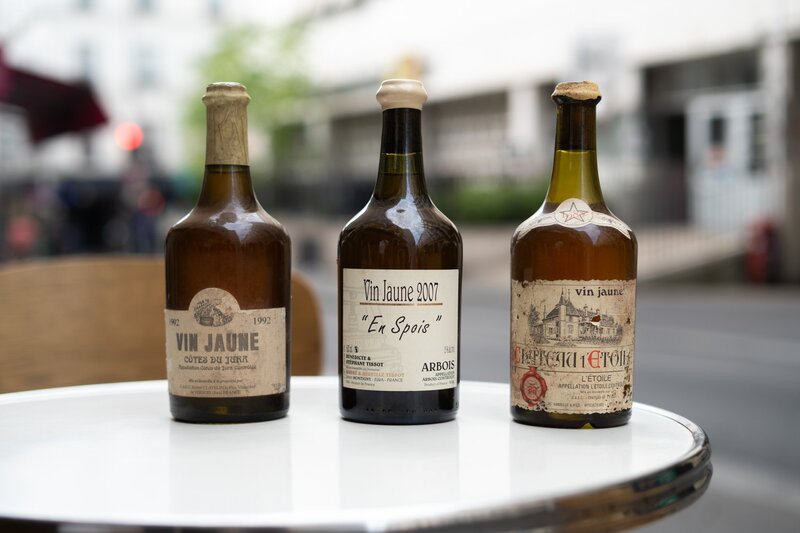
The Vin Jaune bottle, also known as Clavelin, has a capacity of 62cl, which represents the remaining wine after one initial liter of Savagnin has gone through aging. The portion of wine that evaporates during this process is called “the angels’ share”, or la part des anges, a sacred-sounding term in winemaking. This evaporation not only reduces the amount of wine, but also plays an important role in creating the distinctive flavor and complexity of Vin Jaune. It is a testament to the meticulous winemaking tradition of the Jura region.
4.6 Provence Wine Bottle Shape
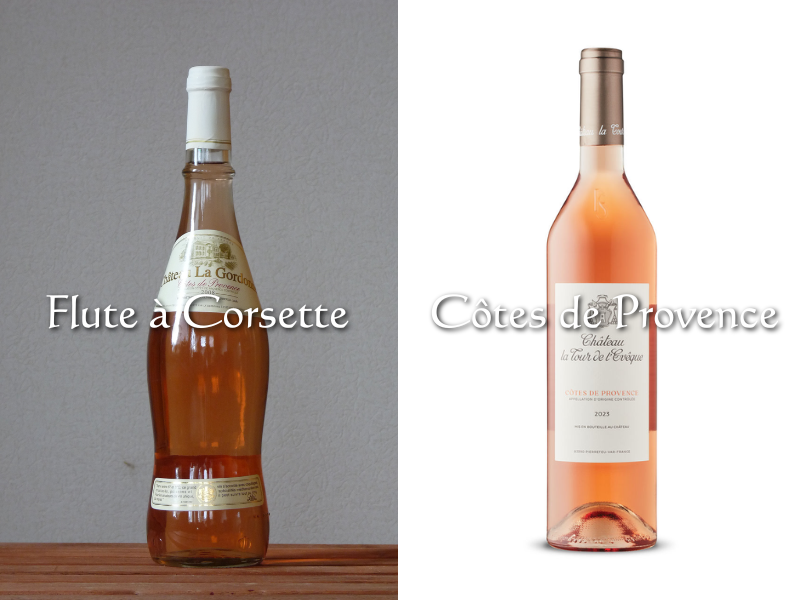
In Provence, France, a region famous worldwide for its rosé wines, two main wine bottle shapes are used. The first is the “flûte à corset”, with a tightened base that imitates the curves of a corset. The second is the “côtes de Provence” bottle, with a more upright shape similar to a funnel. This bottle style is closer to the Bordeaux bottle shape.
Final Thoughts,
Hopefully, through this article, you now have a more complete view of wine bottle sizes, from compact versions to giant bottles, as well as the unique differences in bottle shapes. Understanding wine bottles not only helps you choose the right bottle for your purpose, but also enhances your experience when enjoying, storing or collecting wine.
To choose a wine bottle with the right size and shape for your needs, feel free to contact Hedon for more detailed advice.