


 Tiếng Việt
Have you just bought a good bottle of wine and are looking for how to store wine for a special occasion? Or do you simply want last night’s unfinished bottle to still taste good tomorrow?
This guide will share every wine storage secret in the simplest and easiest way to understand, so you can confidently care for your beloved bottles, even if you are just getting started.
1. How to store wine before opening
To keep a bottle of wine in its best condition, you only need to remember the following 6 golden rules. These are extremely important factors that directly affect the health of a bottle of wine.
1.1. Keep the temperature moderate
This is the most important factor, like the “heartbeat” of a bottle of wine.
- Suitable temperature: The ideal temperature range for storing wine is from 10°C to 18°C. The perfect number often mentioned by experts is 13°C, the temperature of underground wine cellars in France.
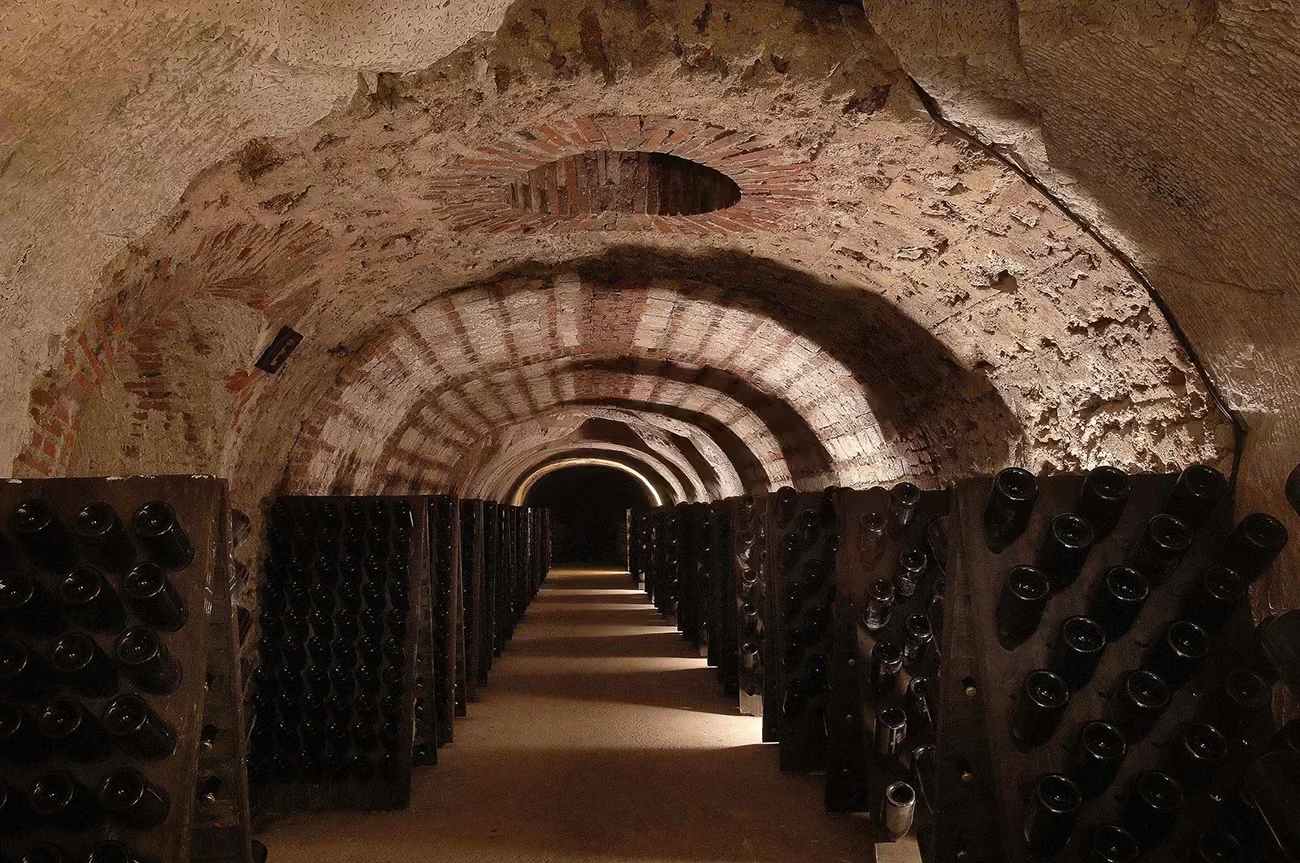
- The danger of heat: High temperatures, above 20°C, are wine’s “number one enemy”. Too much heat will “cook” the wine, destroying its fresh fruit flavors and making it taste like overcooked fruit jam. A bottle kept at 35°C – 40°C can be ruined in just a few days. An easy sign to notice is that the wine will turn brown.
- The danger of cold: Excessive cold, below 4°C, is also not good for long-term storage. It puts the wine into “hibernation” and stops its development. If it gets too cold, the wine may freeze and push the cork out. Cold also causes the cork to shrink, creating gaps for air to enter.
- Stability above all: More important than an exact number is keeping the temperature stable. Fluctuating temperatures cause the bottle and the wine inside to constantly expand and contract, loosening the cork and allowing air in, which causes oxidation. Ideally, daily temperature changes should not exceed 1.6°C.
1.2. Avoid direct light
- The darkness rule: Store wine in the darkest place possible, away from sunlight and even fluorescent light.
- Ultraviolet rays (UV) in sunlight are the culprit. They attack and break down the wine’s delicious flavor structures. This phenomenon is called “light strike”.
- The consequence: Wine affected by “light strike” will develop very unpleasant aromas, similar to wet wool or damp cardboard.
- How to protect it: Damage can happen very quickly. A clear bottle of wine may be ruined after only 3 hours in the sun. That is why most wine bottles have dark-colored glass, such as green or brown, to protect the wine inside. White wine is usually more vulnerable than red wine. If you do not have a dark storage place, simply wrap the bottle in a cloth or keep it in a cardboard box.
1.3. Keep humidity at a high level
- Ideal humidity: The suitable humidity level is from 50% to 80%, with 70% being ideal.
- Why is it important? Humidity helps keep natural corks from drying out. If the environment is too dry, the cork shrinks and creates gaps. Then air – wine’s enemy – enters the bottle and damages the wine.
- Too much humidity is not good either: On the other hand, if humidity is too high, above 80%, mold may grow and damage the label, affecting the value of precious bottles.
1.4. Store cork-sealed wine bottles horizontally
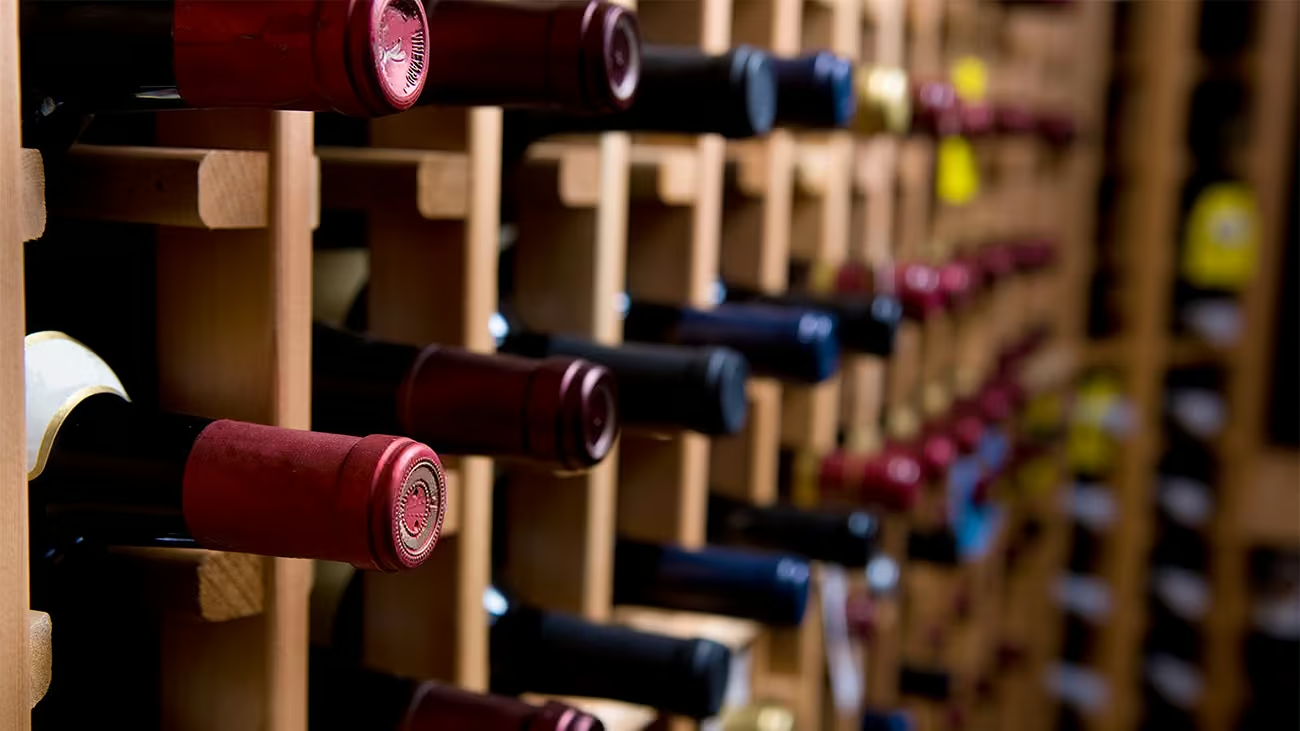
- General rule: For bottles sealed with natural cork, always store them horizontally.
- Reason: When lying horizontally, the wine stays in contact with the cork, keeping it moist and expanded so it seals the bottle tightly. If you store the bottle upright for too long, the cork may dry out and air can enter, damaging the wine.
- Additional benefit: For old wines, storing bottles horizontally helps sediment settle along one side, making it easier to pour clearer wine into the glass.
- Exceptions:
- Screw caps: If your wine bottle uses a metal screw cap or synthetic cork, you can store it either upright or horizontally.
- Sparkling wine (Champagne, Prosecco…): There is an interesting debate here. Many experts recommend storing these bottles upright. The reason is that the internal gas pressure is enough to keep the cork moist. Upright storage also helps preserve the bubbles better.
1.5. Ensure stillness and limit vibration
- Wine needs peace: Wine likes to “rest” in a quiet place without vibration.
- Why is that? Continuous vibration can disturb the wine’s “maturation” process. Especially with old wines, vibration stirs up sediment, making the wine cloudy and less pleasant to drink.
- Avoid: Do not place wine near washing machines, dryers, refrigerators, loudspeakers or high-traffic areas.
1.6. Keep the air clean: Stay away from strange odors
- Corks can “breathe”: Natural cork has tiny pores, allowing it to “breathe” and absorb odors from the surrounding environment.
- Where should wine be stored? Keep wine away from strong-smelling items such as paint, chemicals, garlic, onions and especially strongly scented foods such as cheese or fish sauce. The kitchen is a very poor place to store wine for this reason.
- Ventilation: The storage area should also be well ventilated to avoid musty odors.
These six principles are closely connected. Temperature, humidity, bottle position and air quality all revolve around protecting the “gatekeeper”, the cork. Once you understand this, wine storage becomes logical and simple.
2. How to store wine after opening
Once you open a bottle of wine, the battle with air begins. Here is how to win that battle and keep the remaining wine tasting good for the next few days.
2.1. Limit wine exposure to oxygen
Once opened, air containing oxygen enters the bottle and begins the oxidation process, turning fresh fruit flavors into vinegar-like or bruised-apple aromas. Every method for storing opened wine has the same goal:
to minimize the wine’s contact with air as much as possible.
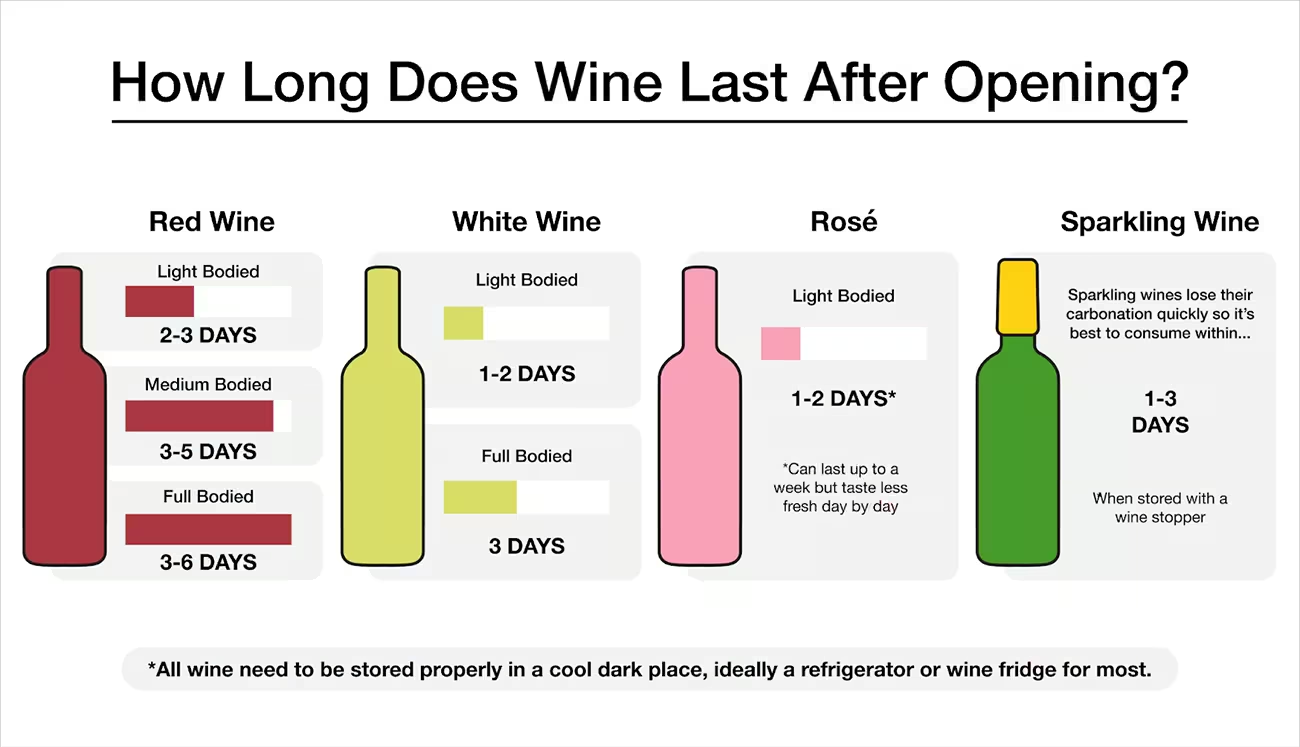
Table: How long does opened wine last?
| Wine type | Recorked & refrigerated | Using a vacuum pump | Using inert gas |
| Sparkling wine | 1 – 2 days | Not recommended | 2 – 3 days |
| Light white wine/rosé | 3 – 5 days | 5 – 7 days | Up to 10 days |
| Full-bodied white wine | 2 – 4 days | 3 – 5 days | Up to 7 days |
| Light red wine | 2 – 3 days | 3 – 5 days | Up to 7 days |
| Full-bodied red wine | 3 – 5 days | 5 – 7 days | Up to 10+ days |
| Fortified wine (Port) | 2 – 4 weeks | Not needed | Not needed |
4.2. Guide to storing wine after opening
- Good (Basic method): Recork and put it in the refrigerator. This is the simplest method. Seal the cork tightly and place the bottle in the refrigerator immediately. Remember to keep the bottle upright to reduce the surface area of wine exposed to air.
- Better (Reduce the amount of air):
- Transfer to a smaller bottle: Pour the remaining wine into a smaller bottle, such as a 375ml bottle with a screw cap. This method is very effective and inexpensive because it significantly reduces the amount of air in the bottle.
- Use a vacuum pump: This tool helps remove some air from the bottle. However, some people believe it may unintentionally remove part of the wine’s aroma.
- Best (Completely remove air contact):
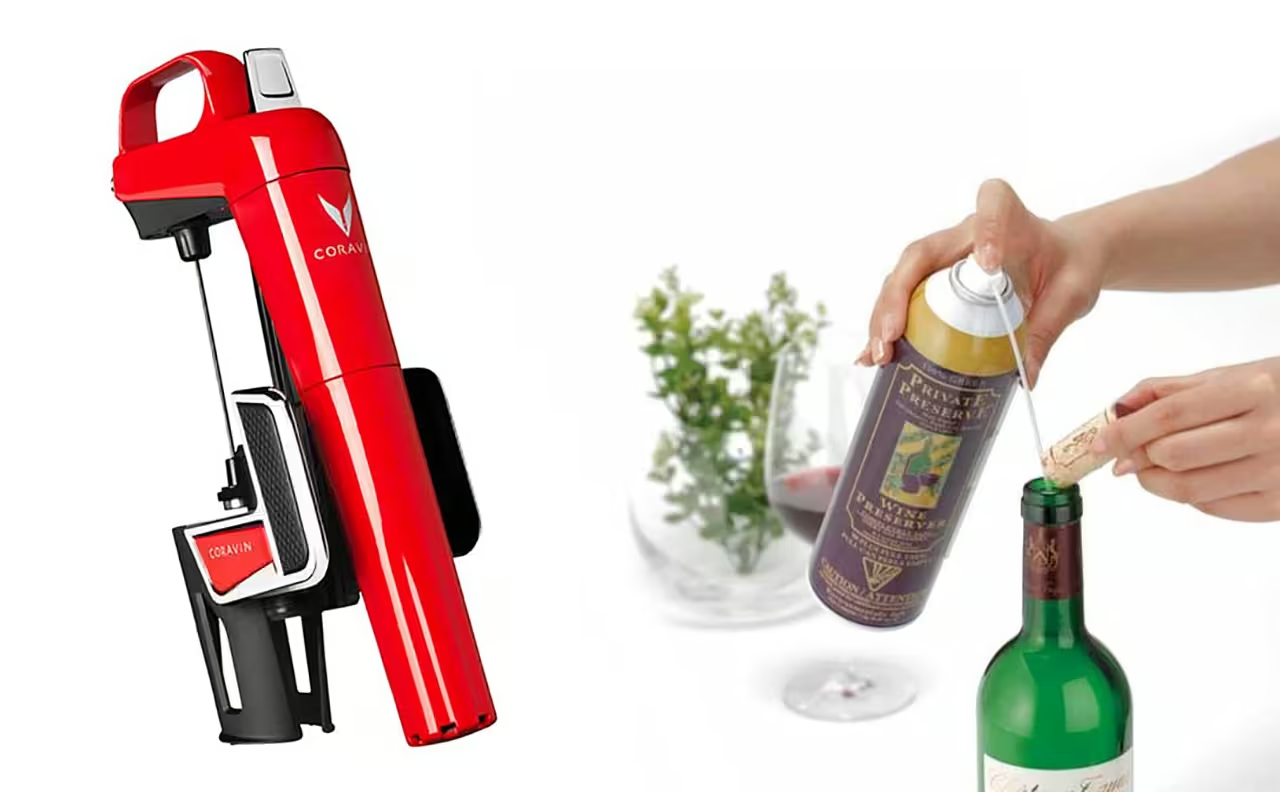
- Use inert gas: This is considered the “gold standard”. You spray an inert gas, usually Argon, into the bottle. This gas is heavier than air, forming a protective layer on the surface of the wine and completely preventing oxygen contact.
- Use a Coravin device: A high-tech device that uses a small needle to pass through the cork and pour wine without removing the cork. At the same time, it injects Argon gas to fill the empty space. This allows you to enjoy a glass of wine while preserving the rest of the bottle for months, or even years.
A small tip: some young, full-bodied red wines may taste better on the second day after opening, because a little initial oxidation helps soften tannins and open up the wine’s flavors.