


 Tiếng Việt
Choosing wine becomes much easier when you understand how to read wine labels, especially if you are a beginner. Do you often read wine labels when shopping? Learn how to understand the important information on a bottle label so you can choose the perfect wine for a romantic dinner, a party with friends or simply for enjoying on your own. Read this article now to master how to read wine labels.
1. Mandatory Information on Wine Labels
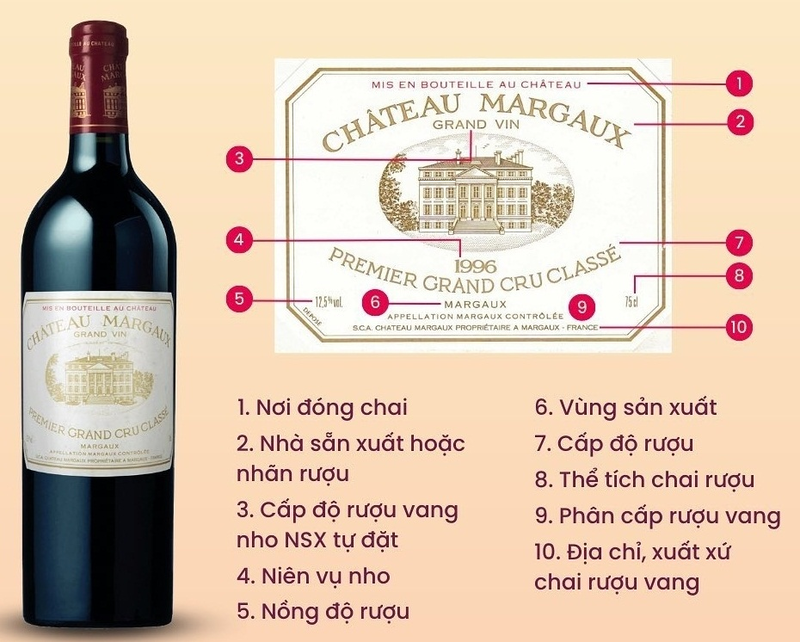
Before getting started, note that you will find useful information in two places on a wine bottle: the front label, on the front of the bottle, and the back label, on the back of the bottle. The front label is usually designed to stand out and attract buyers, showing basic information such as brand name, producer, region, grape variety and vintage.
Meanwhile, the back label provides more detailed information, including alcohol content, ingredients, country of origin, producer or importer information, and sometimes flavor descriptions, serving suggestions or related certifications such as organic or biodynamic. Both wine bottle labels help buyers better understand the bottle they are choosing.
2. How to Read Wine Labels: Basic Information on the Front Label

-
Producer/Name, Producer or Wine Name
One of the first pieces of information you will see on the bottle label is the name of the wine producer. This information is very important because each producer has its own style and unique winemaking secrets, creating differences in their products.
-
Region, Area or Country
When you look at a wine label, information about the production region not only tells you where the grapes were grown, the country and specific region, but also reflects the wine’s quality and value. Understanding the production area helps consumers easily recognize the style and characteristics of each bottle.
For example, wines from specific regions such as Bordeaux, France, Burgundy, France, Chianti, Italy, or Rioja, Spain, often have higher value thanks to the region’s distinctive climate, soil and winemaking style.
-
Variety/Appellation, Grape Variety or Classification
In New World wine-producing countries, the grape variety is often written directly on the label, such as Cabernet Sauvignon or Chardonnay, making it easier for consumers to imagine the wine’s flavor. Meanwhile, in Old World countries, wine labels often do not list the grape variety. Instead, they show the wine classification, such as AOC in France or DOCG in Italy, which ensures high quality and wine origin.
The standardized origin designation, or Appellation, on a wine label indicates the production region and guarantees wine quality according to strict regulations. Appellation helps identify the geographic production area, designations such as AOC, IGP and VDP in France, DOC and DOCG in Italy, or DO in Spain, as well as specific production processes. It reflects environmental characteristics such as climate and soil that influence wine flavor, while also certifying the quality and reputation of the wine.
>> Learn more AOC – The secret behind France’s prestigious wine classification
-
Vintage, Grape Harvest Year
The vintage on a wine bottle label tells you the year the grapes were harvested, which affects the quality and flavor of the wine. Vintage reflects the weather conditions of that year, helping determine the wine’s quality and distinctive character. Wines from good vintages often have high quality, while unfavorable vintages may affect the flavor and development of the wine.
However, showing the vintage is not mandatory, because not every wine has a vintage, such as many Champagnes or bottles from New World countries that blend grapes from multiple vintages, such as Chile or the United States.
-
Alcohol by Volume, Alcohol Content
Alcohol content, ABV, in wine can help you better understand the richness and sensation that the bottle brings. It is shown on the wine label as a percentage, %vol, ranging from 6% to 15% depending on the country and production style. Higher alcohol content, usually 13% and above, often appears in wines made from fully ripe grapes with high sugar levels, because during fermentation, this sugar is converted into alcohol. Light sweet wines usually have lower ABV because fermentation has not converted all grape sugar. In addition, the alcohol content of wine also depends on the production process and legal regulations of each country.
3. How to Read Wine Labels: Information on the Back Label
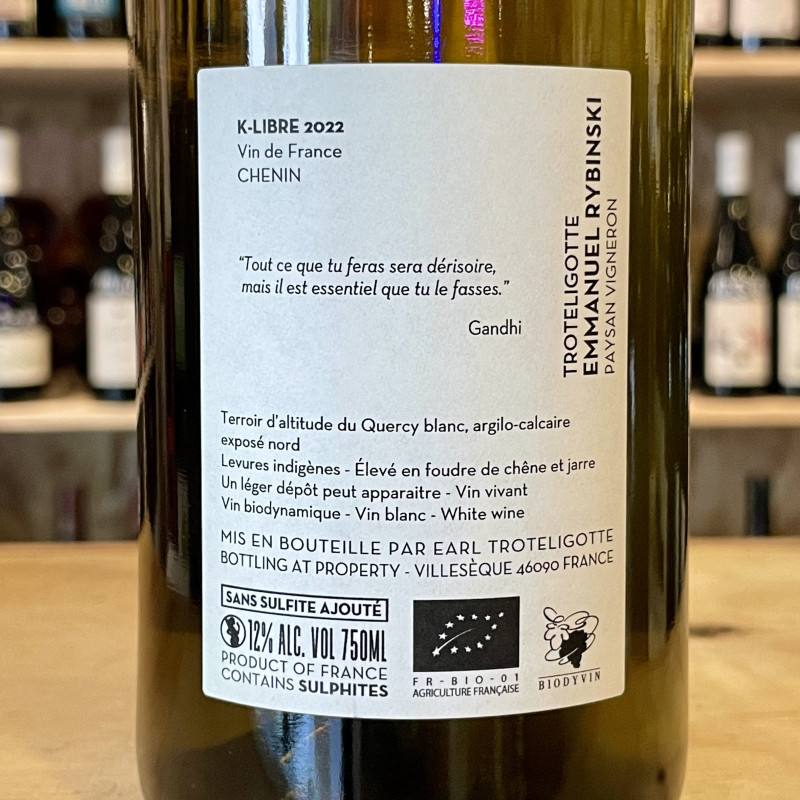
The back label of a wine bottle provides many important details you need to know in order to understand the quality and characteristics of each bottle.
- Grape variety
If the wine is made from a single grape variety, monocépage, the back label will clearly state that grape variety, such as Merlot, Syrah or Chardonnay. If it is a blended wine, vin d’assemblage, the back label will list the grape varieties used in order from highest to lowest proportion. For example, if the label says “Sauvignon Blanc – Sémillon”, it means Sauvignon Blanc makes up the larger share of the blend.
- Short description of the wine
The back label often provides detailed information about the wine’s flavor, helping you easily identify the characteristics of the bottle. Examples include red fruit notes, white fruit notes, tannin, dried fruit aromas and more. Some bottles also provide food and wine pairing suggestions.
- Mandatory information on the back label of a wine bottle
The back label also contains legally required information that must appear on a bottle of wine, including:
– Volume, usually 75 cl.
– Name and address of the bottler.
– Production lot number.
– Alcohol content.
– Information about allergens, such as sulfites.
– Health warning for pregnant women, usually shown as an image or text.
– For sparkling wine, the label also shows sugar content.
Some of this information may appear on the front label, but the back label is usually where more detailed information is concentrated.
4. How to Read Wine Labels by Country
How to Read French Wine Labels
Basic information on French wine labels includes:
- Producer name: Usually printed largest on the label and reflects the reputation and style of the wine producer.
- Production region: French wine focuses strongly on the grape-growing region. Regions such as Bordeaux, Champagne or Rhône strongly shape the flavor and quality of the bottle. Understanding these regions is the first step to understanding French wine style. Each region has its own grape varieties, terroir conditions and techniques.
- Grape variety: Rarely shown on the label, especially for premium bottles; however, it may still appear on certain lines. On French wine labels, the production region indirectly helps you understand what grapes the wine is made from and what it may taste like.
- Harvest year: Important for premium wines, reflecting how that year’s climate conditions influenced grape flavor.
- French wine classification: Reflects the level of quality control and the value of the bottle. The classification system helps you evaluate product reputation without needing to know the grape varieties inside.
– AOC/AOP: The highest level, with strict rules about growing region, grape varieties and winemaking methods.
– IGP/Vin de Pays: More flexible than AOC.
– Vin de France: Basic classification, without strict requirements for production region or grape variety.
=> French wine labels focus on the grape-growing region, not the grape variety.
How to Read Italian Wine Labels
Basic information on Italian wine labels includes:
- Producer name: Important information for understanding more about the origin and recognizing the quality of the bottle you choose.
- Grape variety: Italy has more than 350 different grape varieties, so each bottle carries distinctive characteristics from the grape variety and the land where it is grown.
- Production region: Usually clearly shows the region or subregion. For example, “Moscato d’Asti” means Moscato grapes from the Asti region, while “Primitivo di Manduria” means Primitivo grapes from the Manduria region. This helps you better understand the grape type and characteristics of each production area.
- Harvest year: Vintage plays an important role in determining the quality of Italian wine. Weather and climate change each year, affecting vine development. Years with favorable weather produce high-quality wines, while harsh climate conditions can affect wine quality.
- Italian wine classification:
– DOCG, Denominazione di Origine Controllata e Garantita – the highest classification, ensuring quality and strict standards.
– DOC, Denominazione di Origine Controllata – a mid-level classification, ensuring quality but with less strict rules.
– IGT, Indicazione Geografica Tipica – a flexible classification, common for blended wines.
=> Similar to French wine.
How to Read Chilean Wine Labels
Chilean wine comes from the New World, so its labeling style is modern, direct and clear, suitable even for beginners.
- Wine name: Usually appears prominently at the top or center of the label.
- Production region: Usually clearly stated with its own characteristics, helping buyers easily understand the wine style.
- Grape variety: Always clearly shown on the label, following the modern and easy-to-understand New World style.
- Vintage: The year the grapes were harvested, which affects wine flavor.
- Information about oak aging, if any:
– Some wine labels show “Reserva”, referring to wine aged in oak barrels, which adds more depth of flavor.
– Some labels also show “Gran Reserva”, indicating that the wine has been aged longer and is of better quality.
=> On each Chilean wine label, you will usually see the wine name prominently, followed by the grape variety and production region.
5. Common Mistakes When Reading Wine Labels
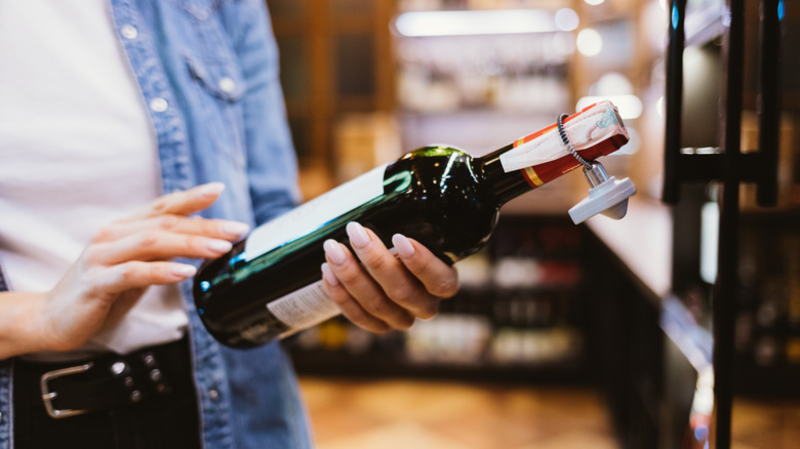
Knowing how to read wine labels not only helps you recognize quality, but also helps you avoid mistakes when choosing wine.
- Trusting catchy phrases
Decorative phrases are often used to create an impression, but they are not necessarily related to wine quality. For example:
– Vieilli, élevé, en fûts de chêne: This phrase only refers to a winemaking method involving aging and maturation in oak barrels. It has nothing to do with the quality of that bottle.
– Grand Vin de…: This phrase is not controlled by any authority, meaning any producer can use it without guaranteeing quality. This is completely different from “Grand Cru”, which is strictly regulated and only applied to wines in premium classifications.
- Ignoring spelling mistakes on wine labels
Do not let small spelling errors on wine labels mislead you. Spelling mistakes may reflect a lack of professionalism from the producer. Reputable producers always pay attention to small details. If you see a wine label with spelling mistakes, think carefully before buying, because this may indicate carelessness from the producer and may also reflect lower product quality.
- Be cautious with “award-winning” labels
Many wine labels use phrases such as “award-winning” or “world-class” along with medal images. However, not all awards are trustworthy. Many wine competitions are mainly marketing tools and give out many awards to attract producers to participate. You should only trust awards from reputable organizations or publications that you recognize.
- Assuming wine labeled “Vieilles Vignes” is automatically premium
This term refers to wine made from old vines, which usually produce fewer grapes but often higher-quality fruit. However, there is no specific regulation or legal control for this term, so consumers cannot know exactly whether the vines are truly old. Vine age may range from 20, 40 to 60 years and should only be treated as a reference. A vine is generally considered old when it is over 30 years old.
6. Frequently Asked Questions About How to Read Wine Labels
- Is wine without a vintage trustworthy?
Wine without a vintage is often a blend from multiple harvests, helping achieve a consistent flavor. This is common for commercial wines from the New World or sparkling wines such as Champagne. However, the absence of a vintage may make it harder for consumers to identify quality and origin.
- Why should you pay attention to certification symbols on labels?
Symbols such as “Organic”, “Biodynamic” or “Terra Vitis” indicate that the wine is produced using environmentally friendly and sustainable methods. If you care about health or the environment, this is an important factor to consider.
- Do wine labels show an expiration date?
No. Wine does not have a fixed expiration date, but the optimal storage time depends on the type of wine:
– Everyday wine: Drink within 1-3 years.
– Premium wine: Can be stored for decades if properly preserved.
- Why do some bottles not show the grape variety on the label?
Wine labels may not list the specific grape variety because some regions, especially in France, focus more on appellation than grape variety. For example, Bordeaux wines often do not state specific grape varieties because the region is famous for blends made from grapes such as Cabernet Sauvignon, Merlot and Cabernet Franc.
- Why do some bottles not have a back label?
Some small producers or traditional-style producers use only a front label for simplicity, focusing on brand image or minimal information.
Final Thoughts
Understanding how to read wine labels is the key to choosing a bottle that suits not only your taste but also your drinking needs, opening the door to a rich and fascinating wine world. Finally, remember that choosing the perfect bottle of wine does not depend only on the information on the wine label, but also on the tasting experience and the joy of sharing it with loved ones.