


 Tiếng Việt
Understanding French wine classification is a way to connect more deeply with the world of wine. Every bottle tells a story about its land, natural conditions and the winemaking techniques of the people behind it. When you understand these details, you are not simply drinking wine. You are experiencing an entire culture and the refinement that each glass brings.
The article below will help you understand how French wines are classified in a simple, easy-to-follow way, so you can feel more confident when choosing the right bottle.
1. What is AOC? Understanding the AOC wine classification system (Appellation d’Origine Contrôlée)
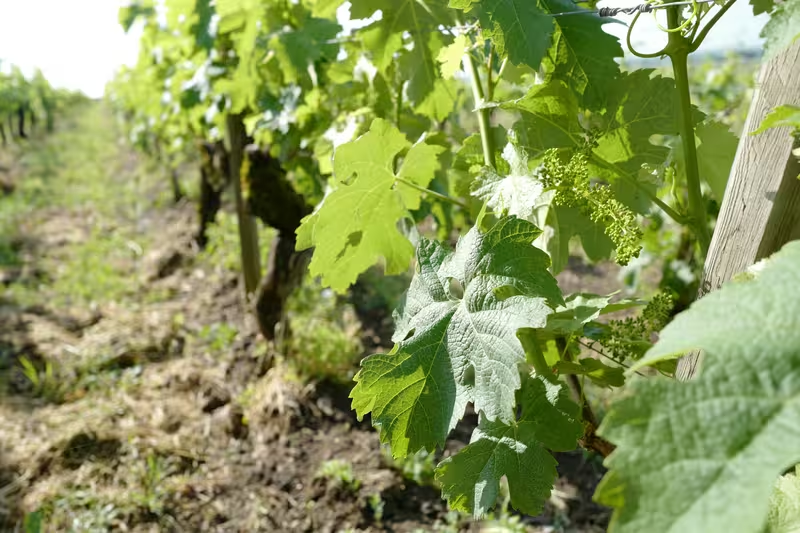
1.1 AOC – A tightly controlled wine classification system
When you enjoy a bottle of wine from prestigious regions such as Champagne, Bordeaux or Burgundy, few people realize that behind every label is an entire system of careful supervision. That system is Appellation d’origine contrôlée (AOC), a control mechanism established to protect the quality and reputation of French wine-producing regions.
AOC is not simply a certification. It is a guarantee that the bottle in your hand:
- Was produced within a specific, officially recognized geographical area.
- Strictly follows the technical standards and winemaking traditions of that region.
- Uses suitable grape varieties that are carefully controlled from cultivation to production.
1.2 Criteria for AOC certification approval
For a bottle of wine to receive AOC certification – the highest level in wine classification – it must meet a series of criteria set by INAO (Institut National de l’origine et de la qualité, the French National Institute of Origin and Quality). Specifically:
- Defined geographical area:
This is divided into several levels:
– Regional AOC: For example Bourgogne, Bordeaux, Languedoc, Crémant de Loire…
– Sub-regional AOC: For example Chablis, Médoc, Limoux, Saint-Chinian, Anjou…
– Village or commune AOC and vineyard plots: For example Côtes d’Auxerre, Pauillac, Côtes de Beaune, Côtes de Nuits…
- A strict production control framework:
This includes:
– Grape varieties used, allowing only the region’s characteristic grapes.
– Vineyard area and maximum harvest yield.
– Grape blending methods and winemaking techniques.
All of these must strictly comply with the regulations in order to achieve AOC certification.
1.3 French wine classifications: Grand Cru and Premier Cru
Grand Cru and Premier Cru are among the highest quality levels in the French wine classification system, used to evaluate exceptional quality within the same AOC (Appellation d’Origine Contrôlée) category.
Grand Cru wines – The peak of quality
Grand Cru is the highest classification, but its meaning differs slightly between wine-producing regions:
- In Bordeaux: Grand Cru refers to prestigious Châteaux, or wine producers, most notably classified under the 1855 Grand Cru Classé system, applied mainly in Médoc and Graves, as well as the separate Saint-Émilion classification system established in 1955.
- In Burgundy and some other regions such as Alsace and Champagne: Grand Cru refers to exceptional vineyards with optimal natural conditions, including climate, soil and elevation, for growing noble grape varieties that produce outstanding wines. Grand Cru vineyard areas here are often very limited, making these bottles even more valuable.
Premier Cru wines – A distinguished level
Premier Cru is a special quality level, above standard AOC but below Grand Cru, especially in Burgundy.
- In Bordeaux: Premier Cru is the highest ranking within the 1855 Grand Cru Classé system for red wines from Médoc and Graves. In the Saint-Émilion classification, there are categories such as Premier Grand Cru Classé A and B.
- In Burgundy: Premier Cru refers to vineyards with outstanding quality, though still ranked below Grand Cru vineyards.
On French wine labels, if you see terms such as “Grand Cru”, “Grand Cru Classé” or “Premier Cru”, it shows that the wine holds a high classification within the AOC system. In addition, many wines clearly display the name of the village or commune, such as Pauillac or St. Émilion, to identify the precise origin.
1.4 Why is the AOC system important?
An AOC label is not just a name. Simply put, if you want to use names such as “Bordeaux” or “Sancerre” on your wine label, you must fully meet AOC standards. These names cannot be used freely. This is designed to:
- Protect the reputation of wine-producing regions: Although these rules may seem strict, the value of wine is always tied to the reputation of its place of origin. This is exactly why regions such as Bordeaux, Bourgogne, Rhône and Loire Valley have such strong brand value and must be protected from misuse.
- Ensure wine quality and identity: Thanks to strict regulations, consumers buying a bottle bearing the name of a famous region can enjoy it with confidence, knowing that the wine reflects the region’s characteristic quality and grape origin.
>>> See more: Famous French wine-producing regions
2. What is IGP? IGP wine classification (Indication Géographique Protégée)
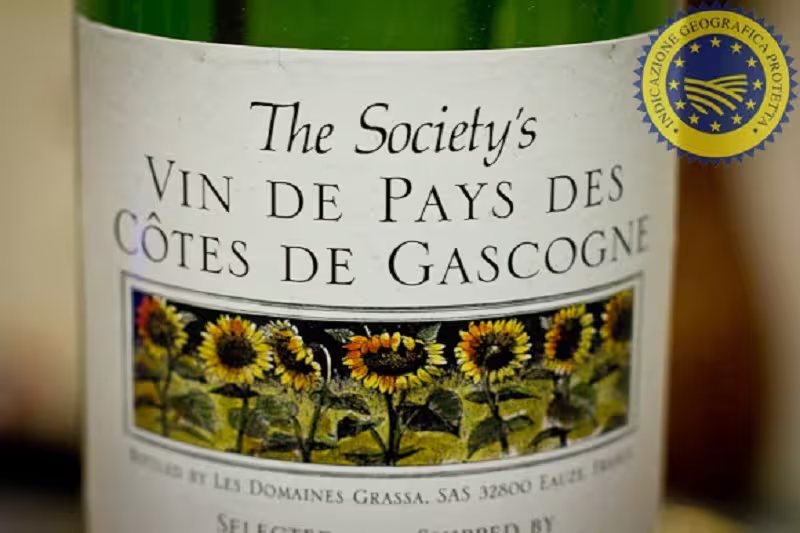
IGP (Indication Géographique Protégée) is an important level in the French wine classification system, ranked just below AOC. With more flexible regulations, IGP gives winemakers greater room for creativity while offering wine lovers a wider range of choices.
2.1 IGP – A flexible and diverse wine classification
Ranked second in France’s wine classification framework and accounting for about 33% of the country’s wine production, IGP (Indication Géographique Protégée) is a certification introduced by the European Union in 2009. Its purpose is to identify the reputation and quality of wines linked to a specific geographical area.
For IGP certification, the regulations are much more relaxed than AOC. Winemakers have greater freedom in choosing grape varieties and creating different wine styles. As a result, IGP wines in France often offer more novel and diverse expressions than AOC wines.
2.2 Criteria for IGP certification
Although not as strict as AOC, wines labeled IGP must still follow several important requirements:
- The wine must be produced within the designated geographical area
For example, wines labeled IGP Pays-d’oc, Saône-et-Loire, Val de Loire, Côtes-Catalanes and others must be grown and produced within those regions.
- Freedom to choose grape varieties and production styles
IGP does not impose strict limits on grape varieties or production methods like AOC does. This allows for greater diversity in flavor, color and wine personality.
2.3 Why choose IGP wine?
Thanks to flexibility in winemaking, producers can blend different grape varieties to create unique bottles that are not restricted by the strict standards of AOC.
3. Vin de France (VDF) wine classification
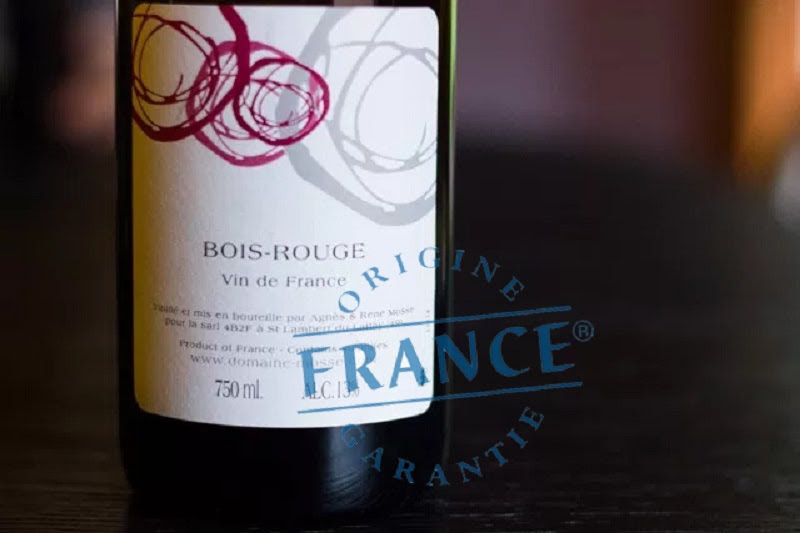
Vin de France is the most basic level in the French wine classification system, representing freedom in winemaking without being bound by strict geographical or grape variety rules.
3.1 Vin de France – Creative freedom without rigid standards
Although it sits at the bottom of the classification system, this is a fascinating category for those who enjoy innovation and flexibility. Previously, Vin de France was known as “Vin de Table”, or table wine. Today, Vin de France accounts for about 7% of wine production in France. It is the lowest classification in the French wine system, but also the most flexible.
3.2 Key characteristics of Vin de France wines
Wines labeled Vin de France are almost unrestricted by strict rules on origin, provenance or geography, as long as the wine is produced within French territory.
Grape varieties can be used and blended freely to create distinctive flavors.
Winemaking methods are not limited, allowing maximum diversity and making the wines accessible to many types of consumers.
3.3 Advantages and disadvantages of Vin de France
- Advantages
– Not restricted by production methods or yield limits, VDF allows producers to create quality wines with complete freedom. Some well-known winemakers also choose VDF to release experimental wines with strong personality.
– Easy for wine beginners to approach thanks to reasonable prices and approachable flavors.
- Disadvantages
– Without strict inspection like AOC or IGP, quality can vary between bottles, and some lower-quality wines may appear in this category.
4. Frequently asked questions about AOC and French wine classification
– Which regions in France have wines that meet AOC standards?
Almost all wine-producing regions in France have wines that meet AOC standards. Some notable regions include Bordeaux, Burgundy, Champagne, Loire Valley, Alsace, Provence, Jura and Rhône Valley…
– Why do I see some French wines labeled AOP? What is AOP?
AOP (Appellation d’origine protégée) has a meaning equivalent to AOC (Appellation d’origine controlée). However, the difference is that AOP is a European-level certification designed to protect the origin of agricultural products throughout the European Union, including wine. AOC, meanwhile, is a certification applied specifically in France.
In 2008, the AOP logo was created, and from May 1, 2009, this new logo became a mandatory element on the labels of French wines certified under AOC. Since then, AOP certification has gradually replaced AOC certification in many cases in France. Even so, both terms are still used side by side and carry almost the same meaning and value within the French wine classification system.

– According to French wine standards, is AOC wine always the best, and should I only buy AOC?
No! Although AOC is the highest level in the French wine classification system, it does not mean that every AOC bottle is better than IGP or VDF (Vin de France) wines. It is true that you may have a higher chance of choosing a good AOC wine compared with IGP or VDF, because AOC-certified wines are carefully reviewed, monitored and evaluated by INAO. This helps reduce the likelihood of wines failing to meet quality standards.
Today, the wine industry is constantly evolving and innovating. IGP and VDF wines, which are less restricted by INAO’s strict rules, are gradually establishing their own reputation and quality through creativity and innovation. It would not be surprising if you tasted a VDF wine and found it far more impressive than many AOC bottles. Sometimes this happens because newer winemakers do not want to be confined by the “rulebook” of previous generations. Instead, they want the freedom to create and explore distinctive wines of their own, breaking away from old limitations.
– How can I know whether a wine suits my personal taste if I am not familiar with classifications?
If you are not yet familiar with the French wine classification system, you can rely on grape variety, production region or reviews from experts and reputable wine critics to identify the type of wine that best suits your preferences.