
 Tiếng Việt

With its international reputation, Bordeaux is a famous wine-growing region of France and one of the most prestigious wine regions in the world, thanks to its renowned premium wines. This wine-growing land has diverse terrain with different soil types, distributed around three waterways: the Garonne River, the Dordogne River and the Gironde Estuary.
The term “Bordeaux” refers to wines produced in the Bordeaux region. More than 90% of Bordeaux wines are red wines based mainly on two grape varieties: Merlot and Cabernet Sauvignon. Around 7,500 producers here create nearly 10,000 different Bordeaux wines.
1. Bordeaux wine classification

Bordeaux introduced the concept of wine classification in 1855 under Napoleon III, a system closely associated with quality and worldwide prestige. The principle of “crus classés” or classified growths reflects the perfect combination of terroir characteristics, including soil and climate, and generations of human craftsmanship dedicated to creating wines of outstanding quality.
It is worth noting that even without classification, a “cru” can still be considered an exceptional wine, as in the case of Pomerol!
- The 1855 Classification
This is the most famous classification, established for the Paris World’s Fair in 1855, in which wines from Médoc and Sauternes were classified into levels ranging from Premier Cru or Grand Cru to Cinquième Cru.
Criteria: The classification was based on the reputation of the “crus” and their market value.
Characteristics: It only includes red wines from Médoc, red wines from Graves and sweet white wines from Barsac and Sauternes.
Classification levels:
– Red wines: 60 “crus” from Médoc and 1 “cru” from Pessac-Léognan, Château Haut-Brion, divided into 5 levels:
5 Premiers Crus
14 Deuxièmes Crus
14 Troisièmes Crus
10 Quatrièmes Crus
18 Cinquièmes Crus
– Sweet white wines, or liquoreux: 27 “crus” from Sauternes and Barsac:
1 Premier Cru Supérieur
11 Premiers Crus
14 Deuxièmes Crus
- The Graves Classification
Created in 1953 and later updated in 1959, this classification is reserved for wines from Graves, ranking them as “Cru Classé” for both red and white wines.
Criteria: Classification is based on each commune and wine type, either red or white.
Characteristics: There is no hierarchy of ranks, only one classification level.
Classification levels:
16 “crus” within the Pessac-Léognan AOC:
7 red wine “crus”
3 white wine “crus”
6 “crus” producing both red and white wines
Château Haut-Brion is the only Bordeaux wine classified twice: in the Graves Crus Classés classification and in the 1855 classification.
- The Saint-Émilion Classification
This classification, first established in 1955, applies to wines from the Saint-Émilion region. Alongside the 1855 classification, it is one of the oldest and most prestigious wine classification systems in Bordeaux.
Criteria: Evaluation is based on quality, consistency across vintages and aging potential, especially for “Premiers Grands Crus Classés”. A scoring system out of 20 is used.
Characteristics: The classification is revised every 10 years.
Classification levels:
The 2022 classification recognized 85 crus:
2 Premiers Grands Crus Classés A
12 Premiers Grands Crus Classés B
71 Grands Crus Classés
- The Crus Bourgeois du Médoc Classification
First established in 1932, this classification ranks wines from Médoc that are not part of the 1855 Grand Cru Classé system. It is updated periodically to reflect changes in wine quality.
Criteria: Based on the overall performance of each wine compared with a reference vintage, according to technical specifications and an inspection plan approved by ministerial decree; compliance with tasting and sensory analysis standards. Tastings are conducted across 5 vintages of each wine to measure consistency and aging potential. HVE, or High Environmental Value, commitment is a mandatory environmental standard.
Characteristics: Applies only to affordable red wines.
Classification levels:
The 2020 classification recognized 249 crus, divided into the following groups:
14 Crus Bourgeois Exceptionnels
56 Crus Bourgeois Supérieurs
179 Crus Bourgeois
- The Crus Artisans Classification
This classification is dedicated to small, independent wine producers in Médoc and has been officially recognized since 2006. These wines often offer excellent quality, even though the producers are not major brands.
Criteria: The quality and value of wines produced by small estates in one of the eight areas of Médoc: Médoc, Haut-Médoc, Listrac, Moulis, Margaux, Saint-Julien, Pauillac and Saint-Estèphe.
Characteristics: This classification is reviewed every 5 years.
Classification levels: 36 crus were classified for the 2017 to 2021 period.
2. Main grape varieties of Bordeaux wine

One of the most distinctive features of Bordeaux wine is its smooth blending of multiple grape varieties. Bordeaux red blends are among the most popular in the world and include Cabernet Sauvignon, Merlot and Cabernet Franc. Petit Verdot and Malbec are also used, with a small amount of Carménère in some blends.
The most common grape variety in Bordeaux and the most widely planted in France. Worldwide, it is the fifth most planted grape variety. In 2010, Merlot even rose to second place among the world’s most planted grape varieties, behind only Cabernet Sauvignon. Merlot gives wine color, softness and aromas of red fruits such as plum, cherry and fig, often developing toasted notes after several years of aging.
The oldest grape variety in the region. The success of Cabernet Sauvignon comes from its complex secondary aromas, which can develop over time in the bottle. Wines made from this grape are often considered highly age-worthy. It is widely used in Médoc and Pessac-Léognan. It is known for producing structured wines with firm tannins and flavors of black fruit and licorice.
- Cabernet Franc
A blending grape commonly used in Saint-Émilion. Cabernet Franc is lighter than Cabernet Sauvignon, producing bright, pale red wines that are highly refined, with delicate aromas of herbs and green pepper. Depending on the growing area, it can show notes of tobacco, raspberry, pepper, blackcurrant and even violet.
- Petit Verdot
Used in classic Bordeaux blends. When ripe, this grape variety adds tannin to the wine and contributes mid-palate depth to Cabernet Sauvignon-based blends. In its early stages, Petit Verdot can show unexpected banana notes combined with powerful violet aromas.
- Malbec
A rare grape variety. Malbec is one of the grapes used to produce red Bordeaux wines. It brings deep color and strong tannins. This black grape has recently been blended with Cabernet Sauvignon, Merlot, Cabernet Franc and Petit Verdot. Malbec is known for its fruit flavors and aromatic notes such as pepper, leather and jasmine. It adds rich color and abundant tannins.
- Sémillon
A grape variety used in excellent white wines such as Sauternes and Graves. It expresses fruit and floral aromas and ranks among the finest white grape varieties. Very rich in sugar, it produces sweet white wines such as Sauternes and Barsac. When blended with Sauvignon and Muscadelle, Sémillon is ideal for both dry and sweet wines.
- Ugni-blanc
A grape variety of Italian origin, where it is grown under the name Trebbiano Toscano. It produces pale yellow wines that are relatively delicate, with banana-like flavors. In blends, it is used for its high acidity, bringing freshness to the wine. In Aquitaine, Ugni-blanc produces rich, sweet and flavorful wines.
- Sauvignon Blanc and Sauvignon Gris
Sauvignon Blanc is the most common grape variety in Bordeaux white wines. It is known for aromas of citrus, linden and pea flower. It is mainly used to produce dry white wines. Sauvignon Gris, on the other hand, offers grapefruit and tropical fruit flavors. It produces richer, more structured wines with fuller body and lower acidity than Sauvignon Blanc.
- Muscadelle
A minority grape variety. Muscadelle brings wonderful floral aromas and blends beautifully in high-quality dry white wines. Muscadelle is often confused with Muscadet or Muscat. It has simple flavors of grape juice and raisins similar to Muscat-family grapes, but it has no genetic relationship to them.
3. Bordeaux wine-producing areas
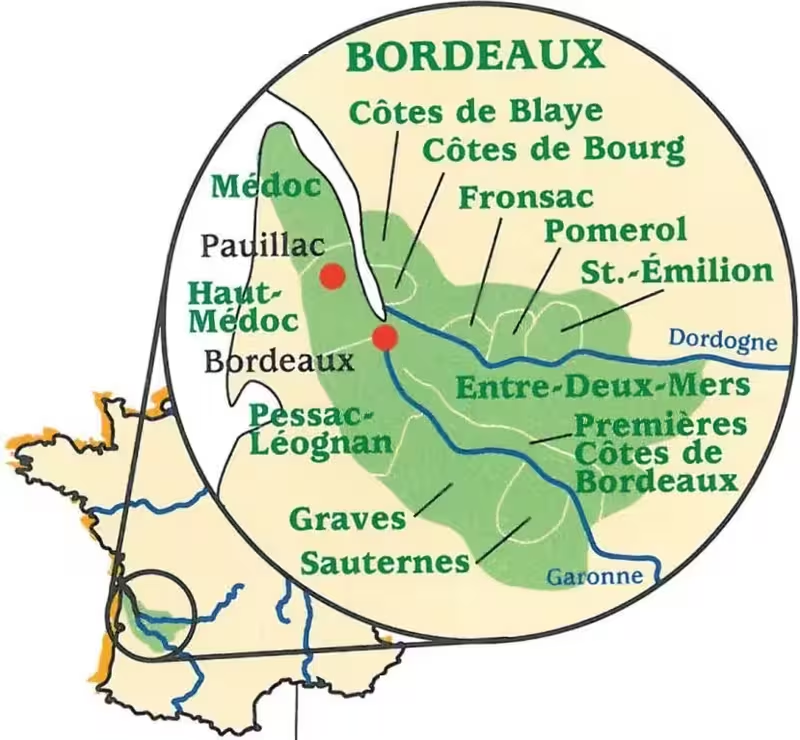
Located in southwestern France near the Atlantic coast, the vineyard area extends more than 100 km from Bordeaux. Bordeaux vineyards are arranged around Europe’s largest estuaries, along three rivers: the Gironde, Garonne and Dordogne, creating an ideal environment for wine production. The region has a mild climate with short winters and high humidity thanks to surrounding pine forests. It is also famous for sunny autumns, which have helped save many harvests in dry years.
The soils of Bordeaux are highly diverse, including gravel suitable for Cabernet Sauvignon, clay suitable for Merlot, starfish limestone, silt, sand and more. This diversity creates a rich range of wine styles.
Below are some of the world-famous wine-producing areas in Bordeaux:
- Margaux: One of the most famous areas of Bordeaux, France, located in Haut-Médoc. It produces premium red wines, especially from Cabernet Sauvignon and Merlot. Wines from Margaux stand out for their finesse, silky texture and balanced structure, with complex flavors of dark fruits such as cherry and blackberry, combined with gentle spice and oak notes. Margaux wines often have smooth tannins and excellent aging potential, gaining more depth and complexity over time. With a mild climate and suitable terroir, Margaux is one of Bordeaux’s great names, celebrated not only for quality but also for the elegance and sophistication its wines deliver.
- Pauillac: An area within Haut-Médoc in Bordeaux, France, known as the “capital of wine” in this part of the region. It produces some of the world’s finest wines, including Grand Cru Classé estates such as Château Lafite Rothschild, Château Latour and Château Mouton Rothschild. Pauillac wines are mainly made from Cabernet Sauvignon, creating powerful, full-bodied red wines with complex flavors of ripe dark fruits such as cherry and blackberry, spice, tobacco and oak. Pauillac wines usually have firm tannic structure, balanced acidity and outstanding aging potential. Its cool climate, influenced by the Gironde River, and limestone and gravel soils create ideal vineyards for producing world-class wines.
- Saint-Estèphe: An area in Haut-Médoc, Bordeaux, France, known for red wines with powerful structure and excellent aging potential. Wines from Saint-Estèphe are usually made mainly from Cabernet Sauvignon blended with Merlot and Petit Verdot, resulting in bold wines with firm tannins and complex flavors, from ripe dark fruits such as blackberry and cherry to notes of spice, herbs and oak. With distinctive soils including gravel and clay, along with a mild climate, Saint-Estèphe produces wines that balance acidity and tannin beautifully, offering long-term aging potential.
- Saint-Julien: An area in Haut-Médoc, Bordeaux, France, known for red wines that strike a perfect balance between power and elegance. It is home to several famous Grand Cru Classé estates, such as Château Léoville-Las Cases, Château Ducru-Beaucaillou and Château Talbot. Saint-Julien wines are mainly made from Cabernet Sauvignon, along with Merlot and Petit Verdot, producing wines with strong structure, smooth tannins and complex flavors of dark fruit, spice and oak. A mild climate and suitable terroir help the wines achieve softness and finesse while retaining power and depth. Saint-Julien wines have excellent aging potential and often reach their peak after several years.
- Saint-Émilion: A highly famous area located on the Right Bank of the Dordogne River in Bordeaux, France, known for outstanding red wines. It produces rich and generous wines mainly from Merlot and Cabernet Franc, with a small portion of Cabernet Sauvignon blended in. Saint-Émilion wines stand out with ripe fruit flavors such as red raspberry and cherry, combined with notes of spice, herbs and oak. Its special terroir of gravel, limestone and clay helps create wines with supple structure, silky tannins and excellent aging potential.
Saint-Émilion is not only famous for the quality of its wines, but also for its long history and the beauty of its vineyards, many of which are recognized by UNESCO as a World Heritage Site. - Pomerol: An area on the Right Bank of the Dordogne River. It is one of Bordeaux’s prestigious red wine-producing regions, known for soft, generous and refined wines. Pomerol wines are mainly made from Merlot, which dominates most blends, along with a small amount of Cabernet Franc. The dominance of Merlot creates the signature style of Pomerol, with flavors of ripe dark fruits such as cherry and plum, combined with light spice, cocoa and earthy or truffle-like notes.
Pomerol does not have Grand Cru Classé classifications like other Bordeaux areas, but wines from Pomerol, especially from famous Châteaux such as Château Pétrus and Château Le Pin, always command extremely high value and prestige on the international market. - Sauternes and Barsac: Two famous areas of Bordeaux, France, especially known for premium sweet wines. Both are located in Graves, south of Bordeaux, and produce sweet wines mainly from Sémillon, Sauvignon Blanc and a little Muscadelle. What makes Sauternes and Barsac wines special is the development of botrytis, also known as noble rot, on the grapes. This causes the grapes to lose water and become intensely sweet, creating a unique flavor profile combining honey, peach, lemon and spice.
Sauternes is the most prestigious sweet wine-producing area, known for Grand Cru Classé estates such as Château d’Yquem, one of the world’s most expensive and longest-aging sweet wines.
In addition to names based on specific regions, Bordeaux wines can also be distinguished by the two riverbanks: Left Bank Bordeaux along the Gironde and Garonne, which includes Médoc red wines, red and white wines from Graves and further south the wines of Sauternais; and Right Bank Bordeaux along the Gironde and Dordogne, which includes Libournais, Blayais-Bourgeais and Entre-deux-Mers. There are also vineyards producing sweet wines around the Ciron River, a tributary of the Garonne.
4. Food pairing with Bordeaux wine

Red Bordeaux wine is popular and easy to pair with almost any dish. With firm tannins and lively acidity, Bordeaux wine is an ideal partner for roasted or grilled meats such as steak, lamb or duck. Moreover, the wine’s complex fruit layers and gentle flavor profile further enhance stews, braised dishes and slow-cooked dishes. For vegetarians, grilled vegetables and mushroom-based dishes are excellent choices to pair with red Bordeaux wines.
Dry white Bordeaux wine has two distinctive styles: fresh and sweet. Fresh wines made from Sauvignon Blanc bring vibrancy to food through flavors of lemon, peach and jasmine. For this reason, they are well suited to aperitifs or seafood starters such as oysters and scallops.
Full-bodied sweet Bordeaux wines pair beautifully with foie gras, sweet desserts, fresh fruit and sweet cheeses.
5. Frequently asked questions about Bordeaux wine
- What is the difference between Left Bank Bordeaux wine and Right Bank Bordeaux wine?
Right Bank Bordeaux wine: The flavor of Right Bank wines differs because of the proportion of grape varieties used in the blend. Here, the main grape variety used for blending is mostly Merlot, followed by Cabernet Franc. Right Bank Bordeaux wines often bring flavors of licorice, chocolate, black cherry, plum, blackberry, spice and violet flowers. Wines made mainly from Merlot usually have less tannin than wines dominated by Cabernet Sauvignon. These wines tend to be sweeter in impression, rounder and smoother.
Left Bank Bordeaux wine: On the Left Bank, the grape variety that makes up the largest proportion of the blend is Cabernet Sauvignon, followed by Merlot, Petit Verdot, Cabernet Franc and Malbec, sometimes with a little Carménère. Left Bank Bordeaux wines offer aromas and flavors of blackberry, blackcurrant, black cherry, vanilla, coffee bean, spice and licorice. These are powerful wines with firm tannins, loved by many wine enthusiasts.
- How should Bordeaux wine be stored properly?
Stable temperature: Ideally 12-16°C, away from direct light and sudden temperature changes.
Store bottles horizontally: This keeps the cork in contact with the wine, preventing it from drying out and stopping air from entering the bottle.
Humidity: Around 60-70% humidity is ideal for long-term wine storage.