


 Tiếng Việt
Sparkling wine, also known as Sparkling Wine, or bubbly wine, has long become a symbol of joyful moments, vibrant energy and celebration. The presence of sparkling wine is not simply about serving a drink. It acts as a catalyst for emotional and social experiences, turning every event into a memorable occasion.
1. What Is Sparkling Wine?
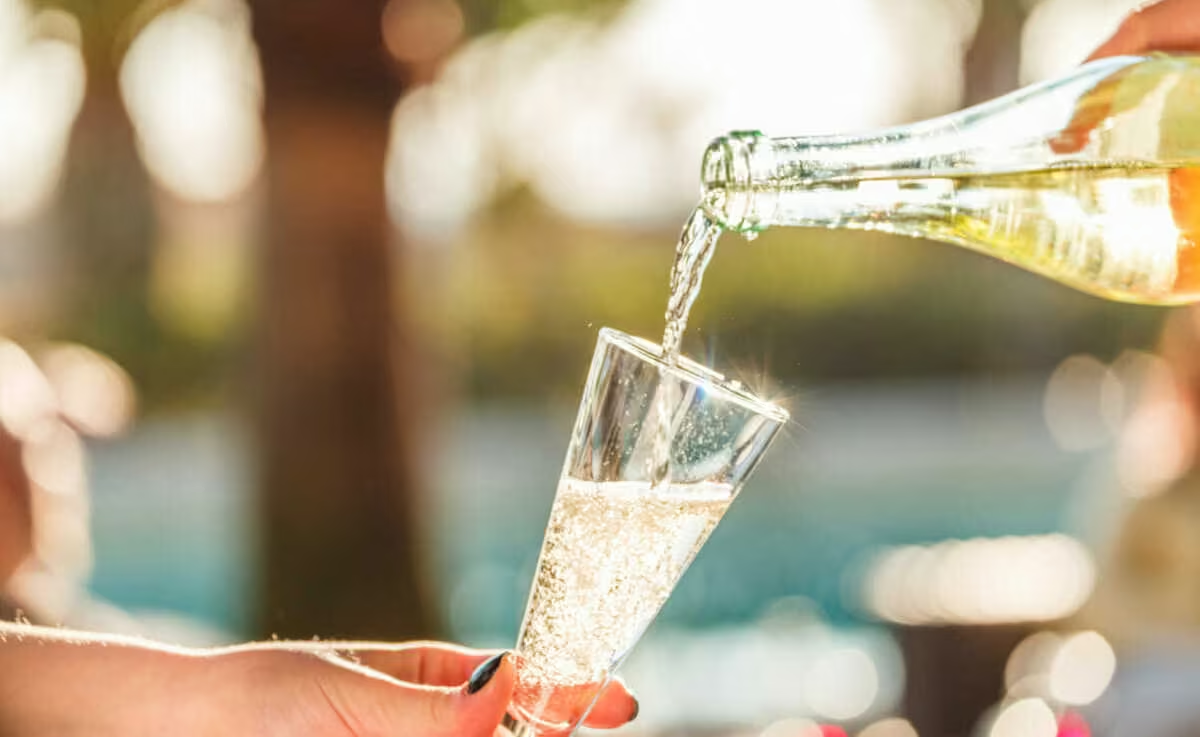
Sparkling wine is a term used for wines that contain carbon dioxide, CO2, with a minimum pressure from 0.05MPa upward, creating signature bubbles when enjoyed. The essence of sparkling wine lies in its special fermentation process, usually involving two fermentations to create this CO2.
The core difference between sparkling wine and still wine is the presence of CO2. Still wine has no bubbles, while sparkling wine is characterized by continuous streams of bubbles, creating a fresh and lively feeling when enjoyed.
Note: Many people often confuse sparkling wine with Champagne. In fact, Champagne is only one famous type of sparkling wine, produced in the Champagne region of France. Not all sparkling wines are Champagne.
Clearly understanding this distinction helps consumers explore different sparkling wine options, from affordable to premium, according to their needs and budget.
2. Sparkling Wine Production Process
Sparkling wine can be made using different methods, which affect the flavor, quality and price of the final product. Below are the 3 most common methods:
2.1 Traditional Method, Méthode Champenoise / Traditionnelle
This is the classic and most complex method, mainly used to produce famous Champagne and some other premium sparkling wines such as Cava. This process requires precision and long production time, contributing to the wine’s complex and deep flavor.
- Step 1: Create the base wine
Grapes are harvested, pressed for juice and go through the first fermentation in large tanks to create a base wine with moderate alcohol content and expressive fruit flavors.
- Step 2: Blending and adding liqueur de tirage
The producer blends base wines from different grape varieties or vintages to create the final base wine blend, called a cuvée. Then, this blend is mixed with “liqueur de tirage”, a mixture of sugar and yeast, before being bottled.
- Step 3: Second fermentation in bottle
This is the most important step and what makes this method distinctive. Secondary fermentation takes place directly inside each individual bottle. Yeast converts sugar into alcohol and CO2, creating the signature bubbles. At the same time, dead yeast cells, called lees, begin to dissolve into the wine through autolysis, creating the characteristic complex flavors.
- Step 4: Aging on lees
Sparkling wine bottles are placed horizontally and aged for a long period, usually from several months to several years, even from 9 to 30 months. This process allows the wine to continue developing and accumulating CO2 bubbles, while absorbing flavors from the lees and developing notes of toast, yeast or chestnut.
- Step 5: Riddling
To remove yeast sediment, sparkling wine bottles are placed upside down on racks and gradually rotated day by day. This process moves the lees from the bottom of the bottle toward the neck.
- Step 6: Disgorgement and adding dosage
The bottle neck is frozen to remove the concentrated yeast sediment. Then, a quantity of “liqueur d’expédition”, a mixture of wine and sugar, is added as dosage to adjust the final sweetness of the wine.
- Step 7: Corking and bottle aging
The bottle is sealed with a cork and secured with a wire cage to ensure the cork does not pop out, preserving the wine’s flavor and bubbles. The wine may then be aged further before release.
2.2 Transfer Method
This method combines traditional and modern approaches, aiming to save cost and time while still preserving relatively good quality and some complexity in the wine.
- The primary and initial secondary fermentation take place in individual bottles, similar to the traditional method. This allows the wine to develop complexity through contact with lees, with at least 6 months of aging required to be labeled “bottle fermented”.
- However, instead of removing sediment bottle by bottle, all individual bottles are then transferred into a larger tank for centralized filtration.
- Sugar is added as dosage, and the wine is bottled again.
This method is often used for good-value sparkling wines from Australia, New Zealand and other regions, or for bottles in very small or very large formats.
2.3 Charmat Method / Tank Method
This is a modern, fast and much more cost-effective method than the traditional method, suitable for large-scale production of affordable sparkling wines.
- Step 1: Create the base wine
Grapes are pressed for juice and undergo primary fermentation in large stainless steel tanks to create a fruit-forward base wine.
- Step 2: Secondary fermentation in stainless steel tanks
The base wine is mixed with yeast and sugar, tirage, then transferred into large pressure-resistant stainless steel tanks called autoclaves for the second fermentation. This process lasts from a few weeks to a few months, creating CO2 and bubbles.
- Step 3: Chilling and filtering
The wine is rapidly chilled to stop fermentation, then filtered to remove dead yeast, helping the wine become clear and clean without affecting its flavor.
- Step 4: Adding dosage
Dosage is added to adjust the wine’s final sweetness.
- Step 5: Bottling
After fermentation and filtration are complete, the wine is carefully bottled to keep the bubbles from escaping.
Below is a comparison table of the main sparkling wine production methods for easier understanding:
| Method | Place of Second Fermentation | Fermentation / Aging Time | Flavor Characteristics | Production Cost | Typical Examples |
| Traditional Method, Méthode Champenoise / Traditionnelle | Inside each individual bottle | Long, from several months to several years, 9-30 months | Complex, with notes of toast, yeast and chestnut from lees aging. | High | Champagne, France; Cava, Spain |
| Transfer Method | Inside individual bottles, then transferred to a large tank for filtration and rebottling | Medium, at least 6 months in bottle | Complex, retaining some lees-derived flavors while still keeping freshness. | Medium | Some sparkling wines from Australia and New Zealand; small or large bottle formats. |
| Charmat Method / Tank Method | In large stainless steel tanks | Short, from a few weeks to a few months, 1-12 months | Fresh, focused on the original fruit aromas of the grape, with fewer complex yeast notes. | Low | Prosecco, Italy; Asti Spumante, Italy; Lambrusco, Italy |
3. Flavor Characteristics of Sparkling Wine
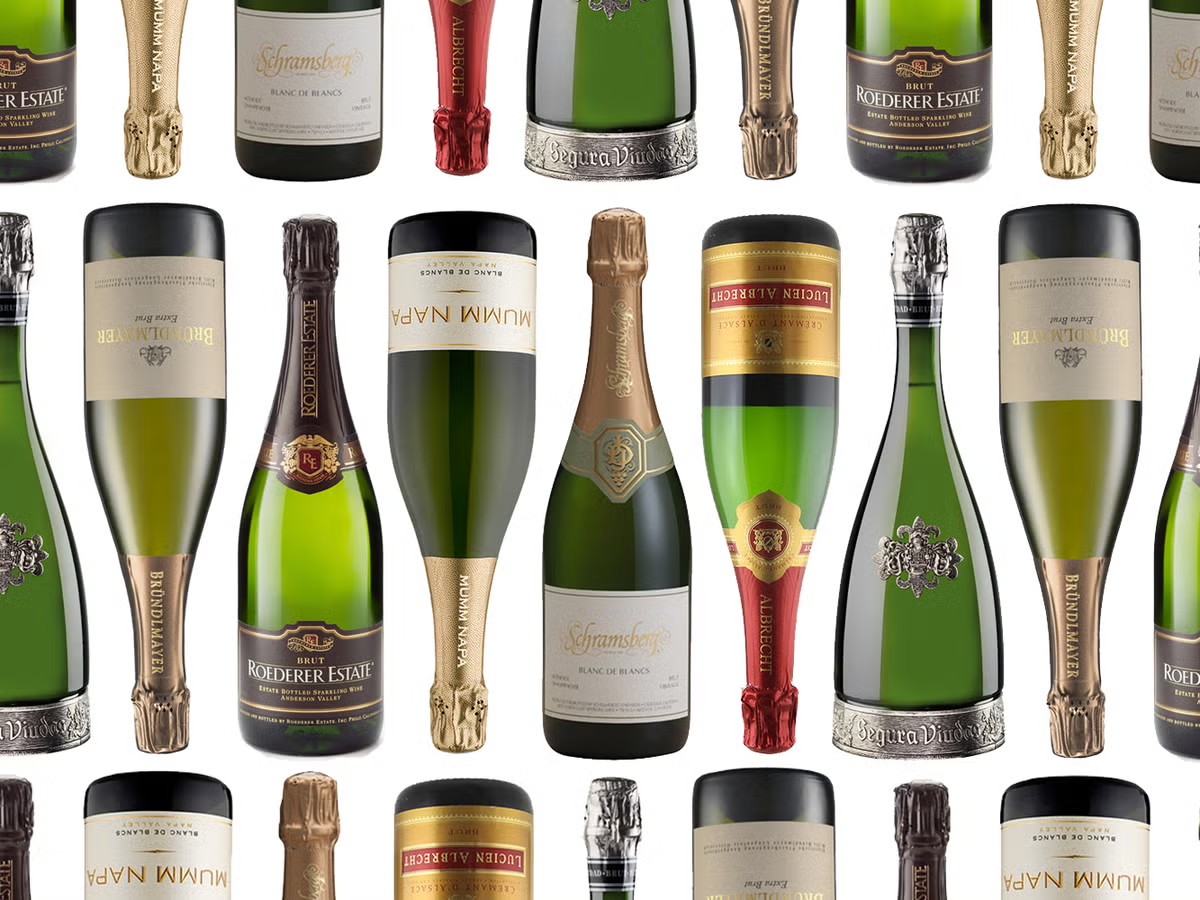
What is sparkling wine? It is not only a bubbly drink that creates a fresh sensation. Sparkling wine also has diverse and captivating flavors, depending on grape variety, growing region, production method and sugar content.
When tasting, you can feel freshness from ripe fruit notes such as green apple, pear, citrus, strawberry and redcurrant, combined with gentle floral aromas such as jasmine, white flowers or wildflowers.
In particular, premium sparkling wines produced using the traditional method and aged for a long time on lees offer deeper flavor layers such as toast, yeast, chestnut or mineral notes from soils such as gravel and clay. These aromas result from yeast autolysis in bottle, creating an elegant and complex style highly appreciated by wine connoisseurs.
4. How to Open Sparkling Wine Properly and Safely
Opening sparkling wine is not only a skill but also an art. With pressure inside the bottle reaching up to 6-7 atm, many times higher than a car tire, opening it incorrectly can not only reduce elegance but also create danger.
4.1 Important Notes Before Opening the Bottle
- Chill to the right temperature: Sparkling wine should be chilled to an ideal temperature of around 7.2°C or higher, about 7-10°C. Cold temperature helps reduce CO2 pressure inside the bottle, preventing the cork from popping too strongly and preserving the wine’s freshness. Avoid over-chilling because it may reduce wine quality.
- Do not shake the bottle: Never shake the bottle strongly before opening. This suddenly increases pressure inside the bottle, causing the cork to pop out with great force and potentially harm you or people nearby. If the bottle has been shaken, let it rest for a while before opening.
- Check the bottle: Carefully inspect the neck of the bottle, especially the wire cage and foil. If there are signs that it has been twisted open or tampered with, ask to replace the bottle to ensure quality and safety.
4.2 Detailed Steps to Open Sparkling Wine Safely and Professionally
- Remove the foil and wire cage protecting the cork.
- Hold the bottle at a 45-degree angle. Use your dominant hand to hold the bottle body and the other hand to hold the cork firmly.
- Rotate the bottle, not the cork, so the pressure gently pushes the cork out.
- Control the pressure with your hand to avoid a loud pop. A gentle “hiss” is the sign of a professional opening.
Following safety principles when opening sparkling wine is extremely important. Safety comes first, protecting the person opening the bottle and everyone around, before elegance or sound effect.
5. What Glass Should You Use for Sparkling Wine?
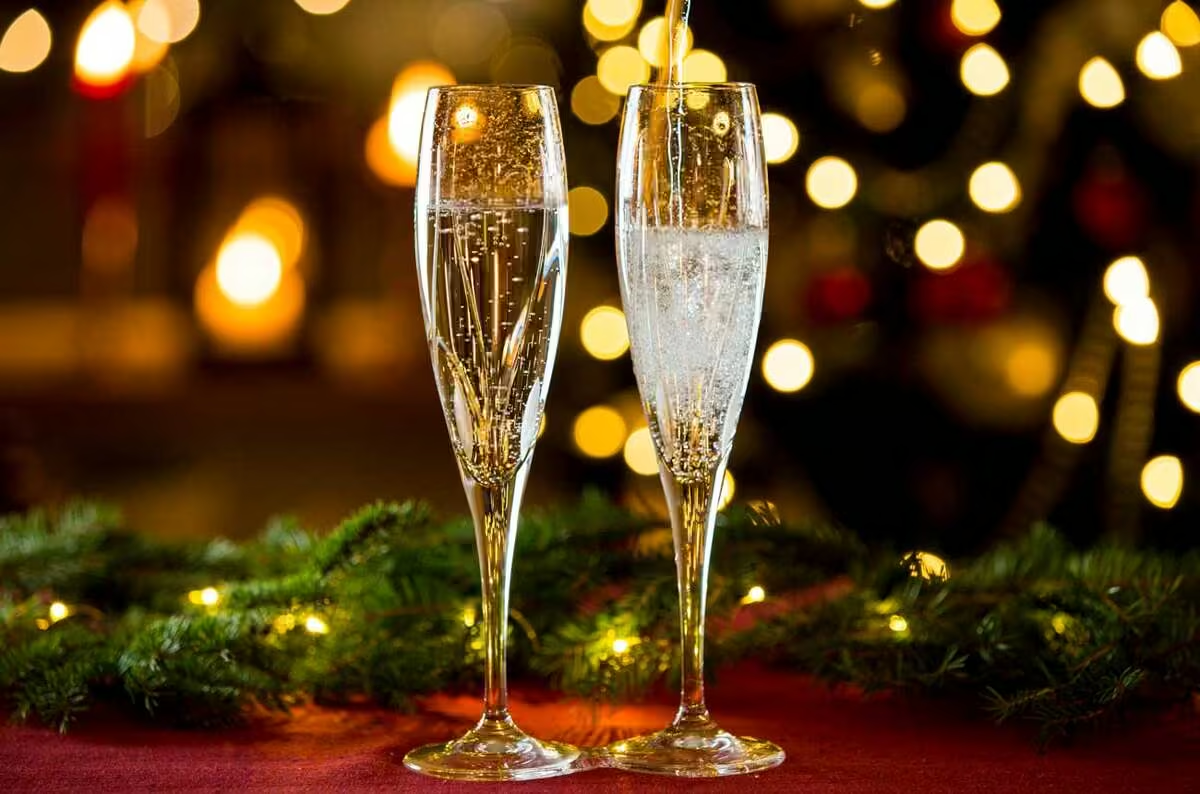
Choosing the right glass not only improves aesthetics but also optimizes the sparkling wine tasting experience, helping preserve both flavor and signature bubbles. Especially for Champagne and premium sparkling wines, Flute and Tulip glasses are two ideal choices.
- Flute glass: Has a slim, tall bowl that narrows toward the rim.
- Tulip glass: Similar to a Flute, but the bowl is slightly wider in the middle and narrows at the rim, resembling a tulip flower.
Why should you choose specialized glasses for sparkling wine?
- Preserve bubbles longer: The slim and tall design of Flute and Tulip glasses slows carbon saturation, helping the tiny sparkling bubbles rise beautifully from the bottom of the glass to the surface for longer. This not only enhances visual beauty but also maintains the drink’s liveliness.
- Maintain cold temperature: A tall and stable stem allows the drinker to hold the glass without touching the bowl, limiting heat transfer from the hand to the wine. This helps sparkling wine stay at its ideal temperature throughout tasting, preserving freshness.
- Enhance aroma and freshness: A narrow rim concentrates aromas toward the nose, highlighting fresh fruit aromas and the wine’s freshness while preventing aromas from escaping too quickly.
6. Sparkling Wine Prices in Vietnam
“How much does sparkling wine cost?” In the Vietnamese market, sparkling wine prices are very diverse, ranging from a few hundred thousand to several million VND per bottle, depending on origin, brand and production method.
An expensive sparkling wine often reflects greater investment in production process, ingredients and aging time. This brings a more refined and complex tasting experience. In contrast, more affordable options can still offer an enjoyable experience, but with a different flavor style, usually younger and more fruit-focused.
Below is a reference price table to give readers an overview of common imported sparkling wine prices in Vietnam.
| Origin | Price Range, VND / Bottle |
| France | From 160,000 for regular sparkling wine to several million for premium Champagne |
| Italy | From 120,000 for popular Prosecco to over 1,000,000 |
| Australia | From 380,000 |
| Chile | From 295,000 |
| Russia | From 155,000 |
| Spain | From 184,000 |
💡Tips for choosing affordable sparkling wine:
- Prioritize Charmat-method sparkling wines from Italy, Spain or Russia.
- Choose reputable brands with official distribution in Vietnam.
7. Suggested Popular Sparkling Wines on the Market Today
Below are several popular sparkling wines loved for their distinctive flavors, diverse prices and suitability for many uses:
- Champagne, France
This is the most premium sparkling wine, produced exclusively in the Champagne region of France using the traditional method, Méthode Champenoise. It is usually made from Pinot Noir, Pinot Meunier and Chardonnay.
Outstanding brands:
– Moët & Chandon: Global icon
– Dom Pérignon: Luxurious and refined
– Veuve Clicquot: Suitable for large parties
– Krug, Cristal, Louis Roederer, Laurent-Perrier: For wine connoisseurs
- Prosecco, Italy
This is Italy’s most popular sparkling wine, produced mainly from the Glera grape using the Charmat method.
Typical brands:
– Valdo Prosecco
– Cinzano Prosecco DOC
– Rocca Dei Forti Dolce, lightly sweet and suitable for casual parties
- Cava, Spain
Spain’s famous sparkling wine, mainly from the Penedès region, produced using the traditional method like Champagne.
Popular brands: Freixenet, Segura Viudas, Cristalino
- Sekt, Germany and Austria
This is the sparkling wine of Germany and Austria. It comes in many different styles, from dry to sweet, and can be made from grape varieties such as Riesling, Pinot Blanc and more.
- Sparkling wines from other countries
– Australia & New Zealand: Often use the Transfer Method, creating complex flavors while still preserving freshness.
– United States, California: Produces many sparkling wines with diverse aromas, flavors and colors. Examples include Moët et Chandon California and Louis Roederer Estate.
Final Thoughts,
Hopefully, this article has helped you better understand what sparkling wine is, while also suggesting several affordable and premium sparkling wines currently loved on the market. Whether it is premium Champagne or more affordable sparkling wines such as Prosecco, each type has its own flavor and style for you to explore.
Understanding the definition, production process, flavor characteristics, opening method and proper serving style will help consumers fully discover the beauty of the sparkling wine world. Sparkling wine, with its diversity of flavors, styles and prices, has proven that it is not only a drink but also a lively cultural experience.