


 Tiếng Việt
You will often come across a term mentioned by experts and wine lovers with great respect: Terroir. So what is terroir, and why does it have such a deep influence on the flavor of a bottle of wine?
1. What Is Terroir? The Origin and Meaning of Terroir in Wine
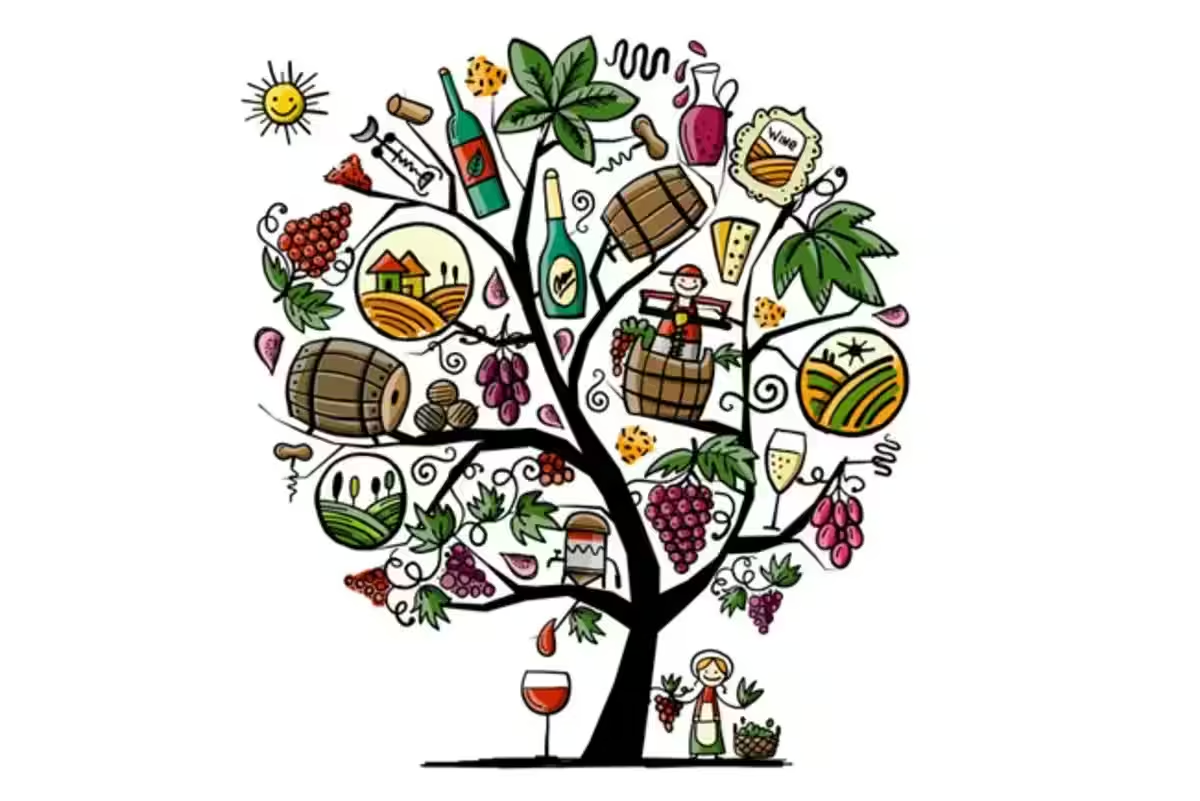
Terroir is a French term with no exact equivalent in Vietnamese or English, but it can be roughly interpreted as “the natural character of a place”. However, its meaning goes far beyond the simple idea of soil.
Terroir refers to an area or landscape, often relatively small, where environmental factors such as soil and microclimate combine to give a product its distinctive quality. Although the term is used in many agricultural fields, such as coffee, terroir is most closely associated with winemaking.
In the world of wine, terroir is the total interaction of all natural and human factors that influence grape quality and wine flavor. These include climate, soil, topography and even the local traditions of farming and winemaking in a specific region. Figuratively speaking, terroir is the “soul” of the land, the finest essence of nature and local culture distilled and carried into every bottle of wine.
The French were the ones who elevated terroir into a philosophy in the wine industry. They believe that a great bottle of wine is not only the product of skilled winemaking, but also the most honest reflection of the land that gave birth to it.
2. Key Factors That Shape the Character of Terroir
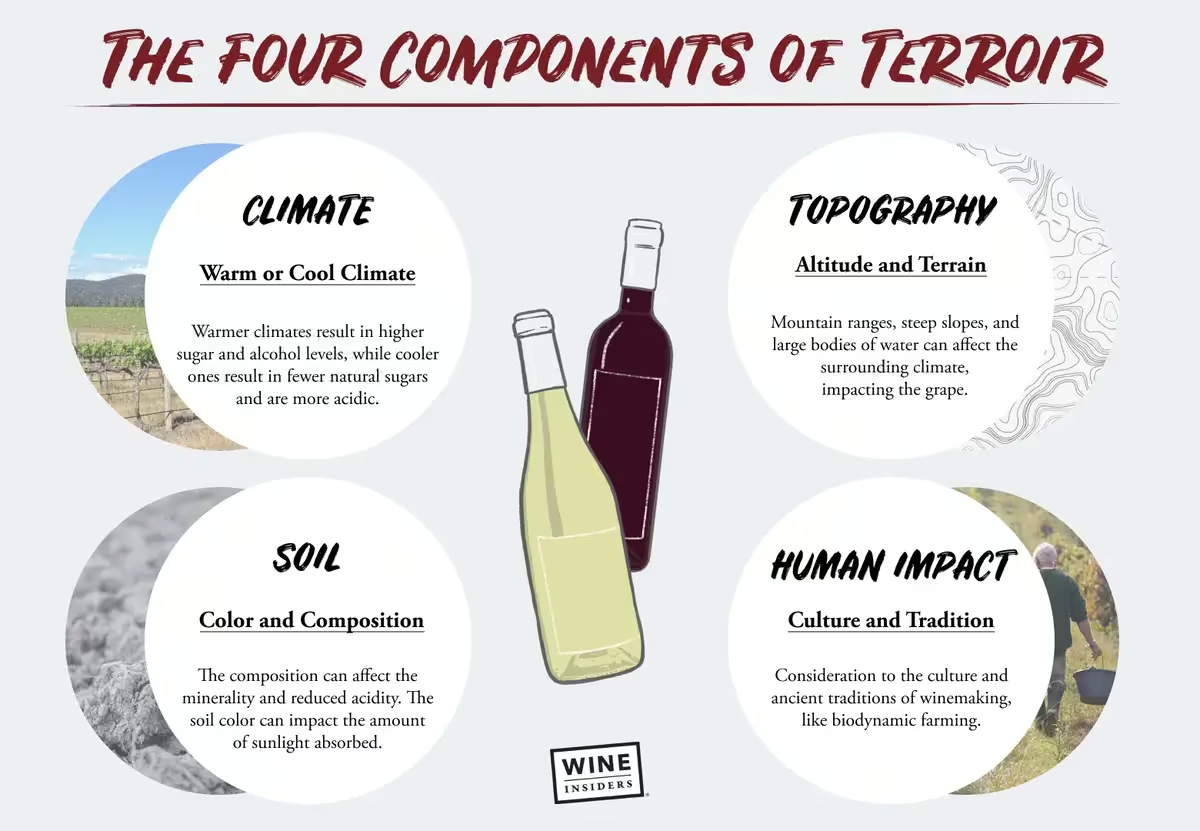
To fully understand what terroir is, we need to analyze 5 main factors that come together, including 4 natural factors and 1 human factor.
2.1. Climate
Climate is the broadest and most influential factor affecting grape development and flavor. It is analyzed at three spatial levels, helping winemakers make precise farming decisions:
- Macroclimate: This is the climate of a large area, which may cover an entire wine region, such as an AVA in the United States or an AOC in France. Macroclimate defines the general temperature range, whether cool or warm, and influences which grape varieties are suitable for the whole region.
- Mesoclimate: This is the climate of a specific vineyard, usually within a range of tens to hundreds of meters. This is where local factors such as proximity to rivers, lakes, wind direction or forests begin to create clear differences between neighboring vineyards.
- Microclimate: This is the environment within a very limited space, even around a single vine row or an individual vine, also known as canopy climate. This is the level most directly influenced by growers through canopy management, which controls how much sunlight and humidity reach the grape clusters.
2.2. Soil
Soil is the foundation that nourishes the vine. There are hundreds of different types of soil, rock and minerals beneath vineyard land. Soil affects vines through drainage ability, heat retention and nutrient supply.
Each soil type brings different flavors and structures to wine:
- Clay: Holds water well and stays cool, often producing full-bodied wines with strong structure. Pomerol in Bordeaux, France, is famous for outstanding Merlot wines grown on clay soils.
- Limestone: Drains well and helps grapes retain acidity even in warm climates. This soil type helped build Burgundy’s reputation for elegant and refined Pinot Noir and Chardonnay.
- Slate: Absorbs heat during the day and releases it at night, helping grapes ripen evenly. This soil is common in Mosel, Germany, creating Riesling wines with distinctive mineral notes.
- Gravel: Drains extremely well and encourages deep root growth. Bordeaux’s Left Bank, where legendary Cabernet Sauvignon wines are born, is covered with thick layers of gravel.
2.3. Topography
Topography is another important piece of terroir. It affects sunlight, temperature and vineyard drainage.
- Altitude: The higher the vineyard, the lower the temperature and the stronger the ultraviolet radiation. This slows grape ripening, helps grapes retain fresh acidity and develops thicker skins, contributing to deeper color and richer tannins in red wine. Mendoza in Argentina is famous for high-altitude Malbec vineyards on the Andes Mountains.
- Slope: Slopes help vineyards drain better and receive more sunlight, especially in higher-latitude regions. Famous vineyards in the Rhône Valley of France and Douro of Portugal often sit on steep hillsides.
- Aspect: This refers to the direction a slope faces in relation to the sun. In the Northern Hemisphere, south-facing and southeast-facing slopes are especially valued because they receive warm sunlight in the morning and midday.
2.4. Winemaking Tradition
Terroir is not only a story of nature. It also carries a strong cultural imprint. Winemaking traditions passed down from generation to generation in a region are an inseparable part of terroir.
This includes decisions such as which grape varieties to grow, for example Sangiovese as the king of Tuscany or Nebbiolo as the soul of Piedmont, farming techniques such as pruning and planting density, harvest timing, and winemaking methods such as fermentation and aging, whether using French or American oak, stainless steel tanks or clay amphorae. These decisions, refined over hundreds of years, aim to highlight the finest gifts that the land can offer.
2.5. The Human Factor
In recent years, the human factor has been increasingly emphasized as part of terroir. Grape growers and winemakers are not passive observers. They are artisans who interpret and express terroir.
Their winemaking philosophy, from choosing organic, biodynamic or sustainable farming to making minimal-intervention decisions in the cellar, is all intended to let the “voice of the land” speak as clearly and honestly as possible through the wine. Human hands and minds are the final bridge between nature and the glass of wine in your hand.
3. Why Is Terroir Important in the Wine World?
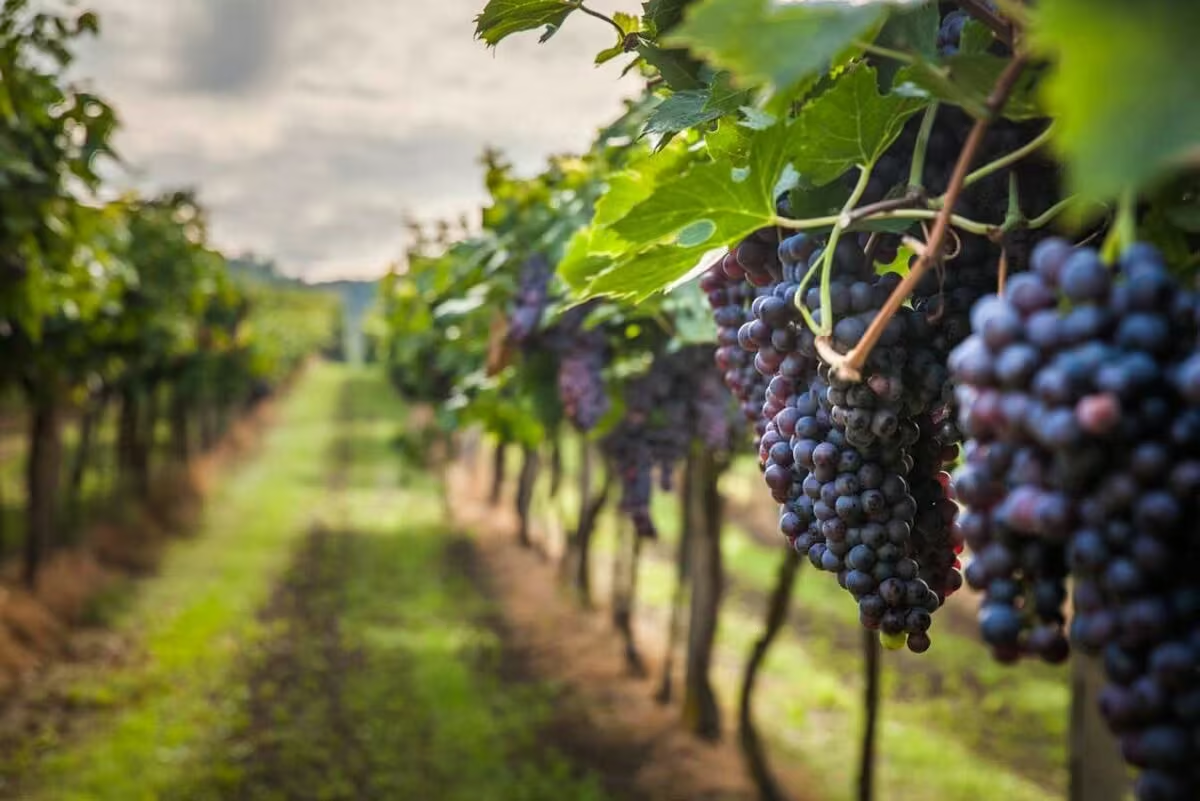
Terroir matters because it gives wine diversity, uniqueness and authenticity.
- Creates difference: Terroir explains why wine has countless styles and flavors. It explains why a Pinot Noir from Burgundy may carry delicate notes of damp earth and truffle, while a Pinot Noir from California may burst with ripe strawberry and cherry aromas. Without terroir, wine would become a monotonous industrial beverage, lacking depth and personality.
- Guarantees quality and origin: Famous wine classification systems around the world, such as AOC, Appellation d’Origine Contrôlée, in France and DOCG, Denominazione di Origine Controllata e Garantita, in Italy, are built on the concept of terroir. A bottle labeled Chablis Premier Cru does not only tell you it comes from Chablis. It also guarantees that it is made from Chardonnay grapes grown in a specific vineyard with special soil and climate, following strict rules on farming and production. Terroir is the seal of origin and quality.
- Creates a cultural and exploratory experience: Understanding what terroir is turns drinking wine from a simple act into a geographical and cultural adventure. When you enjoy a bottle of Sancerre, you are not only tasting bright acidity and grapefruit aromas, but also “tasting” the white chalky soils of the Loire Valley. Every glass of wine is a story, a ticket that takes you to the land where it was born.
Final Thoughts,
Terroir is a beautiful and romantic concept, the heart and soul of wine. It is the crystallization of sunlight, wind, soil, water and the passion and dedication of human beings. Once you understand what terroir is, you will realize that wine is not only an agricultural product, but also a work of art and an honest reflection of the place it comes from.