
 Tiếng Việt
If you love wine, you have certainly heard the term wine tasting. So what is wine tasting? Why do people “taste” instead of simply “drink”? How can you analyze a glass of wine like a professional Sommelier? This article will decode the entire tasting process, from basic concepts to advanced techniques, helping you feel more confident at every gathering.
1. What Is Wine Tasting?
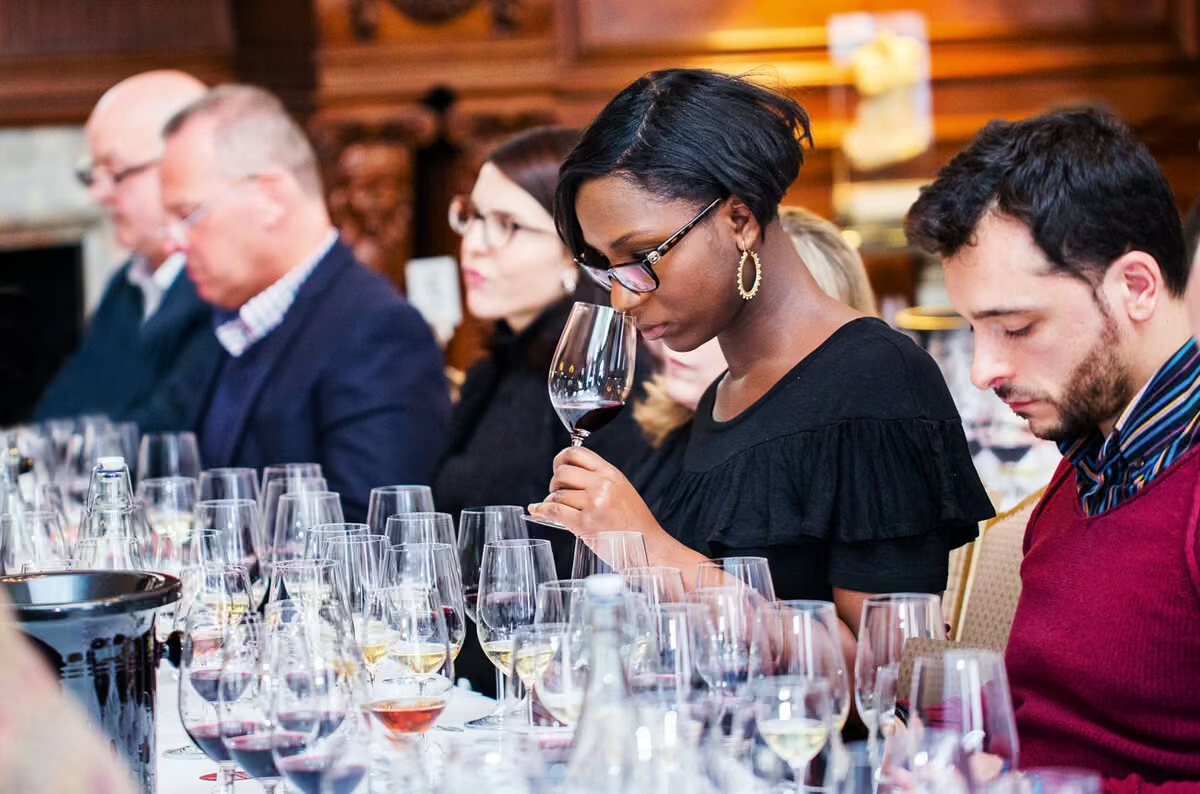
In the simplest sense, Wine Tasting is the process of using the main senses, including sight, smell and taste, to analyze and evaluate the quality of wine.
Unlike “drinking” to quench thirst or become intoxicated, Wine Tasting is a purposeful sensory evaluation experience. Its goal is to answer questions such as: What does the wine smell and taste like? How is its flavor? What is its structure? Is it good, and why?
When you practice wine tasting, you are reading the story behind the bottle: what grape variety it is made from, where the grapes were grown and what intention the winemaker wanted to express.
2. Why Should You Learn Wine Tasting?
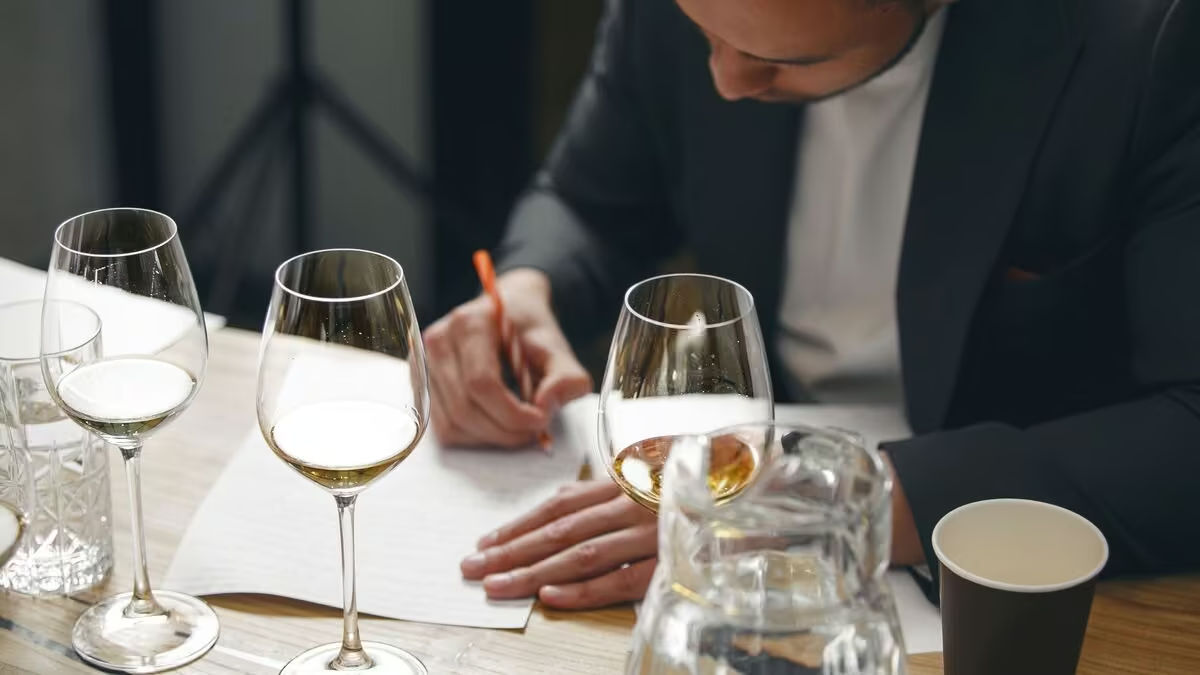
Learning how to taste wine does not only make you look more sophisticated. It also brings practical benefits for health and social life:
- Training the brain: Neuroscience studies suggest that distinguishing complex aromas in wine stimulates the entorhinal cortex, a brain area related to memory. This is considered an excellent brain exercise that helps maintain mental sharpness.
- Developing the senses: Your sense of smell and taste will become more sensitive and refined. This helps you experience food in greater detail and fully enjoy not only wine, but also everyday dishes.
- Building confidence in communication: Wine knowledge is valuable cultural capital in business dinners or diplomatic gatherings, helping you connect more easily and expand relationships.
3. The International 5-Step Wine Tasting Process
To evaluate a bottle objectively, experts around the world follow the 5S process: See – Swirl – Smell – Sip – Savor/Analyze.

Step 1: See
Tilt the glass at a 45-degree angle over a white background, such as a napkin or tablecloth, under good lighting to evaluate the wine.
- Color: This reveals the wine’s age. White wine becomes darker as it ages, shifting from pale yellow to amber. In contrast, red wine becomes lighter with age, changing from deep purple to brick red or brown.
- Clarity: Good-quality wine is usually clear and bright. If the wine looks cloudy, it may be faulty or it may be an unfiltered natural wine.
- Wine legs: After gently swirling, the streaks running down the inside of the glass are called wine legs. Thick, slow-moving legs indicate higher alcohol or greater sweetness.
Step 2: Swirl
This is not just a showy gesture. Swirling helps oxygen enter the liquid, acting as a catalyst that releases volatile aromas upward toward the rim of the glass.
Tip: Keep the glass on the table, hold the base firmly and gently rotate it in circles. This helps you swirl evenly without spilling the wine.
Step 3: Smell
Smell determines 80% of the flavor experience. Place your nose near the rim of the glass and inhale gently. Wine aromas are divided into 3 layers:
- Primary aromas: These come from the grape itself and the terroir, such as apple, lemon, strawberry, raspberry and herbs.
- Secondary aromas: These come from the fermentation process, such as toast, yeast and yogurt.
- Tertiary aromas: These come from aging in oak barrels or in the bottle, such as vanilla, smoke, leather, mushroom and chestnut.
Step 4: Sip
Take a moderate sip and move the wine around your mouth so it touches all taste areas. At this point, your tongue will analyze:
- Sweetness: Felt at the tip of the tongue. Wine that is not sweet is called dry.
- Acidity: Makes you salivate and is felt along the sides of the tongue. Acidity gives wine freshness.
- Tannin: Found mainly in red wine. It creates a dry, astringent feeling on the gums and teeth, similar to strong tea. Tannin helps red wine age longer.
- Body: The sense of richness and weight of the wine in the mouth, like the difference between drinking water and drinking whole milk.
- Alcohol: Creates warmth when swallowing.
- Balance: The harmony between acidity, sweetness, tannin and alcohol.
Step 5: Savor and Analyze
After swallowing, or spitting, take a few seconds to feel the finish. How long does the flavor remain?
A good bottle of wine usually has balance between acidity, sweetness, tannin and alcohol.
The longer and more complex the finish, the higher the wine’s quality.
A good wine has a long finish, harmonious structure and complex aromas.
>> Wine is meant to be appreciated!
4. Basic Terms in Wine Tasting
To describe your impressions accurately, you should understand a few basic terms:
| Term | Meaning |
| Acidity | Natural sourness that creates freshness and stimulates the palate. |
| Tannin | Compounds from grape skins and seeds that dry the mouth and provide structure for red wine. |
| Body | The richness and weight of wine, such as light-bodied, medium-bodied or full-bodied. |
| Dry | Wine with very little or no residual sugar. |
| Oaky/Oaked | Wine with oak aromas, such as vanilla, butter, smoke and caramel. |
| Earthy | Aromas of minerals, damp earth and dried leaves, often found in Old World wines. |
| Finish | The aftertaste that remains after drinking. |
| Vintage | The harvest year of the grapes. |
5. Important Notes When Joining a Wine Tasting
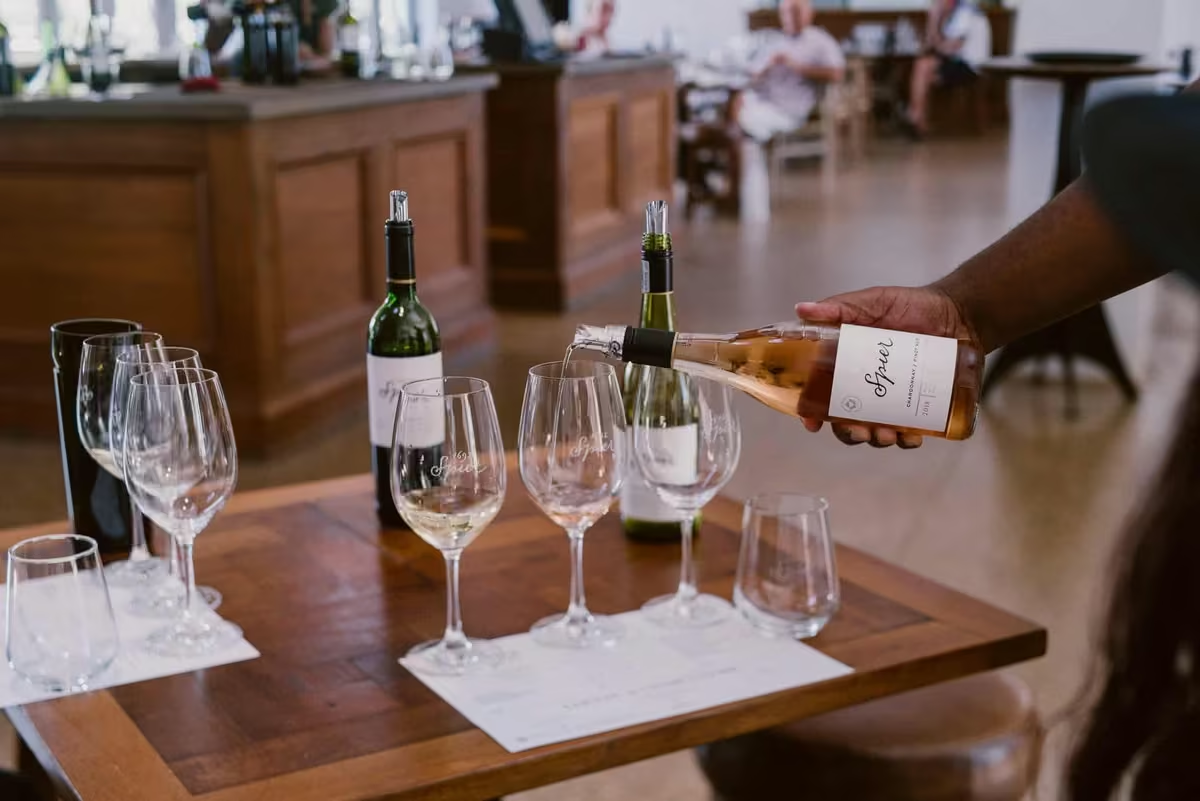
To show that you are polite and respectful of wine culture, remember these rules:
- Do not wear perfume: Strong perfume will overpower the wine’s aroma and disturb other people’s sense of smell. This is one of the most important rules.
- Hold the glass properly: Always hold the stem or base. Do not hold the bowl, because heat from your hand warms the wine and changes its proper flavor.
- Cleanse your palate: Between wines, drink plain water or eat a small piece of plain bread to neutralize your palate.
- Spitting: If you need to taste many wines at once, spitting wine into a dedicated spittoon is completely normal and encouraged so you can stay alert.
>> A guide to holding a wine glass properly for a more complete Wine Tasting session!
Final Thoughts,
Hopefully, this article has helped you understand what wine tasting is and master the basic tasting process. Wine is a journey of discovery with no final destination. Do not worry too much about being right or wrong. Start by observing, smelling and feeling your next bottle slowly.
Every glass of wine has its own story, and now you have the key to open the door to that story. Wishing you wonderful wine tasting experiences.