
 Tiếng Việt

Wine, a beverage that has existed for thousands of years, is not only part of culinary culture but also a refined art form. Understanding how to distinguish different types of wine is the first and most important step toward truly appreciating and understanding the value of wine. This article will take you deep into the diverse world of wine, helping you master the most common ways to classify wine. From there, you can feel more confident when choosing and enjoying this exquisite drink.
1. Distinguishing wine types by origin
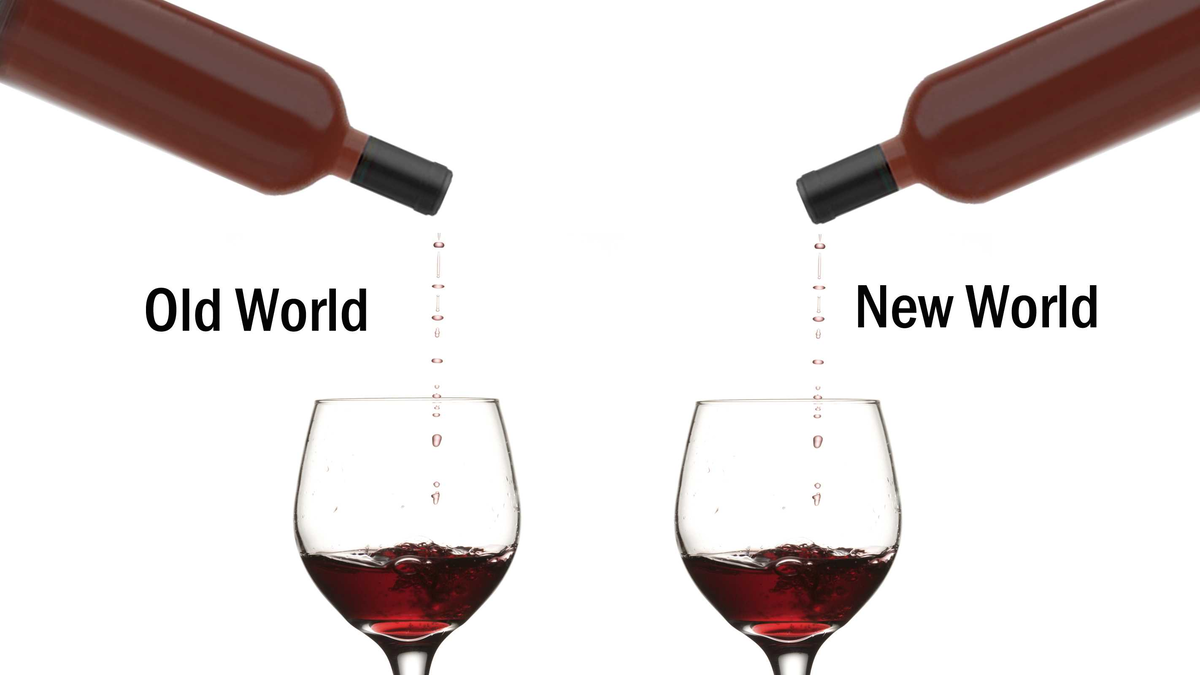
This classification divides wine into two major groups based on history and production philosophy: Old World Wine and New World Wine. The difference between these two groups lies not only in geography, but also in style, regulations and winemaking philosophy, creating unique tasting experiences.

1.1 Old World Wine
“Old World Wine” refers to wine-producing countries with thousands of years of history, where wine grapes, Vitis vinifera, were first domesticated. Representative countries include most European nations such as France, Italy, Spain, Portugal, Germany and Greece, along with Turkey, Georgia and Armenia, the ancient cradles of wine.
Characteristics and production philosophy
Old World wines are produced based on ancient and traditional winemaking methods passed down through generations. Their production philosophy emphasizes vineyard origin, terroir, refinement and complexity. “Terroir” is a profound concept that includes the unique combination of climate, soil, topography and even human farming traditions in a specific region, all of which influence the final flavor of the wine. The main goal of Old World winemakers is to preserve tradition and follow strict regulations on grape varieties, planting density, vine care methods, ripeness, harvest yield and winemaking techniques. This can sometimes restrict creativity, but it ensures quality and a distinctive style that clearly reflects the wine’s geographical origin.
Old World wines often share characteristics such as mineral notes, floral aromas, herbs, gentle spices and a dry, crisp taste typical of temperate climates. They tend to have lower alcohol levels, usually from 11.5 – 13.5%, and higher acidity. Wine quality may vary from vintage to vintage because natural factors strongly influence the final result. Wines are often named after geographical regions rather than grape varieties, and bottle shapes and labels are usually classic and complex. Labeling conventions are also very strict, with protected designations of origin (PDO) and protected geographical indications (PGI).
1.1.1 French wine
France is considered the cradle of global wine culture. The history of French wine dates back at least 2,600 years, beginning when the Greeks founded the colonial city of Marseille in the 6th century BC. France is famous for its strict wine classification system, especially the AOC/AOP level (Appellation d’Origine Contrôlée/ Protégée), established in 1937 to ensure quality and origin.
Famous French wine-producing regions include:
- Bordeaux: The largest wine-producing region in France, famous for blended wines made from Cabernet Sauvignon, Merlot, Cabernet Franc and Petit Verdot. Bordeaux wines have powerful structure, herbal notes, ripe black fruit flavors and excellent aging potential.
- Bourgogne (Burgundy): A leading premium wine region known for exceptional quality from Pinot Noir for red wine and Chardonnay for white wine. Burgundy wines are refined, complex and full of life.
- Rhône: Divided into Northern Rhône, focused on Syrah with powerful wines and herbal notes, and Southern Rhône, producing blends from Grenache, Syrah and Mourvèdre with complexity and good structure.
- Champagne: The world-famous region for sparkling wine. Only wines produced in this region may be called “Champagne”, mainly from Chardonnay, Pinot Noir and Pinot Meunier.
- Alsace: Famous for pure white wines from Riesling, Gewürztraminer and Pinot Gris, clearly expressing local character and fresh flavors.
- Loire: Produces a wide range of wines, from dry white and sweet white to rosé and light red, with popular grape varieties such as Sauvignon Blanc, Chenin Blanc and Cabernet Franc. Loire wines are often fresh and elegant.
1.1.2 Italian wine
Italy’s wine heritage began around 4,000 years ago, when the ancient Greeks expanded into southern Italy and called it Oenotria – “the land of wine”. By the 17th century, grape growing and winemaking techniques had become more focused and scientific.
Famous Italian wine-producing regions include:
- Tuscany: Located in central Italy, Tuscany is one of the most important wine-producing regions in the world. Its mild climate and hilly terrain create ideal conditions for grapes to develop balanced sugar, acidity and aromas. Tuscany is famous for red wines, especially Chianti made from Sangiovese, and the emergence of legendary “Super Tuscan” wines marked a new era for Italian winemaking.
- Piemonte: Famous for Barolo and Barbaresco made from Nebbiolo.
- Veneto: Home to Prosecco and Valpolicella.
The Italian wine classification system includes Vino da Tavola (VdT – table wine), Indicazione Geografica Tipica (IGT – typical geographical indication), Denominazione di Origine Controllata (DOC) and Denominazione di Origine Controllata e Garantita (DOCG – the highest level).
1.1.3 Spanish wine
Spain is an ancient wine-producing country with a history of at least 3,000 years, when the Phoenicians planted vineyards in what is now the Sherry region around 1100 BC. Wine has been produced in Spain since the first centuries AD.
Famous Spanish wine-producing regions:
- Rioja: The most famous wine region, recognized as DOCa (Denominación de Origen Calificada), the highest level in Spanish wine classification. Rioja is famous for premium red wines made from Tempranillo.
- Ribera del Duero: A famous red wine region in the north, also based on Tempranillo, producing full-bodied wines with long-lasting aromas and finishes.
- Rueda: Famous for high-quality white wines made from Verdejo and Sauvignon.
- Priorat: One of the most distinctive and high-quality wine regions, known for complex and powerful red wines from Garnacha and Carignan.
- Penedès: Famous for producing Cava, Spain’s sparkling wine style inspired by Champagne in France, using grape varieties such as Macabeo, Parellada and Xarel·lo.
The Spanish wine classification system includes Vino de Mesa (VDM), Vino Comarcal (VC), Vino de la Tierra (VT/VDLT), Denominación de Origen (DO) and Denominación de Origen Calificada (DOCa).
1.2 New World Wine
New World wines come from countries that were once colonies of Western powers. These countries include the United States, Canada, Australia, New Zealand, Chile, Argentina, South Africa, China and India.
Characteristics and production philosophy
In contrast to the Old World, New World wine producers are usually more open to experimenting with new winemaking techniques and technologies, such as using stainless steel tanks instead of oak barrels or using micro-oxygenation to accelerate the aging process. They are not constrained by strict laws and have more freedom to create and apply modern methods to actively control wine quality and consistency. This has led to the comparison that the Old World is like a “conservative old man”, while the New World is like a “young, modern girl”.
In general, New World wines tend to be fruitier, richer in flavor, full of ripe fruit and easier to approach. They have higher alcohol levels, usually from 14 – 15%, moderate acidity and a softer taste. Their style is flexible, less restricted by production regulations and more focused on grape variety than region or territory. Wine quality is usually more consistent because human intervention can help determine the final result. Wines may be single-vintage or multi-vintage, blended from several vintages, and are often named after the grape variety or producer. Labels are modern, simple and creative. Labeling rules also have their own regulations. For example, in the United States, Chile, New Zealand and Australia, at least 75% of the grapes must be the variety stated on the label.
The difference in production philosophy between the Old World and the New World is not only about geography, but also about the approach to the art of winemaking. The Old World celebrates terroir and tradition, allowing nature to shape the wine’s flavor and structure. This can sometimes lead to variations in quality between vintages, but it also creates wines deeply marked by their place of origin. In contrast, the New World focuses on innovation and quality control, using technology to ensure more consistent and approachable flavors for consumers. Both philosophies have their own value, bringing rich diversity to the world of wine.
1.2.1 American wine
American wine has been produced since the 1500s, with the first large-scale production beginning in New Mexico in 1628. Today, wine is produced in all fifty states, with California accounting for 84% of total U.S. wine production. The first vineyard in California was planted in 1683.
Famous American wine-producing regions:
- California: The largest wine-producing region in the United States, accounting for around 90% of production. Notable sub-regions include Napa Valley, world-renowned for premium wine; Sonoma County, known for diversity and quality; and Mendocino County, famous for sparkling wines made from Chardonnay and Pinot Noir. More than 100 different grape varieties are grown, with the most common being Chardonnay, Cabernet Sauvignon, Merlot, Pinot Noir and Sauvignon Blanc.
- Washington: The second most important wine-producing state, famous for excellent Cabernet, Merlot, Riesling and Chardonnay.
- New York: Third in production volume, with key regions including Finger Lakes and Long Island, growing European Vitis vinifera varieties, native American varieties and hybrids.
- Oregon: Famous for Pinot Noir and aromatic white wines.
Winemaking in the United States often follows traditional methods, including hand harvesting, gentle pressing, natural fermentation in French and American oak barrels, then further aging before bottling. American wine labels must display key information including brand name, wine type, alcohol content, volume, sulfite content, and the name and address of the producer.
1.2.2 Chilean wine
Chilean wine is often called a “fresh breeze” in the New World wine scene. Chile’s grape-growing history began in the 16th century when the Spanish brought Vitis vinifera vines to their colony. By 1889, Chilean wine had won the Grand Prix award in Paris, France. In the 1980s, the Chilean wine industry was revived with the introduction of stainless steel fermentation tanks and oak barrels for wine aging.
Chile is one of the world’s top 10 wine-producing countries, ranking 7th in production and 5th in exports. Its long, narrow geography, with the majestic Andes Mountains to the east and the Pacific Ocean to the west, creates highly diverse climates. In particular, areas near the Andes experience large day-night temperature differences, helping grapes retain high acidity and develop distinctive aromas.
Famous Chilean wine-producing regions:
- Valle Central: The largest and most important wine-producing region, including sub-regions such as Maipo Valley, Rapel Valley and Maule Valley. It produces diverse wines from Cabernet Sauvignon, Carmenere and Merlot to Sauvignon Blanc and Chardonnay.
- Maipo Valley: Located near the capital Santiago, it is home to some of the country’s most prestigious wines and is often described as the “Bordeaux of South America”. It is famous for full-bodied Cabernet Sauvignon and Carmenere.
- Casablanca Valley: Located near the Pacific Ocean, this region is famous for excellent white wines, especially from Chardonnay and Sauvignon Blanc, with fresh aromas and high acidity.
- Colchagua Valley: Considered one of Chile’s premium wine regions, producing outstanding Carmenere as well as Cabernet Sauvignon, Malbec and Syrah.
Chilean wine law (Denominación de Origen, 1995) requires that 75% of the grape variety come from the region printed on the bottle, and 85% of the wine must be made from the grape variety stated on the label to meet export requirements for EU countries.
1.2.3 Australian wine
Australia is one of the leading countries in applying and developing science and technology in the wine industry. The Australian wine industry began in 1788 when the British brought the first vine cuttings from Europe. By 1980, Australia had advanced its techniques, machinery and production equipment, combining long-standing formulas with innovation to create wines with distinctive flavors. Today, Australia is the world’s fifth-largest wine exporter.
With more than 60 grape-growing regions across the country, Australia has favorable climate conditions for growing many different grape varieties. Famous Australian wine-producing regions:
- South Australia: Produces half of Australia’s wine and offers great geographic and climatic diversity. Famous regions here include Barossa Valley, known for powerful Shiraz, Clare Valley, Eden Valley, Adelaide Hills, Coonawarra and Margaret River.
- New South Wales: The second-largest wine-producing state, with the famous Hunter Valley, considered the birthplace of Australian viticulture. Popular grape varieties include Cabernet Sauvignon, Chardonnay, Shiraz and Sémillon.
- Victoria: The state with the largest vineyard area, offering diverse climates and therefore a wide range of wine flavors.
- Tasmania: An island with a cool “European-style” climate, producing many sparkling wines from Chardonnay and Pinot Noir.
Shiraz from Barossa Valley produces some of the world’s most powerful wines, with aromas of ripe blackberry, raisins and mocha woven with tobacco, meat and black pepper notes.
1.2.4 South African wine
South African wine has a history of more than 350 years, beginning with the first Dutch settlers who arrived in Africa in the 17th century. The first South African wines were produced in 1659. South Africa is considered a bridge between Old World and New World wines, because its producers use New World techniques while sharing many stylistic similarities with Old World producers.
South Africa is the 11th-largest wine-producing country in the world. Its wine industry is concentrated around the fertile yet scattered areas of the Western Cape, where mountains, valleys and plateaus allow for creative wine styles. The maritime climate, influenced by the meeting of the Atlantic and Indian Oceans, strongly affects its wine regions.
Important South African wine-producing regions:
- Stellenbosch: One of the most famous regions, with beautiful mountain landscapes and various clay and rocky soils suitable for grape growing. Stellenbosch wines often have fresh fruit flavors and a long finish.
- Paarl: A long-established wine region. Paarl wines often show rich fruit flavors and good tannin structure.
- Franschhoek: A small region nestled among high mountains, producing premium wines with refined aromas and complex flavors.
- Constantia: The oldest wine-producing region, where Bordeaux grape varieties are successfully grown.
- Walker Bay: Known for Pinot Noir and Chardonnay, producing excellent white and red wines with distinctive flavors.
The signature grape variety here is Pinotage, a crossing of Pinot Noir and Cinsaut. Shiraz is also widely planted, along with Cabernet Sauvignon and Merlot.
1.2.5 New Zealand wine
New Zealand wine dates back to the early 19th century, with the first vines planted in 1819. The modern wine industry in New Zealand began in the mid-20th century and expanded rapidly in the early 21st century, growing 17% annually from 2000 to 2020. New Zealand is best known for Marlborough Sauvignon Blanc, and more recently for concentrated Pinot Noir from Marlborough, Martinborough and Central Otago.
As an island nation in the South Pacific, New Zealand has a mainly maritime climate, creating significant regional differences from north to south. Nearly 90% of total wine production is exported, mainly to the United States, the United Kingdom and Australia.
Famous New Zealand wine-producing regions:
- Marlborough: New Zealand’s largest and most prestigious wine region, accounting for nearly two-thirds of the country’s vineyard area. In the 1980s, its distinctive Sauvignon Blanc brought Marlborough to the center of the wine world’s attention. A cool climate, abundant sunshine, low rainfall and well-drained soils create wines with vivid and unique flavors.
- Central Otago: Famous for Pinot Noir, where excellent wine styles are crafted from different sub-regions. The area also produces outstanding Chardonnay.
- Waihake: Famous for elegant, smooth Syrah, while Petit Verdot, Chardonnay and Viognier also deliver distinctive flavors.
- West Auckland: Fertile soils and warm climate create favorable conditions for grape development, especially Chardonnay and Merlot.
Like many New World wines, New Zealand wines are often produced and labeled as single-varietal wines, or if blended, producers usually list the grape components on the label.
>> Read Part 1 here!
2. Wine classification by sugar content (sweetness level)
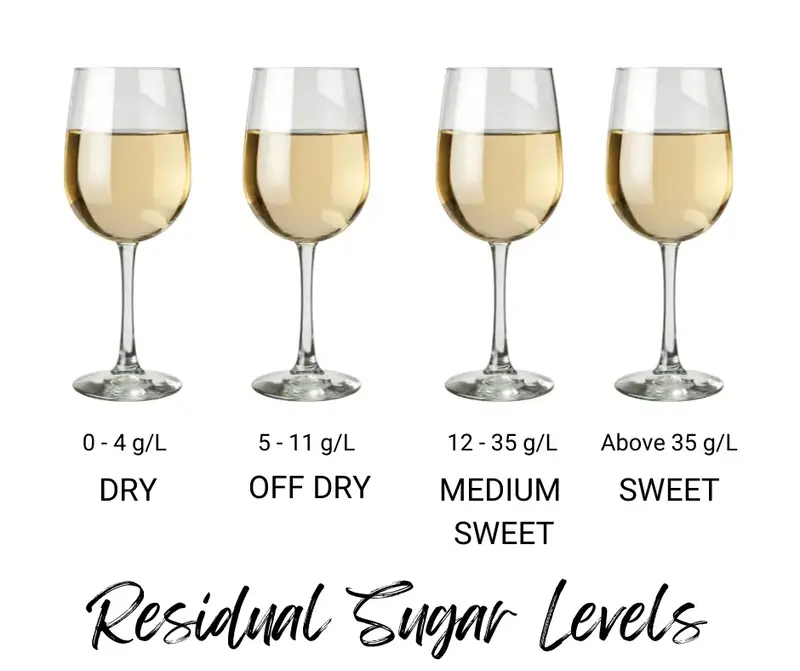
Residual sugar (RS) after fermentation is the factor that determines wine sweetness. This classification is very important when choosing a wine that matches personal taste and food pairings.
2.1. Dry wine
Dry wine is wine in which most or all of the sugar in grape juice has been converted into alcohol during fermentation. Residual sugar content is usually very low, under 4 grams per liter. This is the most common wine style.
Characteristics:
- Flavor: No noticeable sweetness, mainly showing fruit, mineral, herbal and spice notes.
- Acidity/Tannin: Clearly expressed, giving the wine structure and finish.
- Popularity: Most red, white and rosé wines on the market are dry wines.
- Examples: Cabernet Sauvignon, Merlot, unoaked Chardonnay, Sauvignon Blanc, Pinot Grigio.
2.2. Off-dry/Semi-dry wine
Off-dry wine contains a certain amount of residual sugar, enough to give a gentle sweetness without becoming overly rich. Residual sugar usually ranges from 4 to 12 grams per liter.
Characteristics:
- Flavor: Light sweetness, balanced by the wine’s natural acidity.
- Popularity: Some Riesling, Chenin Blanc and Gewürztraminer wines.
- Food pairing: Suitable with mildly spicy dishes, Asian cuisine, cheese or simply enjoyed on its own.
2.3. Semi-sweet/Medium-sweet wine
Semi-sweet wine has a more noticeable level of residual sugar, usually from 12 to 45 grams per liter, giving a clearer sense of sweetness than off-dry wine.
Characteristics:
- Flavor: Noticeable sweetness, often accompanied by ripe fruit aromas.
- Popularity: Some Riesling wines, such as German Kabinett or Spätlese, and Moscato d’Asti.
- Food pairing: Often served with desserts that are not too sweet, fresh fruit or blue cheese.
2.4. Sweet wine/Dessert wine
Sweet wine, or dessert wine, has the highest residual sugar content, above 45 grams per liter and sometimes reaching several hundred grams per liter. Sugar is retained through special techniques such as:
- Noble Rot – Botrytis Cinerea: This fungus dries the grapes, concentrating sugar and acidity while creating complex flavors, as seen in Sauternes, Tokaji and Beerenauslese.
- Dried grapes (Passito/Straw Wine): Grapes are dried on straw mats or hung to allow water to evaporate, increasing sugar concentration. Examples include Vin Santo and Amarone della Valpolicella, although Amarone is a powerful dry wine and some versions may show a slightly sweet impression.
- Frozen grapes (Ice Wine/Eiswein): Grapes are left to freeze on the vine and then pressed while still frozen. The frozen water is removed, leaving only highly concentrated sweet juice, as in Canadian Ice Wine and German or Austrian Eiswein.
- Stopping fermentation early: Alcohol is added during fermentation to kill the yeast and preserve sugar, as in Port and sweet Sherry.
Characteristics:
- Flavor: Extremely sweet and rich, often with notes of honey, dried fruit, nuts and spices.
- Food pairing: Ideal with desserts, blue cheese, or enjoyed alone as a liquid dessert.
- Examples: Sauternes from France, Tokaji from Hungary, Eiswein from Germany or Canada, Port from Portugal and sweet Sherry from Spain.
Final thoughts,
Distinguishing wine types by different criteria such as sweetness and region of origin will help you gain a broader and deeper understanding of this exquisite beverage. Each wine classification method mentioned above offers valuable information, supporting you in choosing a bottle that suits your personal preferences, food pairings or special occasions.