


 Tiếng Việt
Have you ever wondered what wine corks are made of and why they play such an important role? Why, in an age of technology with countless modern materials such as plastic, aluminum and rubber, do the world’s leading winemakers still remain loyal to a traditional wooden wine cork that has existed for hundreds of years?
The answer is not simply about one material. Behind the question of what wine corks are made of lies a long story of history, natural biology and craftsmanship that has lasted for centuries. This article will help you understand it fully, clearly and accurately.
1. What Are Wine Corks Made Of?
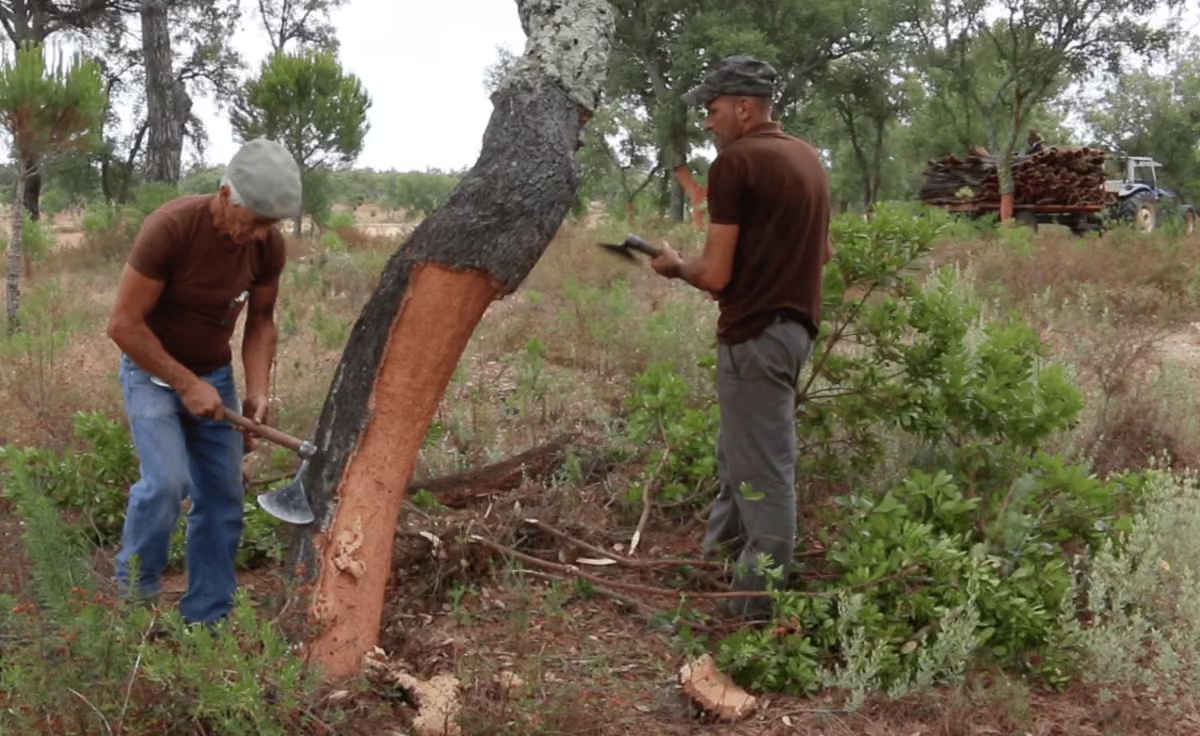
To answer the question of what wine corks are made of precisely, we need to look at their special botanical origin. Cork stoppers are made from the bark of the cork oak tree, scientifically known as Quercus suber.
Unlike ordinary timber trees that must be cut down for harvesting, cork oak is a priceless gift from nature thanks to its remarkable ability to regenerate. Only the outer bark is removed, and the tree heals itself by growing a new layer of bark. This process does not harm the tree. On the contrary, it stimulates the tree to grow more vigorously and absorb more CO2 from the environment.
This makes the wood used for wine corks one of the most:
- Sustainable
- Environmentally friendly
- Naturally renewable
Why is cork oak chosen for wine stoppers?
It is no coincidence that wooden wine corks are made from cork oak. The biological structure of this material is almost perfect for preserving wine.
- Honeycomb structure filled with gas: Under a microscope, a tiny cork stopper contains more than 800 million hollow cells. These cells do not contain water, but a gas mixture similar to air. This makes cork extremely light and wonderfully elastic.
- Water-resistant suberin: This is a natural waxy compound that makes cell walls resistant to water and liquids. Thanks to suberin, cork prevents wine from leaking out while also stopping air from rushing into the bottle.
- Elasticity: When strongly compressed and inserted into the bottle neck, the air pockets inside the cells are squeezed. Once the compression force ends, they try to expand back to their original shape, creating continuous pressure against the glass neck and sealing the bottle tightly.
Thanks to these naturally gifted properties, wine corks made from cork oak have remained the perfect answer to what wine corks are made of for many centuries.
2. How Wine Corks Are Made from Cork Oak Bark
Understanding how wine corks are made will help you see why such a small stopper can hold so much value.
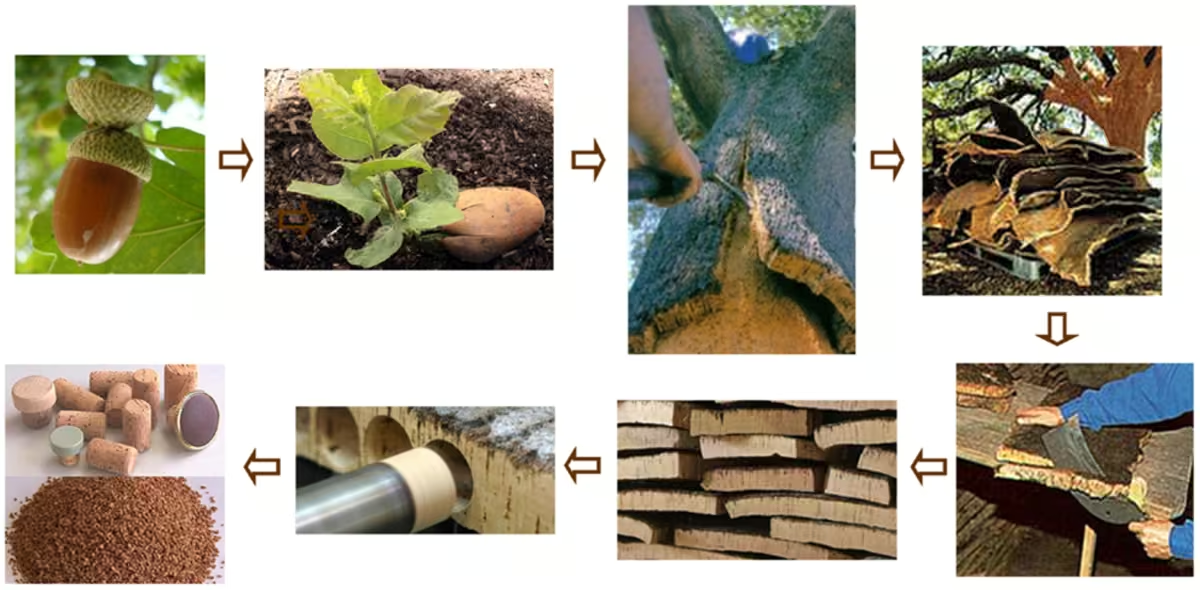
2.1. Harvesting Cork Oak Bark
The cork harvest is an art that requires patience. A cork oak tree must reach around 25 years old before its bark can be harvested for the first time. However, this first bark is very hard and rough, so it cannot be used to make wine corks and is usually used for insulation materials or flooring instead.
Growers must wait another 9 years for the second bark, but its quality is still not good enough. Only by the third harvest, when the tree is more than 40 years old, does the bark reach the smoothness and elasticity required for premium wine cork production. This high-quality bark is called “Amadia”. From then on, every 9 years during summer, skilled workers use specialized axes to remove the bark by hand. They must be extremely careful not to damage the inner wood, ensuring the tree can continue living and regenerate its bark.
2.2. Cleaning and Sterilizing
After harvesting, cork bark planks are left outdoors for about 6 months to stabilize their structure and moisture. Next comes an extremely important step: boiling the cork. The cork planks are boiled in water for about 1 hour. This process helps:
- Remove dust and insects.
- Eliminate excess tannins and some volatile organic compounds.
- Soften the cells, flatten the cork planks and increase elasticity by around 20%.
Today, to ensure maximum safety, modern factories also use steam distillation or supercritical CO2 technology to completely remove the risk of mold and unwanted odors.
2.3. Shaping the Corks
Depending on the type of cork, the shaping process differs:
- Natural whole-piece cork: For the highest-quality cork planks, machines punch cylindrical stoppers directly from the bark. This is the most expensive type.
- Technical cork: The leftover bark after punching is ground into granules, then bonded with food-grade adhesive to create technical corks or agglomerated corks.
- Finishing: Finally, the corks are polished, printed with logos, coated with a thin layer of silicone for easier insertion and extraction, and carefully quality-checked before being delivered to winemakers.
3. How Do Wooden Wine Corks Affect Wine Quality?
Knowing what wine corks are made of is one thing, but understanding their role in wine quality is another fascinating story. A cork is not just a closure. It is the “lung” of the wine bottle.
3.1. Advantages
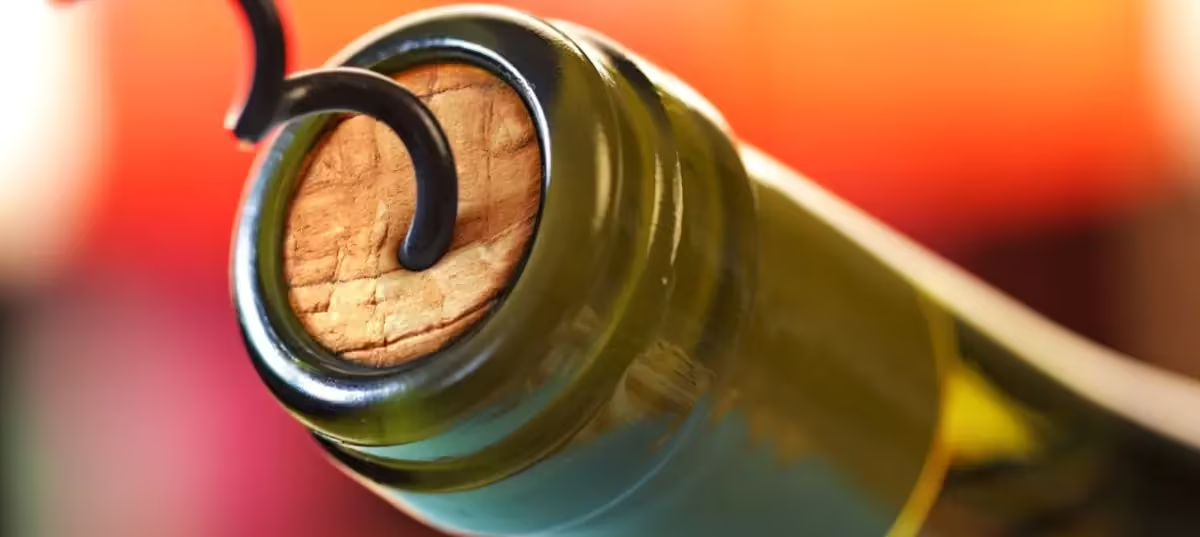
The greatest advantage that makes natural cork unbeatable for premium wines is micro-oxygenation. Although cork prevents liquid from leaking, it allows a tiny amount of oxygen, about 1mg per year after the first year, to pass into the bottle. This tiny amount of oxygen is extremely valuable:
- It helps soften tannins in red wine, making the wine smoother and more refined over time.
- It encourages the development of complex aroma layers, such as leather, cigar box and mushroom notes, which only appear in aged wines.
In addition, cork is the most environmentally friendly closure material. Cork production can have a negative carbon footprint, meaning it absorbs more CO2 than it emits, while aluminum screw caps and plastic closures consume more energy and create waste that is harder to decompose.
3.2. Disadvantages
However, natural cork is not perfect. Its biggest disadvantage is the risk of TCA contamination, or Trichloroanisole. TCA is a compound formed when natural mold in tree bark comes into contact with chlorine-based cleaning agents or pesticides. Although it is not harmful to health, even a tiny amount, measured in parts per trillion, can create “cork taint”, a damp musty smell like wet cardboard or wet dog, stripping wine of its fresh fruit flavors. In addition, cork can dry out and shrink if not stored properly, which is why bottles should be kept horizontally. When cork shrinks, too much air can enter and turn the wine sour. Natural cork is also much more expensive than other closure types.
4. What Else Can Wine Bottle Closures Be Made Of Besides Cork?
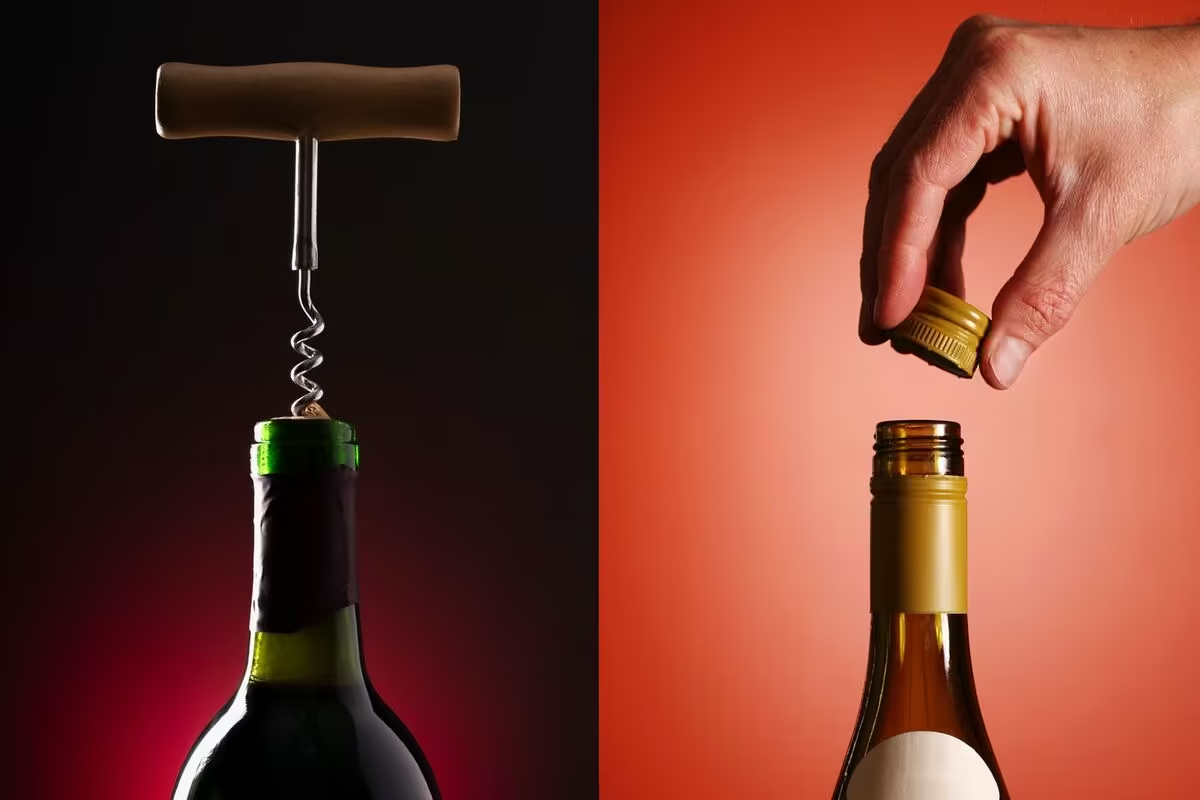
Besides wooden wine corks, today there are also:
- Aluminum screw caps
- Completely airtight
- No micro-oxygenation
- Suitable for wines meant to be consumed young
- Synthetic plastic corks
- Affordable
- No risk of TCA contamination
- Less commonly used for premium wines
However, for wines that require long-term aging, wooden wine corks remain the optimal choice.
>> A list of 12 common wine closures that not everyone knows fully!
5. Common Types of Cork Stoppers on the Market
When learning what wine corks are made of, you will realize that not all corks are the same. Depending on the intended use and price of the wine bottle, producers choose the most suitable type of closure.
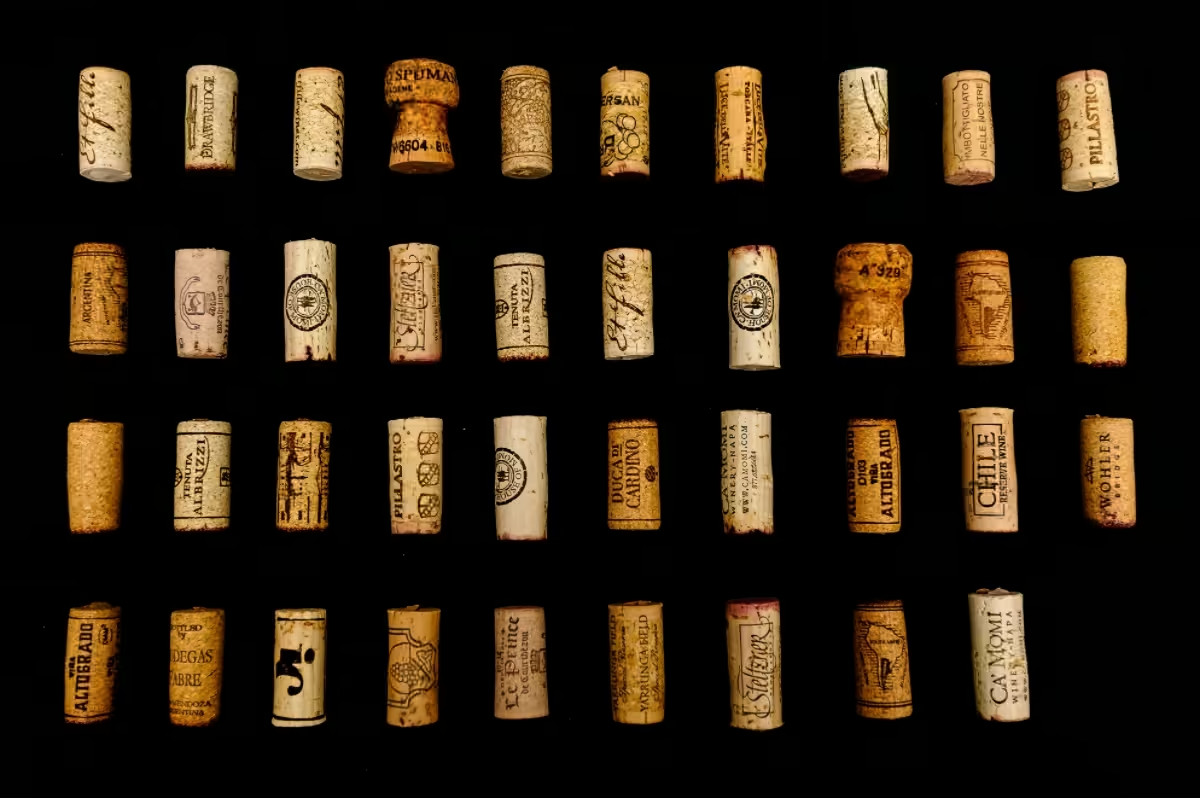
5.1. Technical Stopper / Twin Top
This is a smart solution that balances economy and quality.
- Structure: The body of the cork is made from compressed cork granules, while both ends are covered with discs of natural whole-piece cork.
- Characteristics: This structure, often called 1+1, ensures that the wine only comes into contact with safe natural cork, while the compressed body provides strength and consistent size.
- Application: Very popular for wines meant to be consumed young or aged for a short to medium period, around 2-5 years. It preserves flavor well and offers a reasonable cost.
5.2. Agglomerated Stopper
- Structure: Made entirely from cork granules, the by-product of punching whole-piece corks, mixed with food-grade adhesive and pressed into a cylinder.
- Characteristics: Very affordable. However, its elasticity is lower than natural cork and it is not suitable for long-term aging because the adhesive can degrade over time.
- Application: Used for inexpensive wines intended for quick consumption, usually within 1-2 years, commonly sold in supermarkets.
5.3. Champagne Stopper
If you pay attention, Champagne corks always look like mushrooms, but in reality, they start as large cylinders.
- Structure: Because pressure inside a Champagne bottle is extremely high, around 5-6 atm, about 3 times the pressure of a car tire, the cork must be very strong. The upper body is usually made from large-grain agglomerated cork for strength, while the lower part that touches the wine is made from 2-3 discs of the highest-quality natural cork.
- Characteristics: The cork has a large diameter, around 31mm, and is compressed strongly down to 18mm to fit into the bottle neck. Its rebound force keeps CO2 gas firmly inside the bottle, creating the crisp pop when opened.
Final Thoughts,
Through this article, you now have a complete answer to the question of what wine corks are made of, as well as a clear understanding of the wood used for wine corks, how wine corks are made and why wooden corks are still valued by winemakers today.
Although there are now many more convenient alternatives such as screw caps and plastic corks, cork still holds a unique position, especially for premium wines that need time to mature. It is not only a packaging material, but also a bridge between nature, tradition and the art of wine appreciation.
The next time you open a bottle of wine, take a second to look at the wooden cork in your hand, the result of decades of work by both nature and people. And if someone asks you what wine corks are made of, you now have a wonderful story to share with a glass of wine in hand.