


 Tiếng Việt
There are many ways to classify wine, and each method offers a different perspective on its characteristics and value. In Part 3, we will focus on two main classification methods: classifying wine by grape variety and by production region, which are core factors that shape the unmistakable identity of every bottle.
1. Wine Classification by Grape Variety – The Foundation of Unique Flavors
Grape variety plays a key role in shaping the flavor, structure, color and aging potential of wine. Each grape variety carries its own genetic characteristics in skin, flesh and seeds, directly influencing sugar, acidity, tannin and aromatic compounds in the grape. These elements then create the unique identity of the finished wine.
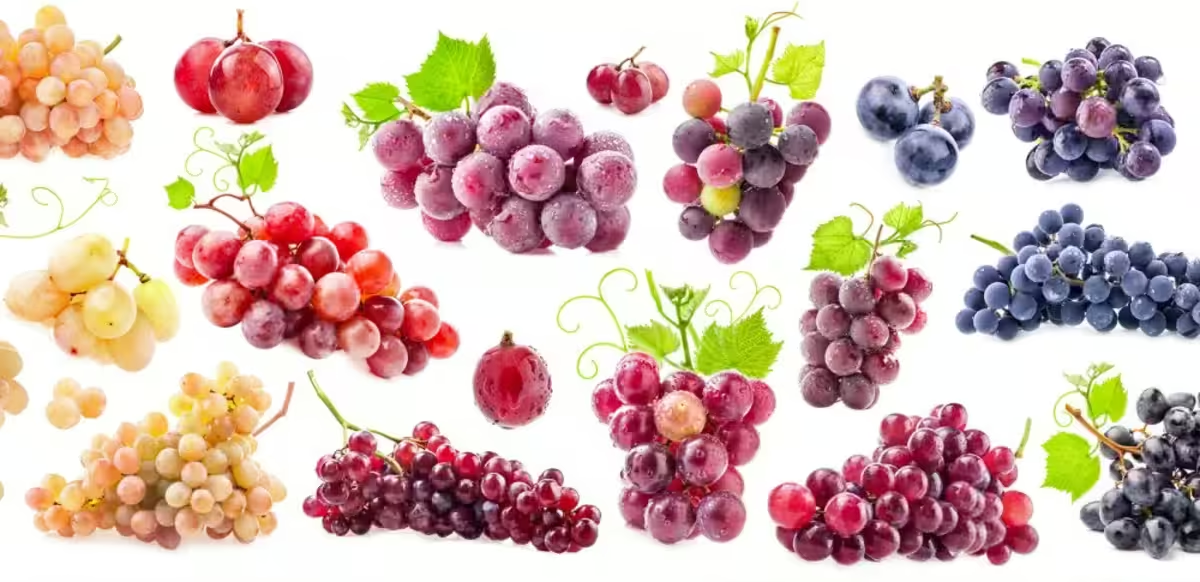
1.1. Cabernet Sauvignon Wine: The Bold Red King
Cabernet Sauvignon is a red grape variety with beautiful reddish-purple skins, thick skin and high tannin content. This grape is small and resilient, with strong vitality, able to grow well in most weather conditions and naturally resistant to insects. Although it ripens later, harvesting is very easy.
This grape variety is commonly used in wine blending, especially in Bordeaux, France, where it is combined with Merlot, Cabernet Franc, Petit Verdot, Malbec and Carmenere to create powerful structure and bold aromas.
With rich fruit flavors and strong tannins, Cabernet Sauvignon wine pairs wonderfully with bold red meat dishes such as steak and hamburgers, especially when served with rich sauces. In Vietnamese cuisine, it can also pair harmoniously with pho or grilled pork.
1.2. Pinot Noir Wine: Refinement from Thin Skins
Pinot Noir is one of the oldest grape varieties in the world, originating from Burgundy, France. Its most notable characteristic is its thin skin, which makes growing and harvesting difficult, but also creates its signature delicate flavors and aromas.
The flavor of Pinot Noir varies clearly depending on the production region:
- French Pinot Noir, Burgundy: Shows signature flavors of cherry, rose, mushroom and earthy notes.
- California Pinot Noir: Usually richer, fruitier and smoother, with notes of cherry, raspberry, cinnamon and vanilla.
Pinot Noir is easy to drink and pairs well with many dishes. It is ideal with meats such as poultry, duck, game birds or beef. When slightly chilled, it also works well with cheese and appetizers. Fruit-forward versions pair beautifully with salmon or oily fish, roasted chicken or pasta. For stews and red meat, a deeper Pinot Noir with more tannin is the best choice. It is also a perfect pairing for earthy dishes such as mushrooms.
1.3. Merlot Wine: Soft and Easy to Drink
Merlot is a dark blue grape variety used to make Merlot wine and as a blending component. It is the most common grape in most wines from Saint-Emilion and Pomerol in Bordeaux, France.
In terms of flavor, Merlot wine has two main styles:
- International style, New World: Usually emphasizes late harvesting. The wine has a deep purple color, rich flavor, high alcohol level, gentle astringency, strong oak influence, smooth tannins and flavors of plum and blueberry.
- Traditional style, Bordeaux, France: Merlot grapes are harvested earlier to preserve acidity. The wine has medium body, moderate alcohol and fresh fruit flavors such as raspberry and strawberry.
Suggested food pairings for Merlot include stewed meat, pork roasted with miso sauce and Feijoada.
1.4. Syrah, Shiraz Wine: Powerful and Full of Character
Syrah, also known as Shiraz, is a famous red grape variety widely cultivated around the world. This grape originates from the Rhône Valley in France. Syrah is the only red grape permitted for red wine production in Northern Rhône and is also used in red wine blends in Southern Rhône. It was brought to Australia in the 19th century and became known there as Shiraz.
There is a clear difference between the two Syrah or Shiraz styles depending on the production region:
- Old World, Europe, especially France: Syrah has a refined and sharp structure with distinctive savory minerality.
- New World, the Americas, Australia and Africa: Syrah wines are often rich, rounded and full of ripe fruit flavors with a touch of spice.
Darker meats and exotic spices highlight the fruitiness of Syrah. Try Syrah with roasted meat or Asian five-spice pork. It also pairs well with rich beef stew in wine or grilled Portobello mushrooms with balsamic sauce.
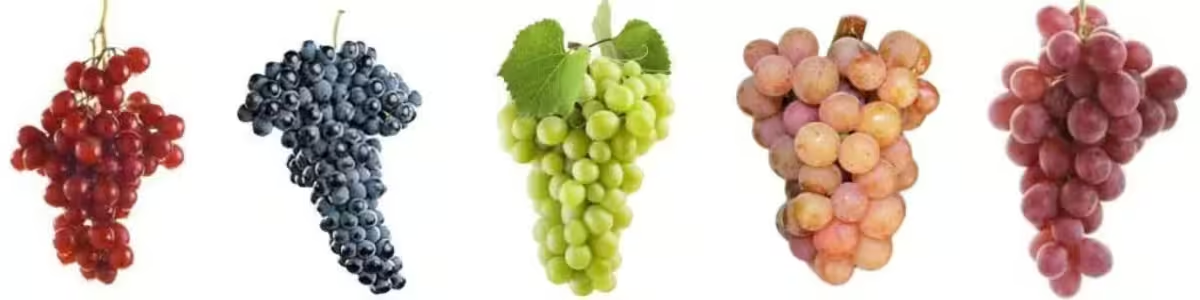
1.5. Sauvignon Blanc Wine: Fresh and Refreshing
Sauvignon Blanc is a green-skinned grape variety that originated in Bordeaux, France. Its name most likely comes from the French words “sauvage”, meaning wild, and “blanc”, meaning white. Sauvignon Blanc is widely planted in many wine-producing countries around the world.
Sauvignon Blanc is an excellent choice with herb-based sauces, as well as chicken, tofu or fish. It is especially suitable with seafood and vegetables. It also pairs well with herb-focused Asian cuisines such as Thai or Vietnamese food. White meats such as chicken, pork and fish are all suitable choices. For cheese, look for tangy and more acidic styles such as goat cheese. Green vegetables, whether stir-fried or served in salads, also work very well with this wine’s acidity.
1.6. Chardonnay Wine: The “Chameleon” of White Wine
Chardonnay is the most popular white grape variety in the world because it adapts easily to almost every climate. Because of this ability, it is known as the “chameleon grape” of white wine. This grape originated from the small village of Chardonnay in Mâconnais, southern Burgundy, France. Today, Chardonnay is widely grown in many wine-producing countries.
The flavor of Chardonnay wine is highly diverse and depends on climate conditions as well as each producer’s techniques:
- Cool climate: Chardonnay shows gentle notes of quince, lemon, peach, apricot and yellow apple.
- Warmer climate: Chardonnay develops characteristic flavors of tropical fruits such as pineapple, apricot, starfruit and citrus.
- Oak aging technique: Many Chardonnay wines have complex aromas from oak use, bringing notes of vanilla, smoke and sweet spices.
- Terroir influence: Sometimes, Chardonnay flavors also include mineral notes such as chalk, wet stone and seashell.
Chardonnay is one of the three main grape varieties used to produce Champagne.
Chardonnay wine can pair well with almost every type of food because it is produced in many different styles:
- Light-bodied Chardonnay: Pairs well with fresh cheese or seafood.
- Medium-bodied Chardonnay: Enhances poultry dishes, pork tenderloin or cheese.
- Full-bodied Chardonnay: Pairs well with appetizers such as rich cream sauces or even grilled meat.
1.7. Sémillon Wine: From Dry Wine to Famous Sweet Wine
Sémillon is a white grape variety with yellowish-green skins, while some clusters may turn pink or copper-red during harvest. This grape originated in Bordeaux, southwestern France, and appeared as early as 1736. Sémillon is a vigorous vine and relatively easy to grow, adapting well to many soil types.
In particular, Sémillon is the key to producing famous sweet wines such as Sauternes, France. For grapes used to make this sweet wine, they must be affected by Botrytis, also known as noble rot, which concentrates sugar and flavor inside the grape.
1.8. Riesling Wine: The Balance Between Sweetness and Acidity
Riesling is a famous white wine grape variety, recognizable by its fresh green skin and small berries growing in clusters. Winemakers often use Riesling to produce dry, semi-sweet, sweet and sparkling white wines. Thanks to its naturally high acidity, Riesling is also one of the most popular grape varieties used for late-harvest wines.
In terms of flavor, Riesling varies depending on the climate of the growing region:
- In cool climates such as Germany: Riesling wines tend to show apple and fruit aromas with noticeable acidity.
- In warmer regions such as Alsace, Australia or Austria: Riesling is often loved for its naturally high acidity and clear fruit flavors.
- Aging potential: With bottles that can age for hundreds of years, Riesling can develop flavors truly worth experiencing.
Try Riesling with grilled dishes, seafood, fish, traditional German dishes such as pasta, tapas, mixed rice or sausages.
Table: Overview of Popular Grape Varieties and Flavor Characteristics
| Grape Variety | Skin Color | Key Characteristics | Typical Flavors | Typical Food Pairings |
| Cabernet Sauvignon | Reddish purple | Thick skin, high tannin, strong vitality | Blackcurrant, green pepper, leather | Red meat, BBQ, pho, grilled pork |
| Pinot Noir | Deep red | Thin skin, delicate, difficult to grow | Strawberry, cherry, mushroom, earthy notes | Poultry, mushrooms, salmon, stews |
| Merlot | Dark blue | Early ripening, sensitive, common in Bordeaux | Plum, blueberry, strawberry, oak | Stewed meat, lamb, grilled pork |
| Syrah, Shiraz | Deep purple | High disease resistance, flexible, high tannin | Blackberry, black pepper, olive, spice | Dark meat, spices, grilled dishes |
| Sauvignon Blanc | Green | Fresh, herbal, high acidity | Lemon, grapefruit, green grass, gooseberry | Seafood, green vegetables, white meat |
| Chardonnay | White / Green | Adaptable, “chameleon” | Pineapple, vanilla, green apple, minerality | Seafood, creamy pasta, poultry |
| Sémillon | Yellowish green | Blending grape, Botrytis sweet wine, thin skin | Citrus, honey, nuts | Dry wine: seafood; sweet wine: desserts |
| Riesling | Fresh green | Naturally high acidity, aging potential | Green apple, peach, minerality, rose | Grilled dishes, seafood, traditional German dishes |
2. Wine Classification by Production Region – The Signature of Terroir
The concept of “terroir” is not only a geographic factor but also a deep winemaking philosophy, especially prominent in Old World regions. This explains why European wines are often classified by origin rather than grape variety.
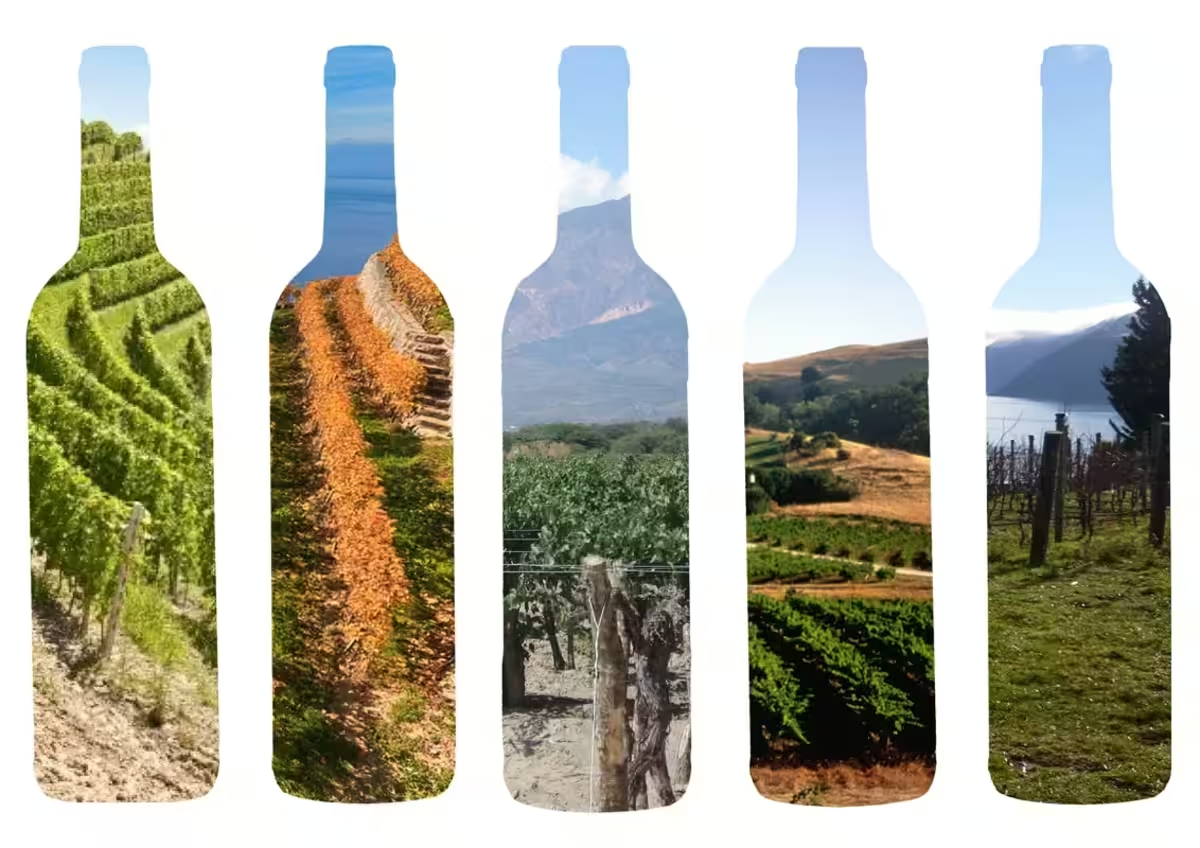
2.1. Bordeaux Wine, France: A Symbol of Refined Blending
Bordeaux is one of the world’s leading wine-producing regions, located in southwestern France, with a long history dating back to ancient Roman times. The region is famous for its unique combination of red and white grape varieties in wine production.
One of the most outstanding characteristics of Bordeaux wine is its excellent aging potential. Thanks to good tannin and acidity structure, this wine can continue to develop and become softer and richer over time.
2.2. Burgundy Wine, France: Where Pinot Noir and Chardonnay Shine
Burgundy, or Bourgogne, is located in eastern France and is famous for the concept of terroir. Limestone dominates the soils here. The most famous wines produced in this region are dry red wines made from Pinot Noir and white wines made from Chardonnay.
The main focus of Burgundy wine production is Pinot Noir for red Burgundy and Chardonnay for white Burgundy.
2.3. Champagne Wine, France: A Symbol of Luxury
Champagne is a sparkling wine produced exclusively in the Champagne region of northeastern France. This is a small region and is considered one of the most expensive wine lands in the world. Champagne gained global recognition through its association with French royalty, becoming a symbol of luxury and nobility.
Champagne is produced from three main grape varieties: Pinot Noir, Pinot Meunier and Chardonnay. It is made using the traditional method known as Méthode Champenoise, or Méthode Traditionnelle, which includes a second fermentation in the bottle to create bubbles.
2.4. Tuscany Wine, Italy: The Soul of Sangiovese
Tuscany, or Toscana, is one of Italy’s most famous and important wine-producing regions, located in central Italy. Its Mediterranean climate, with hot dry summers, mild winters and moderate rainfall, together with significant day-night temperature differences, creates ideal conditions for grapes to develop complex flavors.
Important wine-producing subregions:
- Chianti: The most famous wine region in Tuscany, especially known for Chianti Classico made from Sangiovese.
- Brunello di Montalcino: One of Italy’s finest wines, made from 100% Sangiovese Grosso.
2.5. Piemonte Wine, Italy: The Land of Barolo, “King of Wines”
Piedmont, Piemonte in Italian, is located in northwestern Italy, at the foot of the Alps. This region produces more DOCG wines, Denominazione di Origine Controllata e Garantita, the highest quality level in Italy, than any other region. Its unique continental climate, with morning fog, sunny days and cool nights, creates ideal conditions for Nebbiolo to thrive.
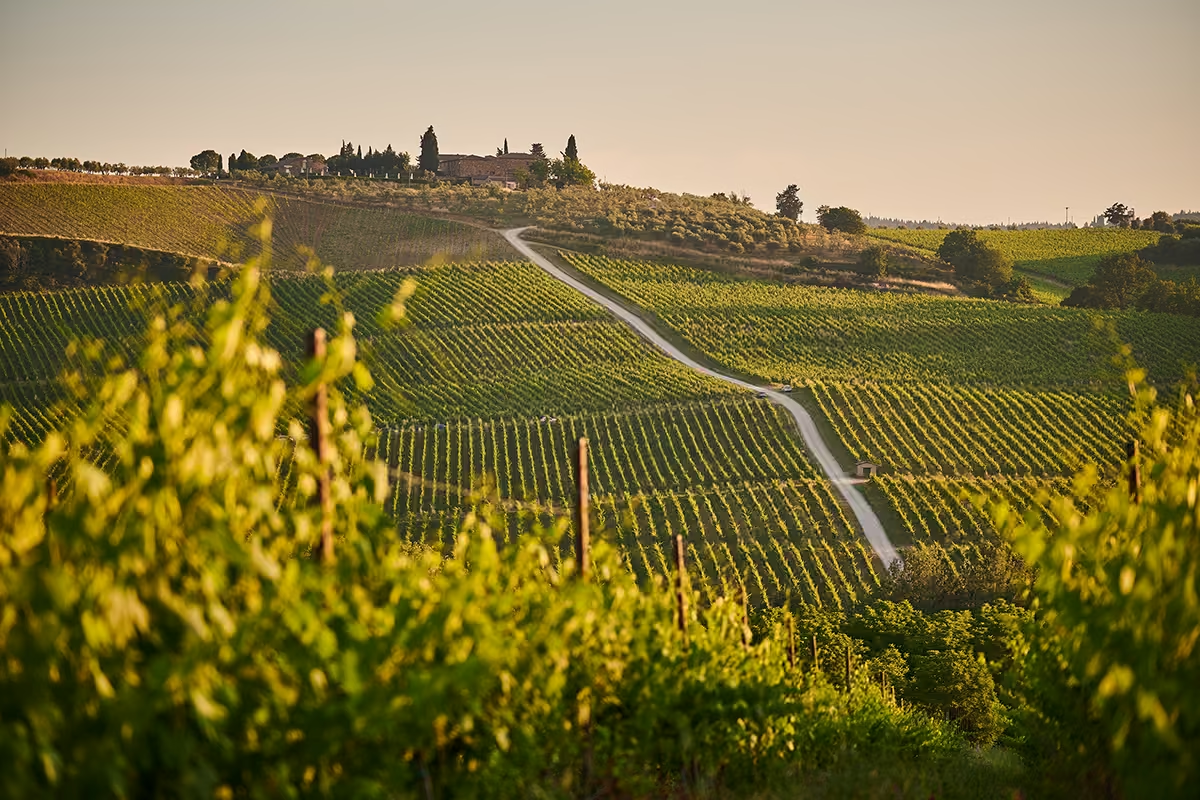
2.6. Rioja Wine, Spain: Rich Fruit and Oak Aromas
Rioja is considered the soul of Spanish wine. It is located in northern Spain and surrounded by the Ebro River. The climate here is diverse, benefiting from Atlantic, continental and Mediterranean influences, creating ideal conditions for grapes to grow. Rioja was the first region in Spain to receive DO classification and was later upgraded to DOCa, the highest level.
2.7. Napa Valley Wine, United States: The Peak Quality of the New World
Napa Valley is the most famous and prestigious wine-producing region in the New World. It was recognized as America’s first AVA, American Viticultural Area, in 1981. A major historical event occurred in 1976, when Napa Valley wines achieved quality equal to French wines in the Judgment of Paris tasting, creating global attention and confirming the region’s status.
Napa Valley has a warm Mediterranean climate, favorable for grape growing. A key factor is the cooling influence from San Pablo Bay, which slows ripening and helps create wines with rich and deep flavors. Napa Valley soils are extremely diverse and contain 50% of the world’s soil types.
2.8. Mendoza Wine, Argentina: Paradise of Malbec
Mendoza is the largest wine-producing region in Latin America and the fifth-largest grape-growing region in the world, accounting for two-thirds of Argentina’s annual wine production. This region lies at the edge of the Andes at an altitude of 600-1100 meters above sea level. Its dry continental climate, abundant sunshine and large day-night temperature differences create ideal conditions for grapes to develop rich flavors. Its water supply comes from melting snow on the Andes peaks.
2.9. Central Valley Wine, Chile: Diversity and Value
Chile’s Central Valley is one of the most important and largest wine-producing regions in South America in terms of production volume. This area stretches nearly 250 miles and includes four main subregions: Maipo Valley, Rapel Valley, Curicó Valley and Maule Valley.
Central Valley has a typical Mediterranean climate, with warm dry summers and cool wet winters. The Andes Mountains to the east and the Pacific Ocean to the west help moderate the climate. The terrain is diverse, with soils ranging from fertile alluvial soils to sandy clay, allowing many different grape varieties to be cultivated.
>> Haven’t explored everything yet? Go back and read Part 1 here!
Final Thoughts,
This article has provided a comprehensive overview of wine classification by grape variety and production region, two key factors that shape the identity of every bottle. With the wine classification knowledge above, you now have a solid foundation to confidently explore new flavors, create refined food pairings and share this passion with others. Always remember that the best bottle of wine is the one you love and the one that brings you joy.