


 Tiếng Việt
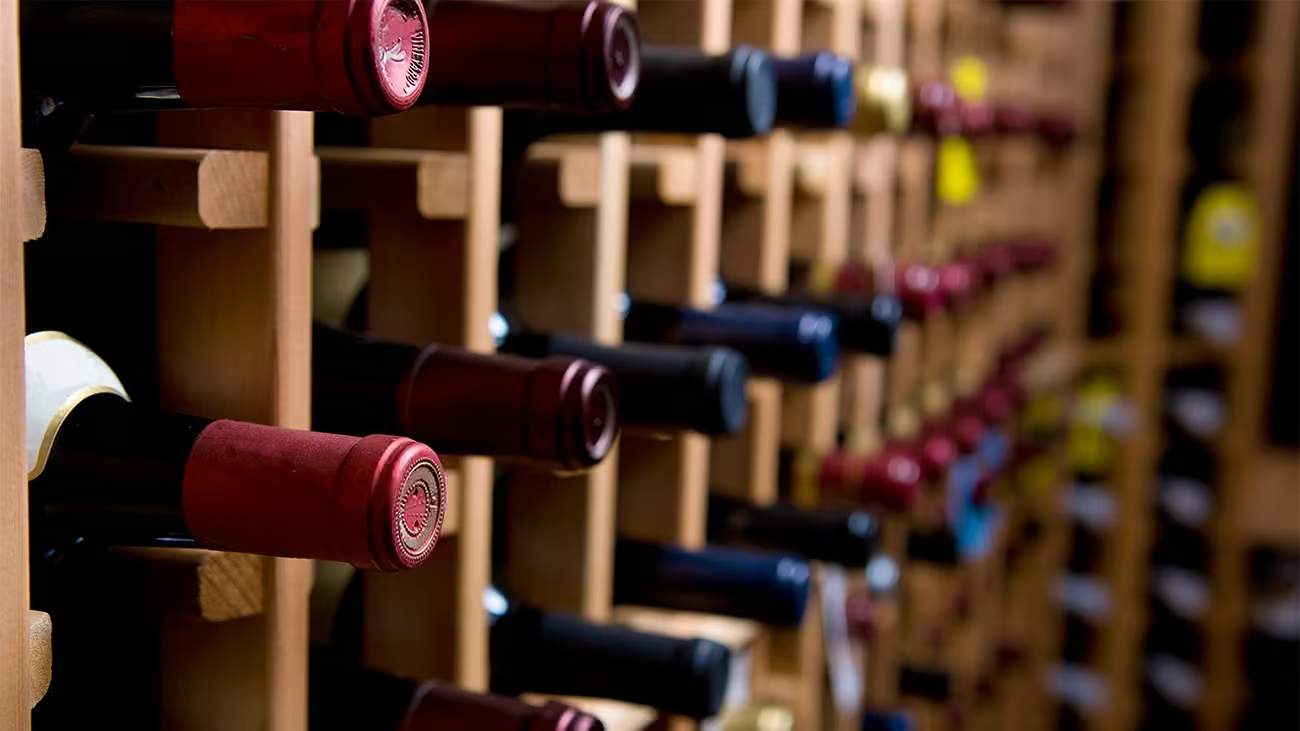
Have you ever walked into a wine cellar or wine shop and wondered: why should wine be stored at an angle instead of standing upright like beer or soft drinks? Is it simply a way to save space, or an aesthetic standard of the elite? In reality, storing wine bottles on their side is an important factor in protecting the quality, flavor and lifespan of wine.
If you are new to the world of wine, this article will help you understand why wine should be stored at an angle, while also giving you expert-standard principles for proper wine storage.
1. Why Should Wine Be Stored at an Angle?
In wine culture, storing bottles at an angle or horizontally is not random. It is the result of hundreds of years of experience from winemakers and tasting experts. Below are 4 core reasons that explain this essential rule.

1.1. Keeps the Cork Moist and Prevents Oxidation
This is the most important reason why wine should be stored at an angle. To understand this, we need to talk about the cork of a wine bottle.
Cork is made from the bark of the cork oak tree, a natural material with a cellular structure containing billions of tiny air pockets. This gives cork excellent elasticity, allowing it to compress tightly into the bottle neck and prevent wine from leaking out. However, just like human skin, cork needs moisture to maintain softness and flexibility.
- When stored at an angle: The liquid wine inside the bottle remains in direct contact with the bottom surface of the cork. This layer of wine acts as a natural moisturizer, keeping the cork swollen and pressed firmly against the glass.
- When stored upright for a long time: The wine separates from the cork. In a dry environment, such as an air-conditioned room, the cork gradually loses moisture, becomes hard and dry, shrinks and develops tiny cracks.
> The oxidation disaster: When the cork shrinks, it creates microscopic gaps that allow outside air to enter. Oxygen is the number one enemy of bottled wine. It attacks flavor compounds, causes the wine to lose its fruity aromas, turns its color brick-brown and, worst of all, can transform your precious bottle into harsh sour vinegar.
1.2. Maintains Stable Wine Quality During Storage
Although modern chemistry shows that alcohol and water are tightly dissolved together, traditional storage experience and some long-standing preservation viewpoints suggest that leaving a mixed liquid undisturbed upright for too long may cause unwanted changes.
When a wine bottle stands still for many years, gravity may cause heavier molecules to move downward, while lighter liquid components remain above. Although this kind of layering, between water and alcohol, does not happen as clearly as oil and water, traditional storage beliefs suggest that storing wine at an angle increases the contact surface between liquid layers, helping maintain a more uniform solution throughout the bottle’s long “sleep”.
Especially for concentrated oak-aged wines, storing the bottle at an angle helps tannins and oak-derived flavor compounds distribute more harmoniously, avoiding a “flavor shock” between the first glass poured and the final glass.
1.3. Helps Stabilize Pressure Inside the Wine Bottle
The environment inside a wine bottle is a sealed but sensitive ecosystem. Pressure inside the bottle can change depending on external temperature.
When the bottle is stored at an angle, the liquid wine sits directly at the bottle mouth, where the cork is. Liquid can handle compression and thermal expansion better than dry air. If the bottle is stored upright, the air space in the neck stays in direct contact with the cork. When temperature rises, air expands faster than liquid, creating strong pressure that may push the cork upward.
Keeping wine in contact with the cork helps regulate pressure better, ensuring the cork stays in place and protecting the sealed structure of the bottle over time.
1.4. Reduces Sediment Concentration at the Bottom of the Bottle
One common misconception is that good wine must always be crystal clear. In reality, premium aged red wines often develop sediment. This is a natural precipitation of tannins and color compounds during aging, or tartrate crystals, often called “wine diamonds”.
If you store a bottle upright for many years, all this sediment will collect at the bottom and form a thick layer, making it difficult to handle when pouring. In contrast, when the bottle is stored at an angle, especially at a slight incline:
- Sediment settles along the shoulder or side of the bottle, spreading out instead of forming a dense mass.
- This position is very helpful for decanting. When you lift the bottle from an angled rack to pour it into a decanter, the flow becomes smoother, making it much easier to separate clear wine from sediment compared with disturbing a thick layer of sediment at the bottom of an upright bottle.
>> Learn more about why wine should be stored horizontally here!
2. Golden Rules for Proper Wine Storage
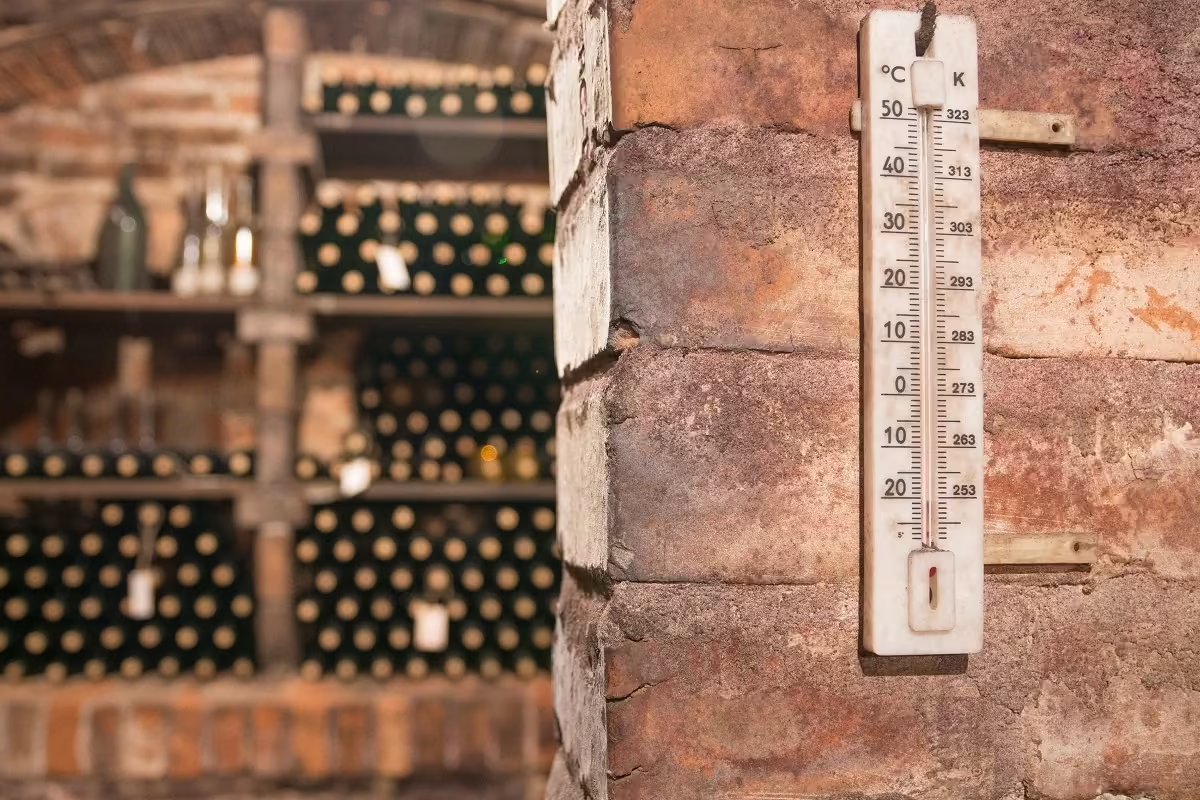
Understanding why wine should be stored at an angle is not enough. To become truly knowledgeable, you need to combine bottle position with other environmental factors. Below are 3 essential rules to remember:
2.1. Ideal Temperature for Wine Storage
Temperature is crucial. You may store the bottle at the perfect angle, but if you place it in a hot kitchen, the wine will still spoil.
The golden temperature range: The ideal temperature for most wines is from 12°C to 16°C.
Stability is key: Wine strongly dislikes sudden temperature changes, also known as thermal shock. Never store wine in places with large temperature swings, hot during the day and cold at night. Continuous expansion and contraction can loosen the cork, causing leakage or oxidation.
Note: A regular household refrigerator is usually too cold, below 4°C, and has too much vibration, making it unsuitable for long-term wine storage.
2.2. Maintain Proper Humidity for the Cork
As explained in section 1, humidity is closely connected to the health of the cork.
Ideal humidity: Around 50% – 70%.
- If too dry, below 50%: Even when the bottle is stored at an angle, the outer part of the cork may still dry out and crack, increasing the risk of oxidation.
- If too humid, above 80%: Mold may grow on the label and cork, damaging the bottle’s appearance and potentially affecting the wine’s aroma.
In Vietnam, humidity is usually high, so corks drying out from the environment is less of a concern. However, you should keep the storage area well ventilated to prevent mold.
2.3. Choose the Right Storage Location
The “home” of your wine bottles should be quiet and dark.
- Avoid light: UV rays from sunlight or fluorescent lights can break down organic compounds in wine, creating unpleasant odors, such as wet wool or cabbage. Choose a dark place or use a wine cabinet with UV-resistant glass doors.
- Avoid vibration: Do not place wine racks near large speakers, washing machines or busy walkways. Constant vibration disturbs sediment and accelerates chemical reactions, making the wine “tired” and causing it to lose delicate flavors.
3. Exceptions: When Does Wine Not Need to Be Stored on Its Side?
Not every bottle of wine is the same. Modern winemaking and packaging have created interesting exceptions to the “store at an angle” rule.
3.1. Screw-Cap Wine
Today, many wines from Australia, New Zealand and the United States use aluminum screw caps. Inside the screw cap is a highly airtight rubber or synthetic liner. This type of closure does not need moisture from wine to maintain elasticity. Therefore, you can store screw-cap wines upright, sideways or even upside down without worrying about damage.
3.2. Sparkling Wine and Champagne
This may come as a surprise. Several newer recommendations from the Champagne wine association, CIVC, suggest storing Champagne upright for short-term or medium-term storage. The reason is that the high CO2 pressure inside the bottle, around 5-6 atmospheres, is enough to keep the internal environment humid and protect the cork without requiring the wine to touch it. In fact, long-term horizontal storage may cause the wine’s acidity to wear down the cork faster.
Final Thoughts,
The question “why should wine be stored at an angle?” is not only about bottle presentation. It is a key to understanding the living nature of wine. Storing wine on its side is the best way to protect the cork, prevent oxidation and maintain wine quality over time.
However, the world of wine is always changing. Apply this rule flexibly: store cork-sealed bottles at an angle, store screw-cap bottles however you prefer, and be thoughtful with sparkling wines.
Proper storage does more than preserve flavor. It also shows respect for the bottle and the people who made it.